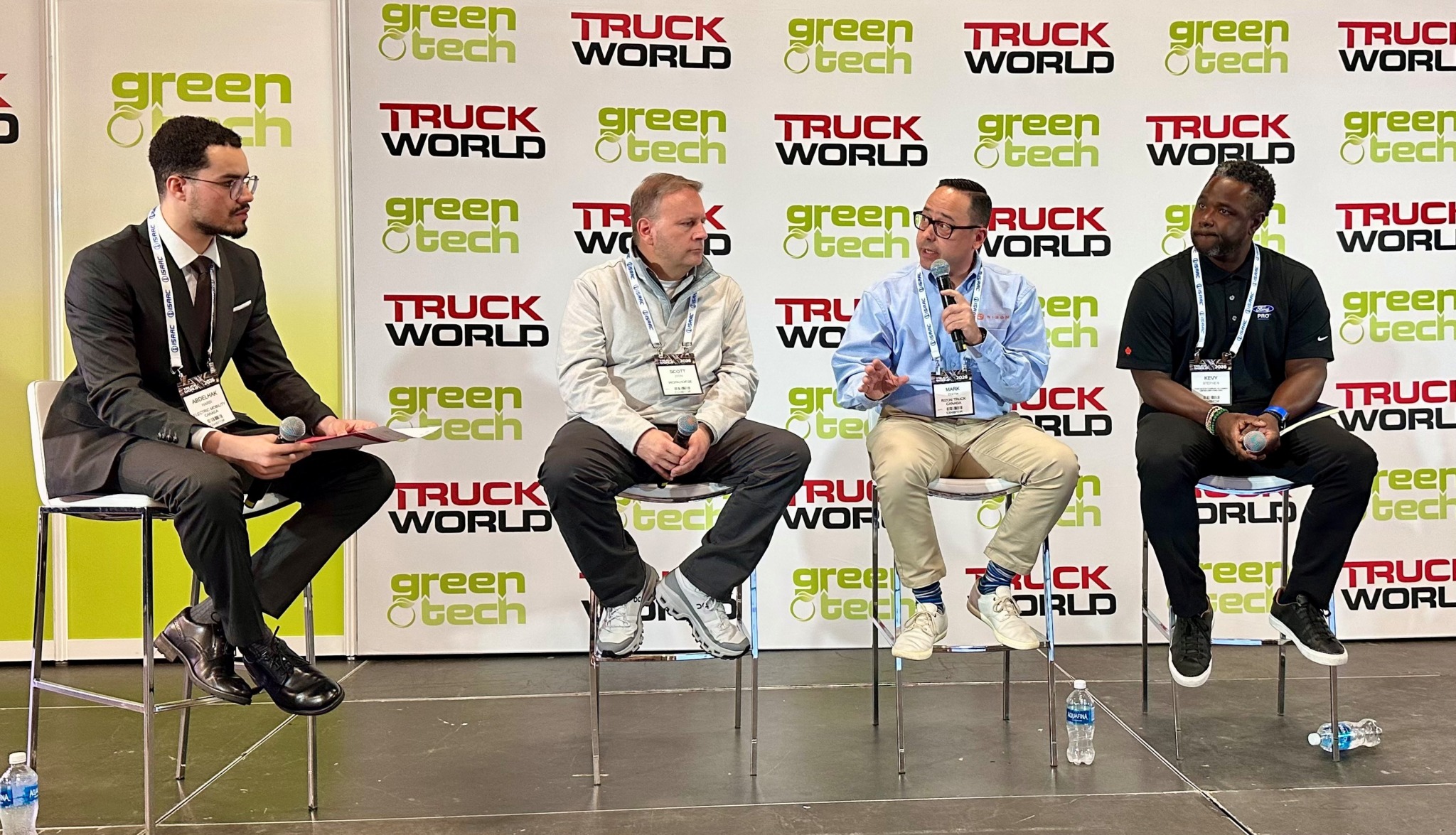
Fleet operators are continuing to test and adopt electric trucks, but decisions are increasingly tied to clear business cases, infrastructure readiness, and confidence in long-term support, panellists said during Truck World 2026.
Speakers in Mississauga, Ont., pointed to a market that is moving forward, though not without friction. While early adopters continue to expand pilot programs, others remain cautious amid cost concerns, evolving incentives, and infrastructure timelines.
Scott Zion of Workhorse said fleets are still seeking reassurance from manufacturers before committing.
“We’re having to reassure fleet operators and managers that we are here to stay,” he said, adding that once concerns about infrastructure and product longevity are addressed, performance feedback has been positive.
Zion said Workhorse currently has about 32 trucks in operation, with more than half deployed in last-mile applications. He noted that driver response has been strong, particularly in urban delivery settings.
Incentives tapering
Mark Smith of Rizon Truck Canada described a shifting policy environment in the U.S., where incentives are beginning to taper. Despite that, he said demand remains.
He added that most customers have made the commitment to move forward with electrification, and are going to continue to do that, with or without the incentives.
Panellists agreed that total cost of ownership (TCO) remains a central consideration, but not the only one. Zion said fleets are increasingly factoring in trust, specifically whether manufacturers will remain in the market long enough to support vehicles over their lifecycle.
He pointed to early entrants that secured funding but failed to establish lasting operations, leaving fleets with unsupported equipment. That experience has shifted buyer expectations.
Affordability
“People want to trust that the OEM is going to be around for the long haul,” he said.
Affordability also remains a barrier. Kevy Stephen of Ford Pro said customers have made it clear that electric trucks must meet pricing expectations as incentives decline.
He said the next generation of vehicles is being designed with that in mind, while also addressing range concerns and dealer readiness. “The vehicles need to be affordable,” Stephen said.
Panellists emphasized that electrification is not a universal solution, but one that fits specific use cases. Stop-and-go urban routes, high-idle operations, and vocational applications where trucks double as mobile workstations were cited as strong candidates.
Stephen said those environments often deliver immediate benefits, with fleets less likely to return to internal combustion once they gain experience.
Driver behavior and acceptance
Driver behavior and acceptance were also highlighted as critical factors. Smith said driver habits can directly affect performance outcomes, while Stephen cautioned against forcing reluctant drivers into electric vehicles during early pilots.
“The last thing you want is to force your driver that’s not ready,” he said, noting that negative feedback from unwilling participants can undermine broader adoption efforts.
Training and coaching were identified as necessary components of deployment. Drivers must learn to operate electric vehicles differently than diesel or gasoline trucks, particularly in managing acceleration and energy use.
Begin small and plan early
Zion said fleets must also be cautious in how they use telematics data, especially when linking performance metrics to driver evaluations. Misinterpretation or technical inconsistencies can lead to unintended consequences, including driver dissatisfaction.
Infrastructure continues to present one of the most significant challenges. Panellists said charging systems can take up to a year to fully implement, requiring coordination with utilities and long-term planning.
They advised fleets to begin with small pilot programs while designing infrastructure for future expansion. They added that early-stage planning is critical to avoid delays and underutilization.
Service and parts availability
Service and parts availability were also identified as key differentiators. While early discussions around electrification focused heavily on charging, Smith said service infrastructure has become equally important.
Stephen said Ford Pro’s dealer network is already equipped to support electric vehicles, with significant overlap in parts between electric and gasoline models. He added that keeping vehicles operational is critical, as downtime directly affects revenue.
Zion echoed that point, saying reliability and service readiness must be built into product design from the outset. While electric trucks have fewer moving parts, failures still occur and must be addressed quickly.
Cost savings remain a primary driver of adoption. Panellists cited reductions in fuel and maintenance costs, with some fleets reporting operating cost decreases of more than 60% in certain applications. However, they noted that these savings typically materialize over time.
Less quantifiable benefits
Stephen said the crossover point, where electric vehicles become more cost-effective than internal combustion, often occurs within three to five years.
Panellists also pointed to less quantifiable benefits, including driver comfort. Reduced noise and vibration were linked to improved driver experience and potential reductions in fatigue-related issues.
Smith shared feedback from drivers who reported increased energy levels after switching to electric trucks, particularly in demanding urban environments.
Despite ongoing challenges, panellists said the overall trajectory of electrification remains positive. Fleets that take a measured, data-driven approach — focusing on real-world operations rather than assumptions — are more likely to see successful outcomes.
“Don’t guess. Measure and then make decisions,” Stephen said.
Credit: Source link