Trailers are now rapidly evolving from being passive equipment units into connected, data-rich assets that can help fleets improve uptime, cut emissions and reshape operations management due to technology like embedded sensors, tire management systems and electrified trailer platforms.
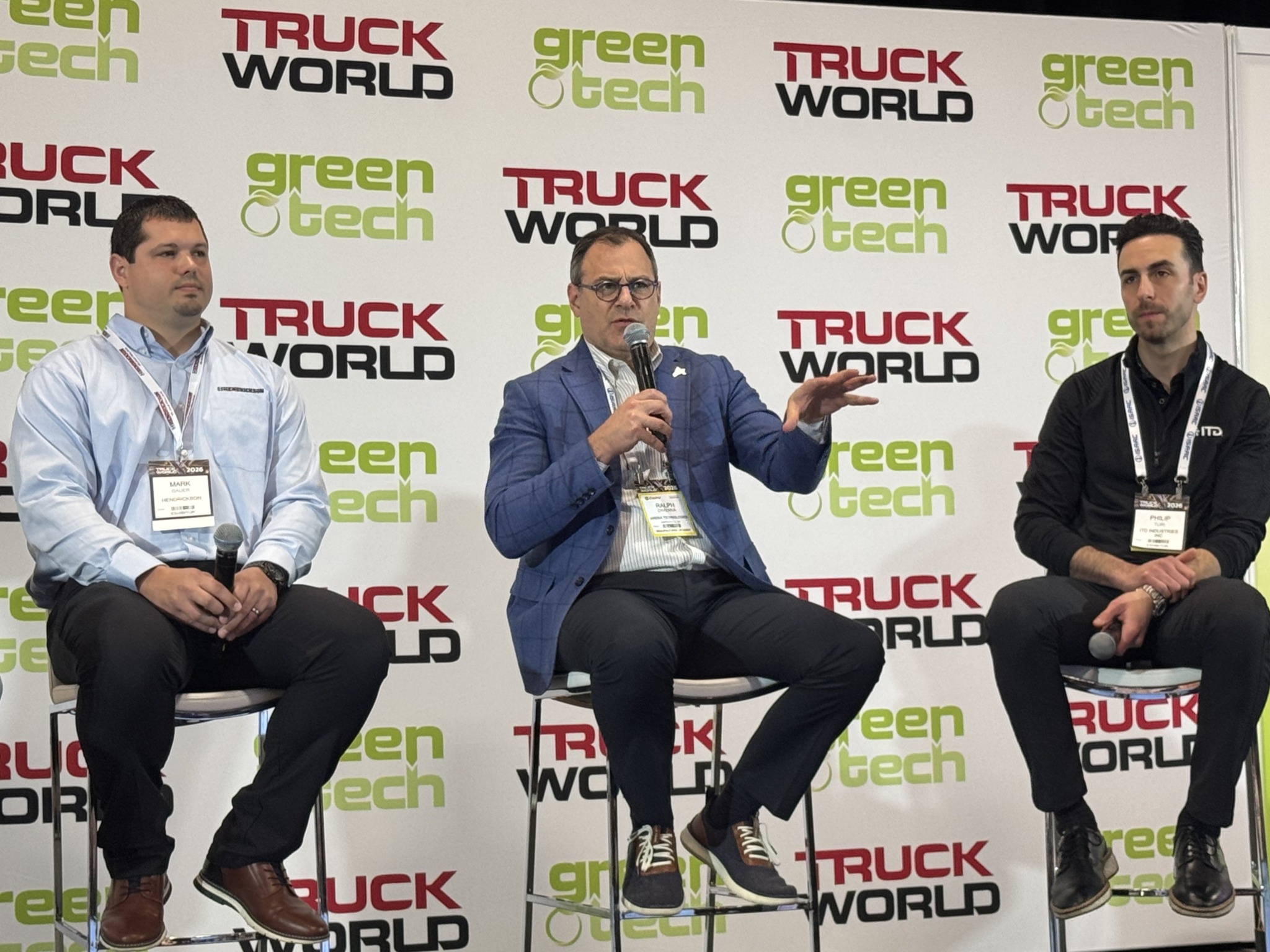
Mark Gauer, a business unit manager of the vehicle technology group at Hendrickson said the integration of sensors into wheel-ends and suspension systems is giving fleets visibility they simply did not have before.
“We’re able to look at things like tire pressure trends, wheel-end temperature and actually a wheel-end degradation profile,” he said during the panel at the Truck World show in Mississauga, Ont., on April 17, adding that fleets can now identify issues such as flat spots, imbalance or overheating components ahead of time, allowing them to act on it prior to it becoming an issue.
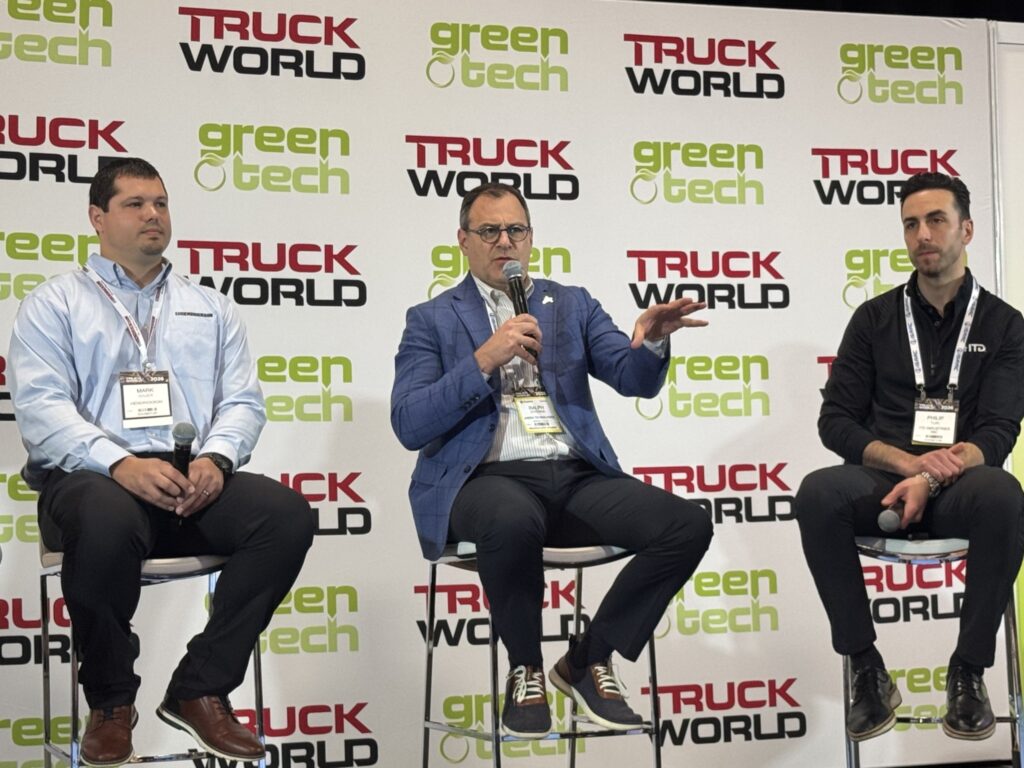
“With all these different integrations going on between the OEMs and the telematics providers, that information is being made more available. And I think over the last couple years, fleets have seen an increase and a lot of benefits in that area.”
That visibility extends beyond diagnostics. Fleets can determine whether a trailer is loaded, and whether its tires, brakes and wheel-ends are in good condition before dispatch, Gauer said, noting it can help prevent out-of-service events and unnecessary roadside costs, resulting in fewer wasted trips and better asset utilization.
And yet, fleets are still not fully leveraging the data already available on their equipment. Even basic indicators — such as tire inflation status lights — can provide early warning signs if tracked over time, but it often underused by many.
Addressing issues with tires
Tire management continues to be a major challenge when it comes to trailer management. Ralph Dimenna, chief commercial officer of Aperia Technologies, cited an audit of 1,000 trailers for one of its largest customers that found 37% had more than one failure, even with smart technology installed.
Those failures could include underinflated tires, overinflated tires (which he notes is a significant problem on trailers), and other tire-related issues that weren’t being properly maintained.
This is why simply adding sensors is not enough.
“That’s really the biggest reason; the tech gets put onto the application and doesn’t get maintained,” Dimenna said.
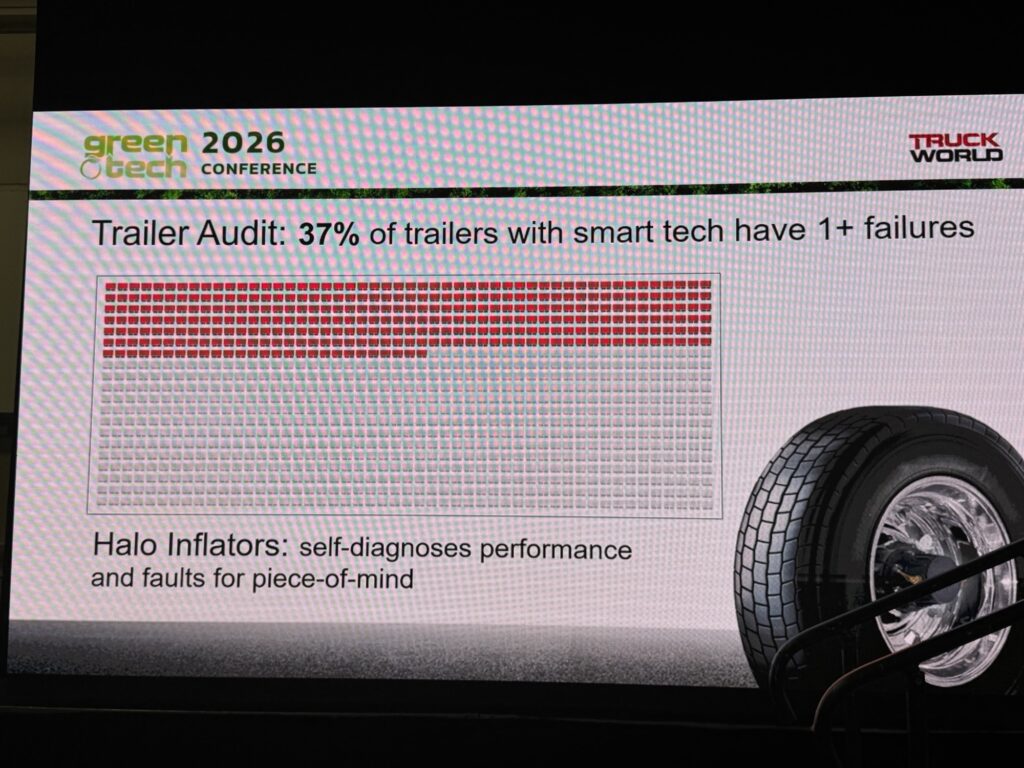
To address that gap, Aperia designed new systems that go beyond monitoring and take on a more active role in managing tire health.
Aperia’s Halo Tire Inflator, for example, is self-powered and mounted at the wheel-end, with an integrated tire pressure management system that monitors its own performance.
Dimenna said it also tracks temperature and pump activity to identify issues earlier than traditional threshold-based alerts. By comparing the workload of pumps across a trailer, it can detect when one is working harder than the others — an early sign of a leak — even before pressure drops to a critical level.
He said that the company can identify a leaking tire “hours before [other] systems that are on the market that are simply threshold based.”
The approach also helps reduce unnecessary alerts. Instead of flagging every pressure change, the system distinguishes between routine conditions — such as normal underinflation or maintenance events — and actual faults that require action.
Electrification expands trailer role
Beyond tire monitoring, panelists also pointed to trailer electrification, particularly refrigerated units that heavily reliant on diesel.
Philip Turi, chief operating officer of ITD Industries, said his company has been developing an electrified trailer system that combines a regenerative e-axle, solar panels and onboard batteries of about 141 kilowatt hours, which can provide three days of continuous run time for the reefer unit. All this to decrease the reliance on diesel.
“What we wanted to do was start with a very heavy emitting piece of technology, which is reefer units themselves,” he said. The system is designed as a retrofit, allowing fleets to install it on existing trailers. It uses solar generation and energy captured while the trailer is in motion to power refrigeration units, reducing fuel consumption without requiring major changes to charging infrastructure.
“When the trailer is rolling down the road, there’s a whole bunch of energy that’s being generated and essentially lost as the axles are turning. We’re now capturing that in what we call passive generation mode,” Turi said.
Trailers have historically been passive assets, but he believes electrification allows them to take on a more active role as energy systems.
“The trailer is a significant asset that, if given the right technology, can be used not only to power a reefer unit, but also, if you think about the technology roadmap, the trailer can be used to power an electric truck,” Turi said.
He added that early trials with Canadian fleets are showing both operational and cost benefits to e-axles and e-trailers. Electric-powered refrigeration enables quieter operation, allowing fleets to expand into nighttime urban deliveries in areas where noise restrictions often limit delivery activity.
Reducing reliance on diesel also cuts fuel costs and emissions. Fleets are seeing fewer refueling trips and improved asset utilization. “Every year you’re saving with our system, $40,000 to $50,000 of diesel. It’s a significant cost savings. It really is.”
Integration key to usable trailer data
As trailers become smarter and more complicated, panelists emphasized that integration, not just data collection, is increasingly important to make informed decisions.
But the right people have to get the right level of detail, said Hendrickson’s Gauer.
“The technology is great, data is great, but … the driver may not need to know which tire has an issue. He just needs to know if it’s safe to continue operating the vehicle.” Maintenance teams, on the other hand, require a greater level of detail.
That requires systems to integrate with existing telematics, ELDs and fleet management platforms, rather than adding new layers of complexity. Gauer said Hendrickson’s role is focused on the hardware side, embedding sensors at the factory level and working with telematics partners to ensure that data reaches fleets and drivers in a usable format.
Dimenna added that he has seen fleets with very different approaches in how they want to receive alerts. Some route all notifications through centralized 24/7 operations teams, while others send all unfiltered alerts and instructions directly to drivers. This is why, he says, it is important for providers to understand how the fleet wants to consume the information and then be flexible in allowing customers to customize the information in a way that makes it easy for them to work into their workflow.
Credit: Source link