Driver behavior remains the single biggest lever fleets can pull to improve both fuel efficiency and safety, but changing habits at scale requires a combination of training, data, and meaningful incentives.
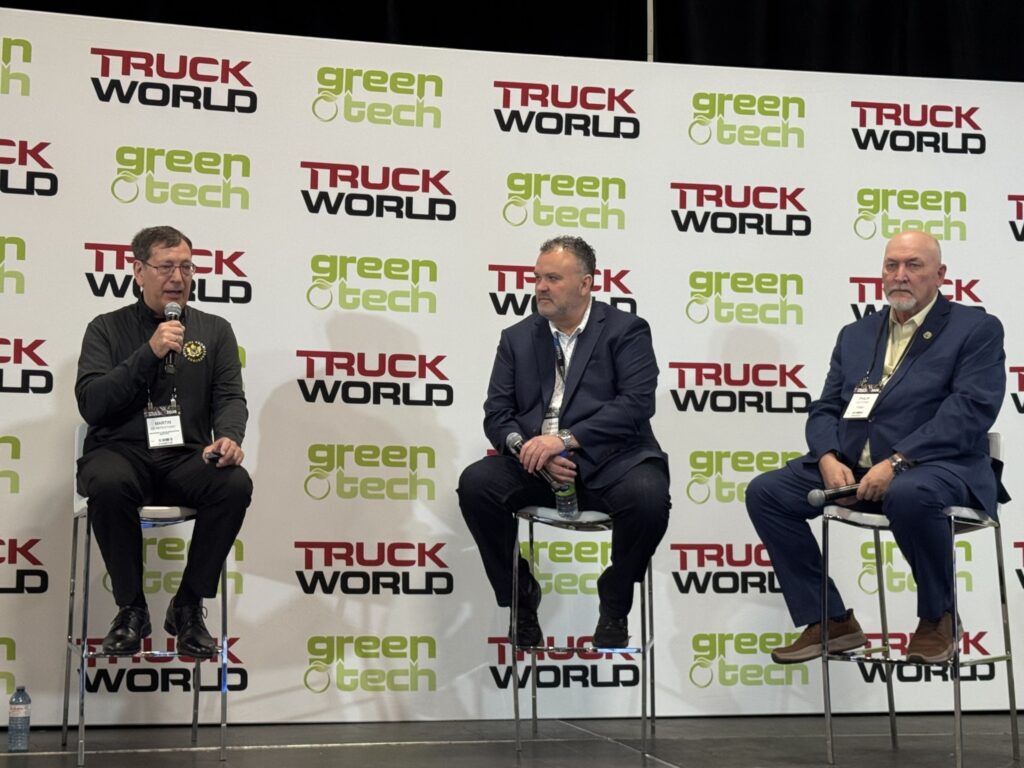
This is according to a panel held during the Truck World show in Mississauga, Ont., where speakers said that as fuel accounts for roughly 30% of a fleet’s operating costs, even small improvements can have a significant financial impact for carriers.
“You can save up to 35% in fuel between somebody that drives really bad and somebody that drives really well from a fuel economy perspective, and so just a 15% decrease in fuel consumption will reduce the operational costs by about 5%,” said Martin de Repentigny, co-founder of Drivewise.
This is why fleets have to educate drivers on the importance of eco-driving. And while practices like smooth acceleration, steady speeds, and avoiding unnecessary braking are simple in theory, they might be difficult to implement consistently across an entire fleet, he added.
Lack of anticipation, for example, is one of the bad driver habits that interferes with eco-driving.
Martin Bissonnette, training team lead at Attrix Technologies, reflected on his own experience as a truck driver in the past 25 years, saying that anticipation or lack thereof directly affects both safety and fuel use. Drivers who anticipate road conditions, including traffic, can avoid harsh braking and excessive acceleration, reducing fuel consumption and wear on equipment, he said
Philip Fletcher, president of the Truck Training Schools Association of Ontario (TTSAO), agreed, adding that drivers should be trained to look well ahead on the road to better predict what’s coming next.
“In an urban setting, they should be looking 12 to 15 seconds ahead of them. So you can see what’s happening well before you get there. You can come off the accelerator, you can glide. You won’t have to put the brake on as hard,” he said. “You can see brake lights well in advance, so you can back off, and you don’t have to be on the accelerator.”
Performance measurement
But prior to beginning any training, all panelists agreed it is important to be able to measure and assess the driver behavior for coaching to be effective and lead to meaningful improvements.
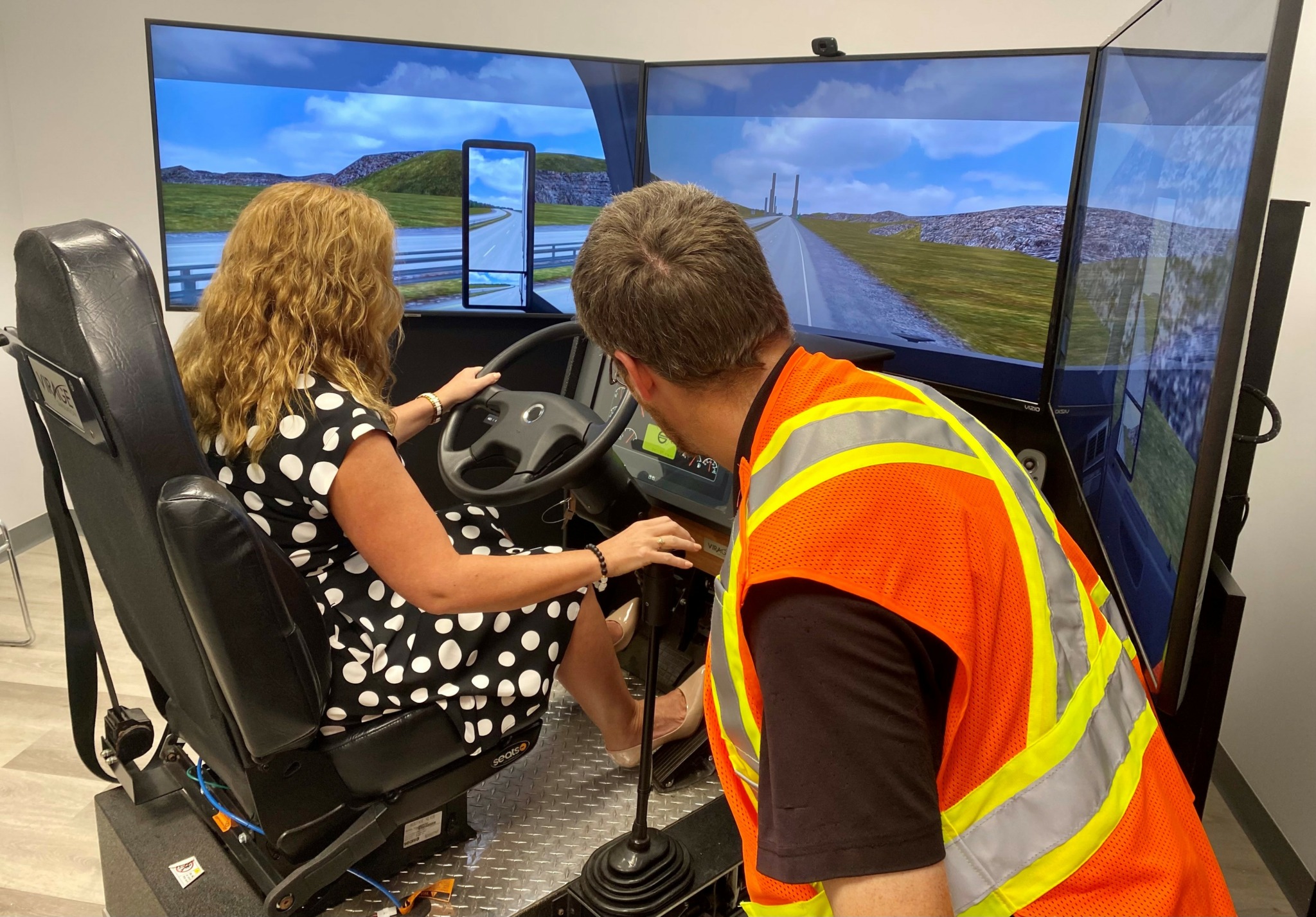
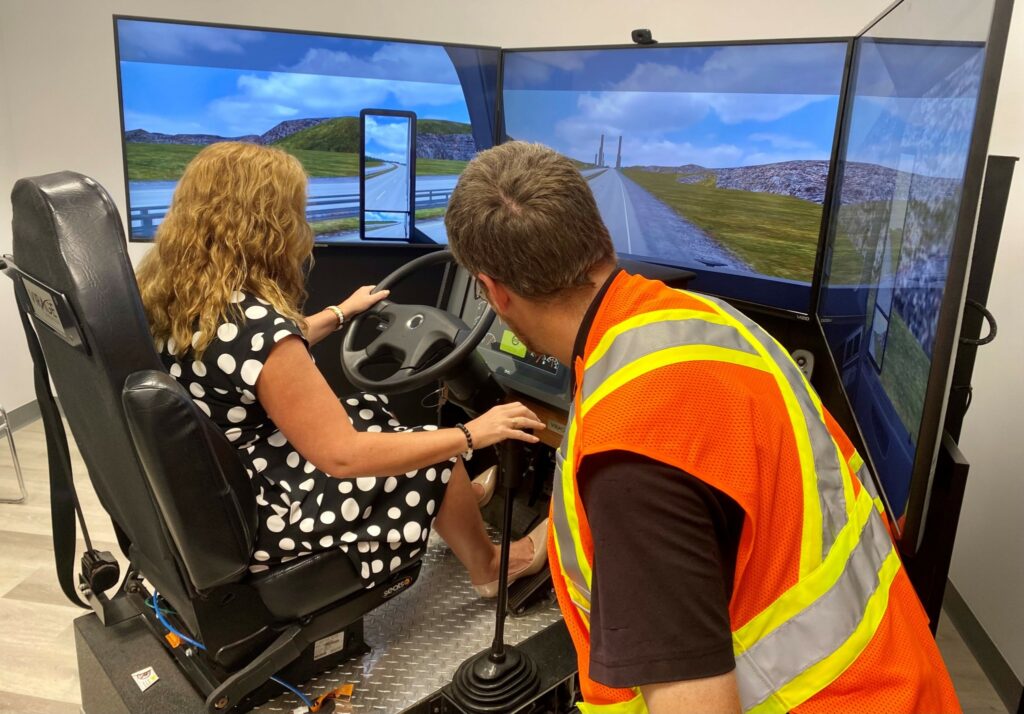
Technologies such as driving simulators and telematics platforms are helping fleets do just that.
Simulators allow fleets to replicate the same driving scenarios across multiple drivers and compare performance against an ideal benchmark, while telematics systems track metrics such as idling, speed, braking and acceleration.
But Bissonnette cautioned against overwhelming drivers with too much information while trying to leverage all the insights telematics has to offer. “Don’t overwhelm the driver with data. We don’t [do] ‘here’s where you’re scored,’ but ‘here’s where you can improve…So you did a lot of harsh braking — manage your pedal, and then everything will come together,’” he said. “Keep it simple.”
He added that targeted feedback, such as weekly summaries or short training videos, can help drivers focus on specific areas for improvement.
“If you’re measuring it, it makes it important,” de Repentigny said, adding that drivers are more likely to improve when they know their performance is being tracked.
And incentives are a big way to keep drivers motivated and engaged in the long run.
“If you give me money in my pocket every month, that’s good enough incentive for me,” Bissonnette said.
Apart from financial motivation, gamification can also help, Fletcher added, as drivers respond to competition and the ability to track their progress on their own.
“Everybody wants to win,” he said.
At the same time, fleets must be mindful of how performance data is presented to drivers, as excessive monitoring can create resistance, Fletcher added. “You want to be sensitive to what the drivers are feeling. They don’t want to be under the gun and pressure and feel like every minute that they’re doing something is being monitored. But you do want to have a buy-in.”
When asked about how drivers perceive gamification, incentives and competitions, Bissonnette said, “Not everybody wants to be on top. But if you start from, I don’t know, 25th [spot] and after a few months, you’re like up to the 10th position, you’re better…because the first three are always going to be the first three drivers in the company. It’s never going to change, but if you can bring people from the bottom up with good incentives, that means something. I think this is the way to go.”
Training shouldn’t stop at new drivers
Another common challenge is that fleets often focus training efforts on new hires, while overlooking experienced drivers, de Repentigny said. Fletcher agreed, adding that retraining seasoned drivers can deliver significant gains. He shared a story about a driver with 35 years of experience who ranked in the bottom 5% of his fleet, yet resisted training.
After spending around a week with TTSAO, Fletcher said the driver’s attitude changed, and eventually, after two months of training, the driver came out in the top 10% of the fleet.
“You can make that change. You can work with somebody. It does take some time, takes some work and effort, but there’s definitely big gains… now that you think of how much a truck will cost you in fuel in a year, you’re looking at $70,000 to $80,000 anyway. If you can save 5% of that, well, there’s $3,500 to $4,000 right there in savings. And you want to be able to get that, recapture that back for the fleet.”
Credit: Source link