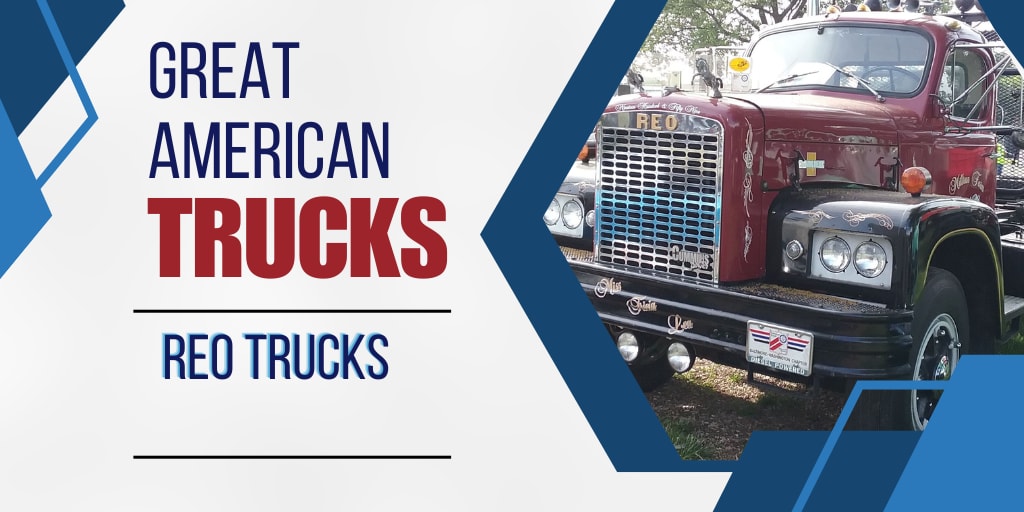
The evolution of the modern truck was a long, slow affair. But perhaps no other company did more to establish the template for what a modern truck should be, and how it should perform, than REO.
Henry Ford is lauded as the great genius who set the world in motion by introducing mass-produced automobiles to the United States in the early 20th Century.
But Ford had a serious rival at the time – a man who has largely been overshadowed by Ford and the automotive giant he founded.
Ransom Eli Olds was an early automotive pioneer who was actually ahead of Ford in many ways. Many automotive historians consider Olds a visionary on par with Ford – particularly in the very early days of the Automotive Age.
Henry Ford’s real genius lay in perfecting production techniques that allowed him to mass-produce automobiles and sell them cheaply to working-class Americans. It was Ford who transformed cars from expensive playthings for the wealthy to practical, essential, daily transportation for everyday Americans.
And it was Olds who actually introduced the first mass-produced, low-cost automobile to the world. And many automotive historians credit Olds with developing the first automotive assembly line, which Ford later perfected.
A New Car Company is Born
Olds was born in 1864, at the tail end of the American Civil War. His father was a blacksmith who settled the family in Lansing, Michigan. The elder Olds developed expertise in building and maintaining steam engines. And as a young man, Ransom helped his father out in his shop. But it wasn’t long before he lost interest in steam technology in favor of new, gasoline-powered engines.
In 1897, Olds founded the Olds Motor Vehicle Company, which would enter the history books as the Oldsmobile brand. And soon, the company was building its famous, low-cost Oldsmobile Curved Dash motor car.
The simple, practical little car was a hit. And by 1902, thanks to the Olds assembly line, the company was building more than 2,500 cars a year.
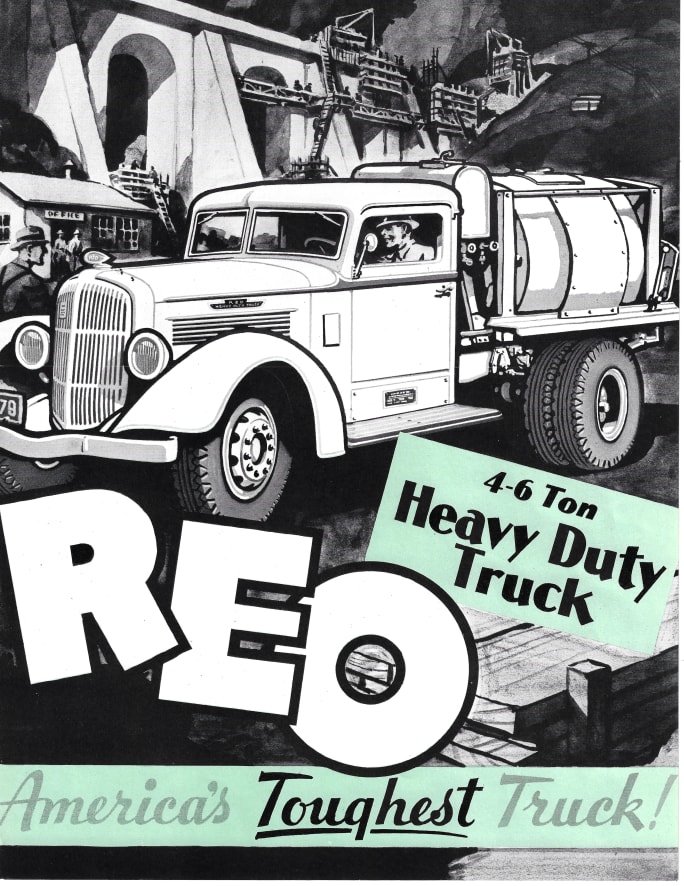
By the 1930s, REO was marketing itself as the builder of “America’s Toughest Trucks.”
Clayton Hoak collection
But Olds and his business partners soon fell out. And in 1904, he left the company bearing his name and founded a new one.
Initially, the new car company was to be called the “R.E. Olds Motor Car Company.” But Olds’ business partners threatened legal action over the similarity between the two companies’ names. So, Olds opted to use his initials instead. On August 16, 1904, the REO Motor Car Company was founded.
With REO, Olds took up where he’d left off with his former company. The company’s first cars were small, motorized “horseless buggies.” Power was supplied by small gasoline engines putting out around 15 horsepower, coupled with a chain-drive, rear-wheel powertrain.
And sales were brisk, due in large part to Olds’ name and reputation. By 1907, REO reported gross sales over $4 million and was recognized as one of the four wealthiest automotive companies in North America.
In 1908, REO turned its attention to the embryonic North American truck market. Its first official truck, the Model H, featured the company’s automotive chassis and a one-cylinder, 12-horsepower gasoline engine.
But the company’s reputation and public interest in an REO truck soon led to the establishment of a stand-alone REO Truck Company in 1910. In a reflection of its new focus on commercial vehicles, the company adopted a new slogan as well: “REO — Built for Business.
Soon, REO was building both the Model H and a larger Model J truck, which featured a new, four-cylinder, inline, 25-horsepower engine.
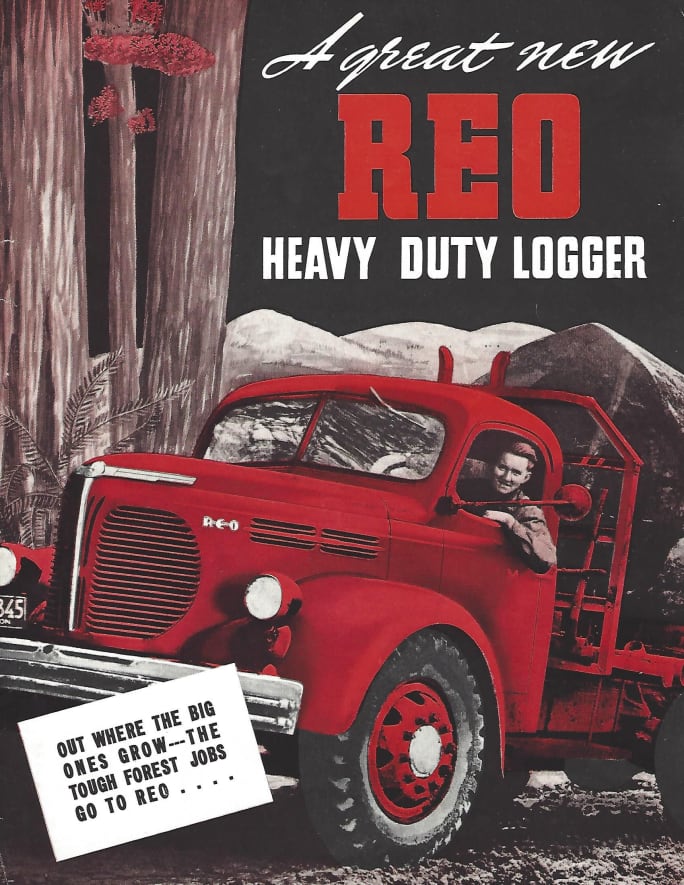
A 1946 REO ad touts the model’s toughness in extreme logging applications.
Clayton Hoak collection
REO was the first truck OEM to equip its vehicles with standard pneumatic tires. And it was an early adopter of electric lights, modern starters, and a shaft-drive powertrain.
The REO Speedwagon Debuts
In the late 1970s, a group of Chicago musicians co-opted the name of a popular REO truck for their rock group. The band enjoyed an impressive string of hit songs in the 1980s. And because of this, the REO Speedwagon brand is part of American popular culture to this day.
Which is not to say that the original Speedwagon wasn’t an important and historically significant vehicle.
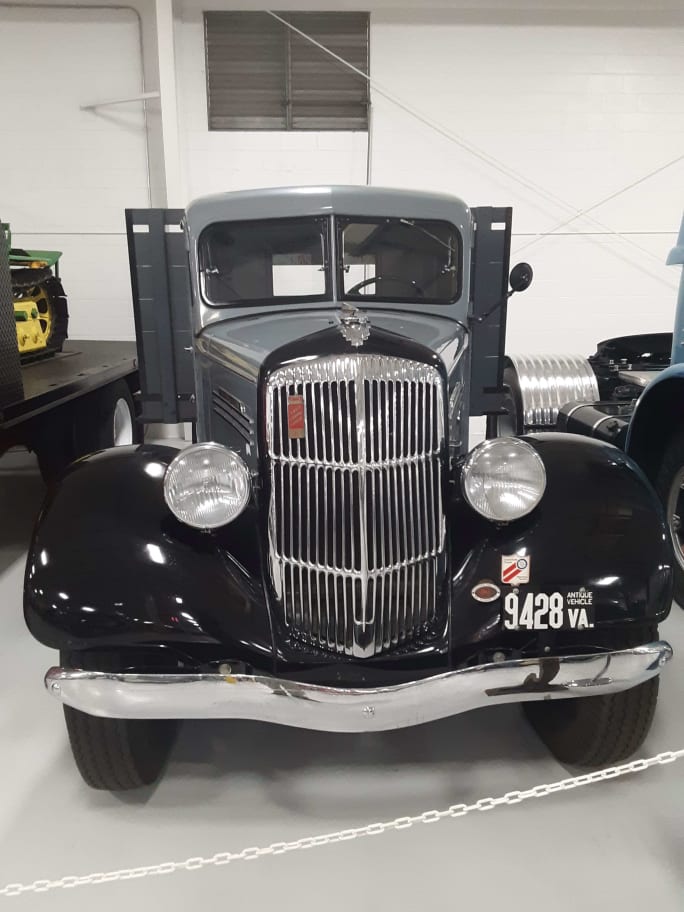
A 1938 REO Speedwagon.
By 1915, automotive manufacturers had identified a desire for delivery vehicles that could carry useful payloads, and were small, maneuverable, and fast enough to operate in tight, often chaotic urban environments. Essentially, what we call “Last Mile” vehicles today.
In fact, a distinct industry offering, dubbed “speed trucks,” were being offered by various OEMs to fill this role – delivery vehicles designed to operate at 15 mph on city roads.
Seeing an opportunity for a dedicated urban delivery truck, REO engineers developed a new, four-cylinder, cast-iron, inline gas engine mated to a floor-mounted, three-speed manual gearbox. Thanks to the new powertrain, the new Speedwagon, as REO dubbed the vehicle, offered urban fleets cargo capacities of more than 3 tons and transport speeds well in excess of the 15 mph industry standard of the time.
By 1925, REO had sold more than 125,000 Speedwagons. The popularity of the trucks prompted the company to offer them in numerous configurations, including buses, dump trucks, tow trucks and panel vans. Realizing they had a hit on their hands, REO made a concerted effort to keep the Speedwagon design as modern as possible. By the end of the decade, REO upgraded Speedwagons with its new Gold Crown 268-cubic-inch inline six-cylinder engine, increasing both performance and reliability for operators.
The company had a winning concept on its hands and knew it. REO held true to the Speedwagon’s original design concept for almost 40 years. Eventually, Speedwagon models would range from what we would now call pickup trucks, to heavy two- and even three-axle heavy truck models.
A Stand-Alone Truck Company
REO had been founded as a passenger car company. And, in fact, its high-end luxury cars had a well-deserved reputation for style, comfort, and reliability.
But the success of the Speedwagon began to push the company more and more into the heavy truck market. By 1928, REO was building its first heavy truck. These included the Tonner, Standard, Master and Heavy Duty models. Base power was centered on new version of the popular Gold Crown six-cylinder engine featuring an improved chrome nickel steel block. New hydraulic brake systems were offered. And fleets could choose from as many as 14 different heavy truck models.
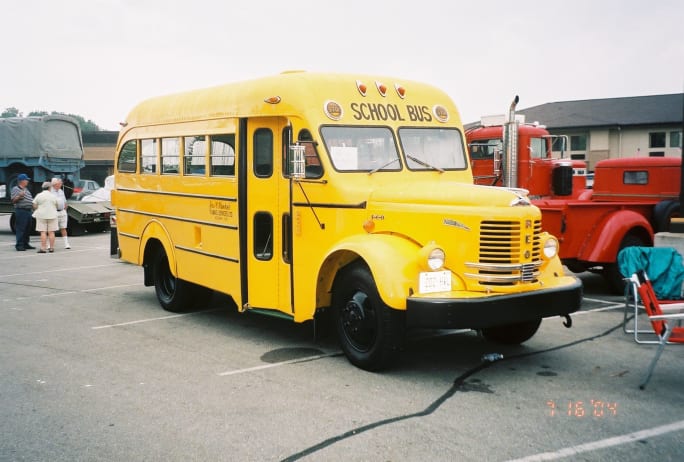
This Speedwagon school bus shows the distinctive front-end styling that REO is famous for to this day.
By the 1930s, REO was offering inline, eight-cylinder engine options. And its heavy truck line began to take on art deco-inspired lines and styling that blended the company’s automotive designs into its truck models. Chrome trim and panel accents appeared. And a distinctive, instantly recognizable, chrome grill became a brand hallmark that would carry over until the last true REO trucks were built in 1966.
By 1936, the Great Depression had gutted the U.S. automotive market. In response, REO discontinued passenger car production and decided to focus exclusively on building trucks.
New heavy truck models, ranging up to 10 tons, were offered. The company also developed a set-back front axle design. A new Silver Crown engine and a five-speed manual transmission upgraded performance. And the company’s designers introduced a more rounded front-grill design that arguably became the defining look for REO heavy truck models.
But still, faced with a global depression and larger, better funded competitors, it was clear that REO was slowly, but surely losing ground in the marketplace.
With the advent of World War II, REO began building the Series 29 6×6 truck for the military. This platform had been developed by Federal Trucks. And REO also found itself building the successful Studebaker US6 cargo truck under license. REO built about 20,000 Us6 models during the war – all of which were exported to the Soviet Union. Moreover, the close relationship forged with both Federal and Studebaker during the war would prove fateful in the years to come.
An Underappreciated Automotive Giant
By the mid ‘50s, REO was in serious financial trouble. It began to sell off its vehicle manufacturing operations. The Speedwagon nameplate was finally retired in 1953 as competition and consolidation forced the company to streamline its operations.
In 1957, the company became a subsidiary of the White Motor Company. Eventually, the company merged with Diamond T Trucks and REO in 1967 to form Diamond REO Trucks. And this company limped along until it fell into bankruptcy in 1974.
Today, the rights to the REO name are owned by the Volvo Group.
Given the important place in trucking history, relatively limited production numbers, and unique styling, it’s no surprise that REO trucks are extremely popular among collectors today.
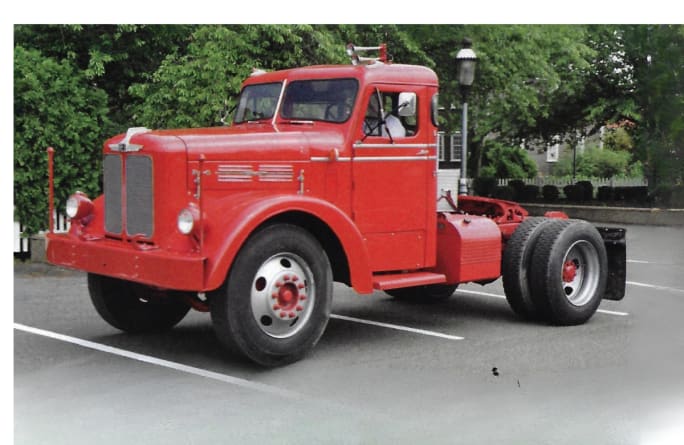
Clayton Hoak behind the wheel of his 1948 REO at an American Historical Truck Society show.
Clayton Hoak is one such collector. Based out of Maine, Hoak is one of the more active and knowledgeable REO collectors in the country today. He is also the proud owner of a fire-engine red 1948 REO Model 31T. And he is passionate about establishing and maintaining networks with collectors nationwide as a means to find, rescue and restore surviving trucks.
In his view, REO trucks very much tracked the various improvements that came into trucks from their very early days into the 1960s. What started as very basic vehicles with fixed seats, hard rubber tires on wooden spoke wheels, with open cabs and mechanical brakes eventually morphed into the beginnings of modern trucks. And the history of REO tells that story in great detail.
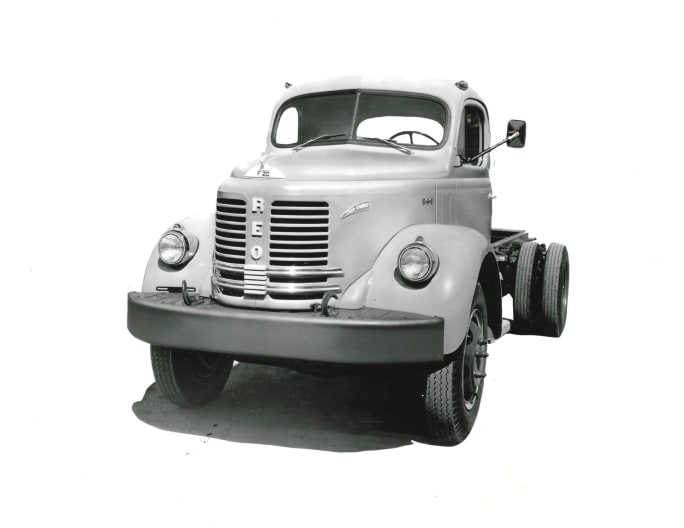
This sales brochure detail of a 1951 REO shows the brand’s distinctive broad, curved chrome grill.
Clayton Hoak collection
“All of those improvements, over time, have made driving trucks more comfortable and safer,” Hoak notes. “My 1948 REO has a 602 cubic inch 210 horsepower Continental gasoline engine with a five-speed overdrive transmission and a two-speed rear and full air brakes. It drives and stops pretty easily. However, it is slow by modern standards. It has a 50 to 55 mph top speed. And that makes it pretty unsafe on the Interstate.”
And Hoak thinks REO’s status in trucking history is substantial, if somewhat unappreciated today. And he does have a point. From today’s perspective, it’s understandable to view REO as just one more truck maker in an extremely crowded market. The trucks were stylish and tough. But at the end of the day, that wasn’t enough to offset the massive advantages many of its competitors had.
But what is true is that the REO Speedwagon did much to shape and cement the idea of a modern truck in the minds of the American public. Perhaps more so than any other truck model in history. And for that reason alone, REO stands proudly as one of the greatest American truck manufacturers of all time.
Credit: Source link