Fifteen local Italians founded the Italian Heritage Group in 1985 so their children could learn about and understand their heritage, said Italian Heritage Association board member Teresa Fausti.
Formally incorporated as a nonprofit in 1987, it then became the independent Italian Heritage Association Inc. Its purpose is to learn, preserve and nurture local Italian heritage so that knowledge will not be forgotten.
An Oct. 10 community-wide dinner and Oct. 11 Festa Day will mark IHA of Walla Walla’s 40th year of camaraderie and community involvement.
IHA is providing free booth space at the Oct. 11 event to local businesses, wineries, artisans and chefs who wish to showcase Italian-themed products and organizations. The deadline to reserve a space is Sept. 30.
For more information, contact IHA president Andrea Bughi-Johnson at [email protected].
Downtown street banners will picture local IHA families, Fausti said. Several programs and events are being offered to the community in an effort to bring back many of IHA’s traditions, Fausti said.
“The initiatives are designed to support the IHA’s mission of preserving Italian history in the area and sharing the contributions that Italians have made and continue to make toward the positive evolution of Walla Walla and surrounding regions,” Fausti said.
The group will sell an IHA cookbook filled with treasured recipes from past generations, Fausti said, and a 40th anniversary IHA commemorative book will be available.
The anniversary will include a festa dinner at 5:30 p.m. Friday Oct. 10, at the Walla Walla County Fairgrounds & Event Center Community Building, 363 Orchard St. The Italian culinary delights menu will feature antipasto; chicken cutlets; meatballs and marinara sauce; build-your-own pasta bar, including gluten- and dairy-free options; assorted breads and salads; wine; and assorted desserts. The kids’ menu will feature chicken strips and butter pasta.
Dinner tickets are $40 for adults, $15 for children ages 7-12 and free for those 6 years and younger. The ticket deadline is Oct. 6.

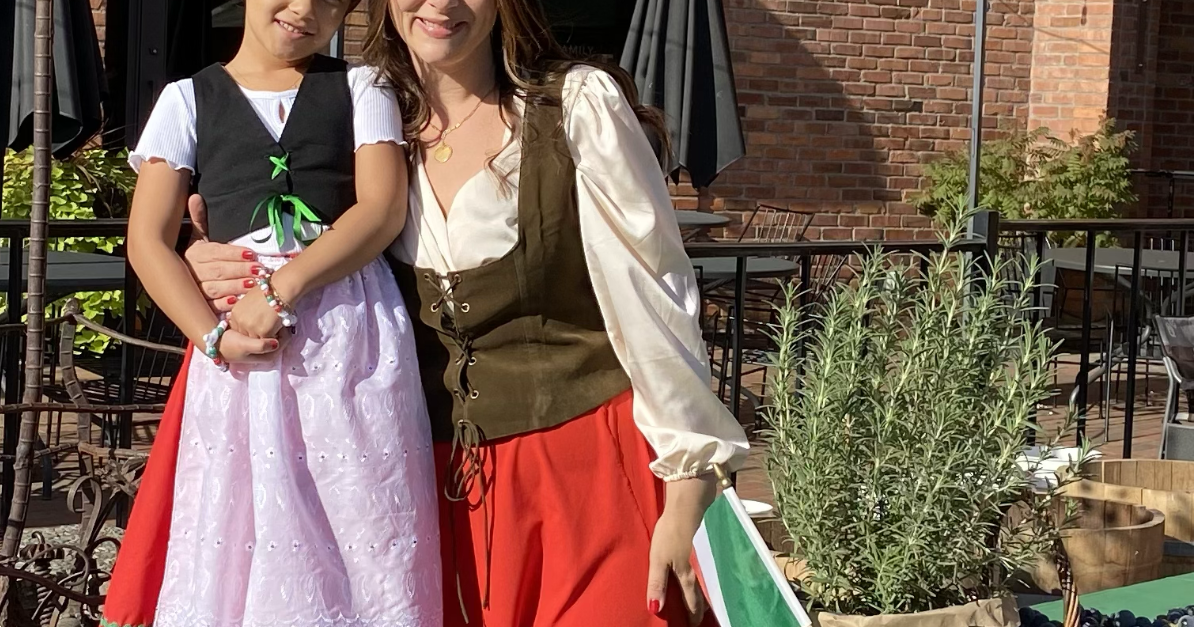
Ella Destito and Kolbe White prepare to dance at a previous Walla Walla Italian Heritage Association Festa Days.
The dinner will feature a silent auction; Italian musical entertainment; traditional Italian dancing by the Piccola Danza children’s group; the introduction of Miss Italian Heritage; and awards presentations honoring IHA and community members for outstanding achievements, contributions that support the IHA mission and values, and local Italian heritage.
Those interested in IHA events or becoming a member of IHA can visit ihawallawalla.org and facebook.com/WallaWallaItalianHeritage or call 509-529-4774 to get tickets and participate in upcoming events.
Festivities continue from 9 a.m.-4 p.m. Saturday, Oct. 11, with the annual Italian culture-themed Festa Day in Heritage Square, 116 E. Main St. The day will include Italian-themed businesses and products; Tessa Floreano, tessafloreano.com, an Italian historical-fiction author; entertainment; sausage, pastry and Italian soda booths; wine; dancing; fun Italian photo opportunities; grape stomping; pizza- and pasta-eating contests; and fun activities, Fausti said.
Two books will be sold at both events: the “Walla Walla Italian Heritage Association Cookbook,” $25; and “Walla Walla Italian Heritage Association 40th Year Commemorative Book (1985-2025),” $12, featuring photos, history and stories of local Italians and their ancestors.
“You don’t have to be Italian to become a member of IHA or participate in the events,” Bughi-Johnson said. “The only requirement is to hold an appreciation for Italy’s food, wine, art, style and other unique attributes.”
“Italians of the Walla Walla region have made significant contributions toward shaping our city and are responsible for developing world-renowned products, such as the Walla Walla sweet onion,” Fausti said. “Italians also helped start the wine industry that is now flourishing with more than 160 wineries in the area.”
Event funds generated through book sales, dinner tickets and events mainly cover the costs of printing and event production, Fausti said.
“We offer the cookbooks and commemorative books because they are well-loved items and traditions with IHA members and Italian and extended communities,” Fausti said. “They also help to preserve and share our heritage.”
IHA offers a number of events and activities that advance its local history and contributions.
IHA gives annual scholarships to high school students; has a parade float, purchases dance group costumes; supports Miss Italian Heritage involvement; documents the history of local Italians; generates newsletters, a website and social media with informative and educational outreach to members and community; holds quarterly meetings/events for members; and helps keep costs low for dues and available items and for participants in IHA events, several which are free, including Festa Day.
Many Italian families who settled in the Walla Walla Valley came from southern areas of Italy, near and in Calabria, Ischia and Sicily and from northern towns, such as Lonate Pozzolo and Lucca, Fausti said.
“We are thrilled to see our organization experiencing a continued increase in interest and receive recognition from our community for the profound impact Italian families have had on the Walla Walla Valley. We are excited to offer these engaging and meaningful activities and programs to residents and businesses,” said Bughi-Johnson, who has participated in Festa events since she was a young child.
“It’s wonderful to see the traditions continue for our next generations, much like our original founders wanted to accomplish,” Bughi-Johnson said.
A look back
Organization founders’ goals included emphasizing the culture, music, folk dances, language, people and geography of the regions of Italy from where their parents immigrated. The group also strives to further achieve the unification of people by sharing its heritage, culture and activities with the Valley community and region.
Notable contributions from Italian descendants: establishing the Walla Walla Gardeners Association; raising vegetables and marketing wares at roadside stands; making wine and teaching others the craft; building city streets with their bare hands; dedicating the 1911 Columbus statue, a symbol of immigration and a gratefulness for new opportunities in America; starting the Castoldi Farm, which celebrates 100 years in 2025; and receiving the gift of a St. Francis of Assisi statue from Walla Walla’s sister city, Cannara, Italy, now at Walla Walla City Hall.
The first Walla Walla sweet onion farm was behind what is now Home Depot. They started by growing a green bunch onion, which Italian farmers Arbini and Locati learned could survive the winter.
They experimented with different bulbs that with the combination of soil and weather produced the Walla Walla Sweet Onion.
Theresa Fausti’s grandpa Anthony Fausti cultivated and developed growing strategies for the first cauliflower and Brussels sprouts in the Walla Walla Valley, the first east of the mountains, she said.
Italian farmers evolved from pulling carrots by hand to developing mechanical harvesting processes similar to those used at the time with potatoes and developed new mechanical mechanisms to harvest spinach instead of by hand.
They overcame bigotry and discrimination, coping with signs that read “No dogs or Italians” and being forced to enter and retrieve food from the back doors of restaurants, Fausti said.
In the early years, most area residents, typically of northern European origin, didn’t consider Italian immigrants or their offspring to be “American” or white, reported Jens Lund in Columbian Magazine.
Tony Locati’s son, Joe J. Locati, in his book, “The Horticultural Heritage of Walla Walla County, 1818-1977,” “cited local newspapers that routinely referred to Italians as ‘foreign elements’ and ‘Dagos.’”
However, local monthly Up-To-The-Times positively reported: “In the vegetable industry, John Chinaman and the sons of Italy cut considerable figures. As gardeners, these two classes have few superiors … Of late years, however, attracted by the profits of the business, many white men and those representing the best citizenship have become holders of valuable vegetable lands.”
Italian-Americans here founded St. Francis of Assisi Roman Catholic Church in 1915 and a local council of the Catholic fraternal organization Knights of Columbus.
The Native American Cayuse, Walla Walla and Umatilla peoples can be traced back some 15,000 years from the region of the Walla Walla Valley south around Pendleton.
For those of non-North American descent, arriving to settle out West is nascent in the grand scheme.
Originally from Lucca, Italy, Frank Orselli is cited as the earliest Italian to settle in the Valley, arriving in 1857, said Fausti.
By 1865, the industrious gardener, firefighter, soldier and pioneer businessman owned 180 acres of land in the original town plat, had a vineyard and orchard, dried fruit and made wine.
Orselli bought the California Bakery, reported localwineevents.com. He sold fruit and vegetables, baked goods, groceries, tobacco, wine and liquor. With a Gold Rush happening in Orofino (“fine gold” in Italian), Idaho, in the 1860s, he sold produce to miners.
From Ischia near Naples, Pasquale Saturno arrived here between 1875 and early 1876.
Visitors to Fort Walla Walla Museum can see Walla Wallan Doug Saturno’s great-grandfather Pasquale’s preserved, original Saturno Italian Farmstead in the Pioneer Village. It represents the history of the area’s Italian immigrants.
Other local descendants making a mark here include Joe Tachi, who arrived in 1880, Tony Locati in 1886 and John Arbini in 1890, all from Lonate Pozzolo; and Louis Rizzuti in 1886 from Calabria.
“As these men sent home for friends and neighbors for labor or marriage partners, the population increased. Immigration continued into the 1920s,” reported Jens Lund in Columbia Magazine.
Francesco and Rosa Leonetti established a farm in 1906 and among other agricultural interests, grew grapes.
Grandson and granddaughter-in-law Gary and Nancy Figgins in 1977 founded Leonetti Cellar, which numerous sources note is Walla Walla’s first commercial winery.
“What is far less understood is that the presence of our family in Walla Walla spans over a century long, into the deep silt loam of this Valley,” Chris said at leonetticellar.com/.
The cabernet sauvignon and riesling varietals the business grows came from a few cuttings from the 1906 Leonetti farm. Gary Figgins planted his first commercial vineyard there in 1974, Chris said.
Gary “unknowingly established an entire industry for our Valley. Building off the inspiration he gleaned from his grandfather’s bubbling fermentations on the farm’s dirt floor basement, the only logical thing to do to honor his family’s roots would be to name the winery Leonetti Cellar,” Chris states on the website.
Chris succeeded his parents and is winemaker, CEO and winemaking director for Figgins Family Wine Estates. He officially joined the winery in 1996 and became head winemaker in 2001. His sister, Amy Figgins, is estate manager.
Walla Walla Sweet Onions have a deeply rooted connection to those here with Italian heritage.
French soldier Peter Pieri is credited with introducing sweet onion seeds to the Valley.
He immigrated to Walla Walla with a “French onion” in about 1900 from the French island of Corsica, off the west side of the Italian boot.
Italian immigrants, including Joe Locati who worked for Pieri, played a key role in cultivating and refining the onion.
Growers like John Arbini and Tony Locati focused on selecting the best onions for replanting, leading to the development of today’s Walla Walla Sweet Onion.
Andrea Castoldi immigrated to the U.S. in 1903. His son, Angelo Castoldi grew Walla Walla Sweet Onions, following in his father’s footsteps. Its first crop was harvested in 1926.
With third-generation brothers Paul and Bob Castoldi and Bob’s son Nathan Castoldi at the helm, their century farm on Newtown Road has been owned by the Castoldi clan since 1925.
The Walla Walla Sweet Onion did not get its distinctive moniker, reported The Columbian, until 1960 when Arbini Brothers Farms was asked to ship samples of its onions to East Coast markets.
The popular name Caroline Arbini and her sisters coined for that shipment has been used ever since.
The Locatis, another noted local family, has a long history of caring for its land in the Valley and produces Italian-style wines at Locati Cellars. Since 1905 Locati Farms, started by Joe Locati, has been a leader in innovative growing, packaging and shipping of Walla Walla Sweet Onions. Sons Ambrose and Pete Locati took over farm operations in the 1940s.
With cousin Virgil Criscola they started the first onion packing shed in the Walla Walla Valley in 1949.
Michael Locati continues the family heritage as a grower, packer and shipper of Walla Walla Sweet Onions.
Known as the long-day allium cepa, the orb’s official name is “Walla Walla Sweet Onion. Since 2007, it’s Washington state’s official vegetable, primarily grown in the Walla Walla Valley.
At one time Italian newcomers could be found living near one another, some on truck farms along “Italian Row.”
“What we like to call Walla Walla’s Little Italy is where many settled in the agricultural zone around Old Highway 12, Gose Street and the surrounding area,” Fausti said.
Current IHA officers are Bughi-Johnson; Alison Maiden, vice president; Sandy McCoy, secretary; Lanna Stemmer, past president; Bob Locati, treasurer; Samantha Castoldi, Ashley Castillo, Alisha Buttice, Donna Kipp and Fausti.
Credit: Source link