The administration’s latest trucking crackdown goes beyond roadside inspections, expanding Homeland Security’s role in commercial vehicle enforcement and investigations involving CDL training schools.
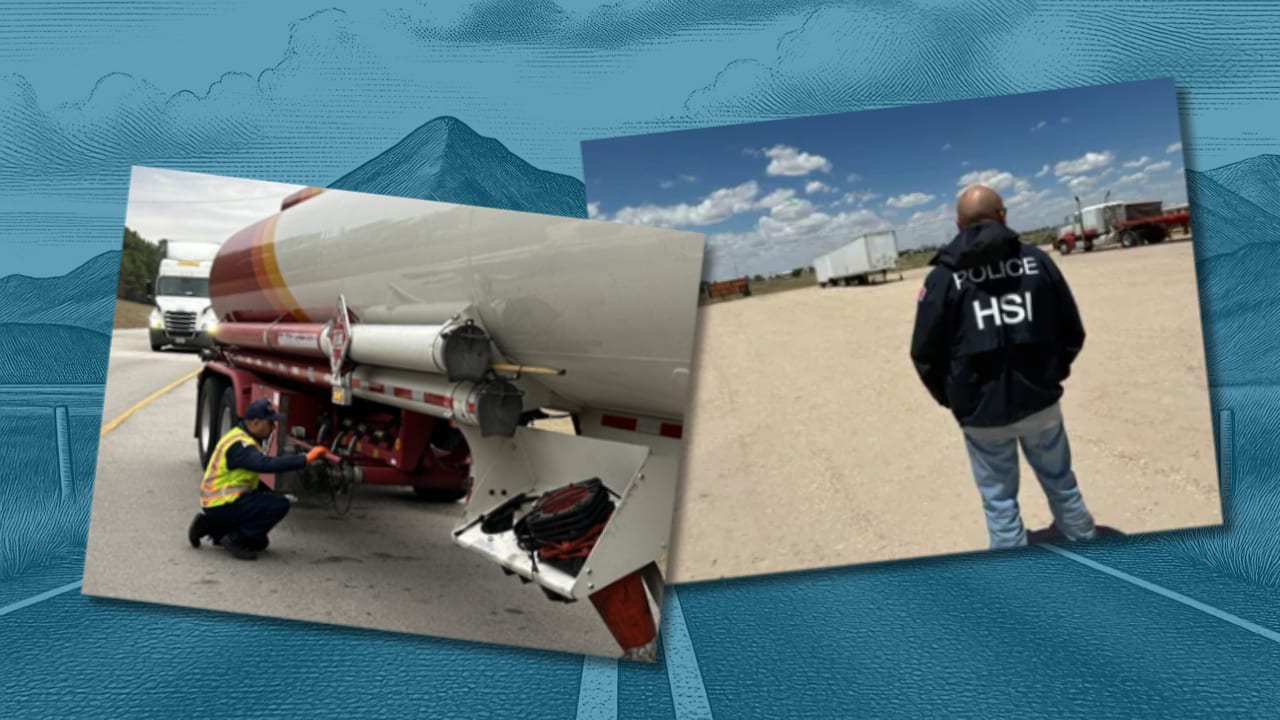
The Trump administration is expanding the role of Homeland Security in truck safety enforcement, with agents from Immigration & Customs Enforcement and Homeland Security Investigations joining commercial motor vehicle inspectors in a multi-state roadside operation that officials say removed hundreds of unsafe drivers and vehicles from the road.
In announcing the results, the agencies said the operation “swept 800 dangerous truckers and illegals off U.S. roads.”
The joint effort, the second wave of what the administration is calling “Operation Highway Shield,” was conducted across four states in three days, along freight corridors in Illinois, Indiana, Iowa, and Ohio.
Working alongside state highway patrols, inspectors from the Federal Motor Carrier Safety Administration, Immigration & Customs Enforcement, and Homeland Security Investigations (another part of Homeland Security) conducted roadside checks.
The three-day enforcement effort in late July is the latest step in the administration’s broader effort to tie highway safety enforcement more closely to immigration enforcement.
Since taking office, Transportation Secretary Sean Duffy has tightened English-language proficiency enforcement and reduced eligibility for non-domiciled commercial driver’s licenses, and partnered with Homeland Security on investigations involving truck driver training schools.
English Proficiency, Non-Domiciled CDLs, Immigration Violations
During the three-day push, law enforcement inspectors focused on commercial vehicle safety violations, while Homeland Security personnel also identified immigration and criminal offenses. According to DOT, the operation resulted in:
- 766 drivers and vehicles placed out of service
- 86 arrests
- 36 English proficiency violations
- 51 people detained for suspected immigration violations, including 21 commercial drivers holding non-domiciled CDLs issued by California and New York.
- Nearly $1 million in recovered stolen cargo
The July initiative continues a series of coordinated federal trucking enforcement campaigns the administration has conducted this year.
In January, Operation SafeDrive, across 26 states, was announced as a “multi-state enforcement and education effort focused on reducing dangerous driving behaviors, ensuring drivers are properly qualified, and addressing unsafe drivers and vehicles on the nation’s roadways.”
And in March, in its first wave, Operation Highway Shield conducted more than 3,300 inspections in Florida. That resulted in 176 drivers being taken out of service, 54 of them for language deficiencies. Another 35 individuals were arrested on criminal-related charges, and 42 were taken into custody for violating federal immigration laws.
What Is Homeland Security’s Role?
In addition to Operation Highway Shield, FMCSA is using Homeland Security agents as part of itsmission to crack down on fraudulent and illegal practices in CDL schools.
In February, more than 550 CDL training schools received notices of proposed removal from FMCSA’s national training provider registry, following what the government characterized as sting operations.
Noncompliant schools lacked qualified instructors, used fake addresses, and failed to properly train drivers hazardous materials, among other violations.
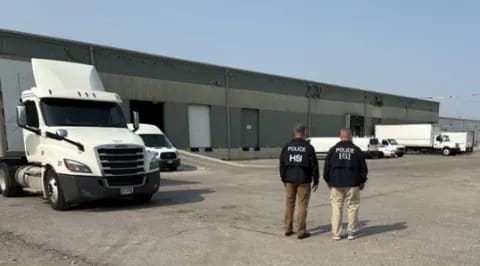
What are Homeland Security investigators doing in investigations of CDL training schools?
Department of Homeland Security
Beyond the sting operation, the administration identified more entry-level driver training schools that were suspected of fraudulent activities, including using improper driver certifications, falsifying training records, and failing to properly train drivers applying for CDLs. The agency said DOT would engage DHS’s Homeland Security Investigations in its investigations of these schools.
The announcements did not explain what role ICE or Homeland Security Investigations personnel were playing during roadside inspections or school investigations.
HDT asked DOT and DHS to explain what role Homeland Security investigators are playing in the CDL school investigations and how they are being trained to identify fraudulent driver training practices.
The response indicated that USDOT will engage DHS’s Homeland Security Investigations in its investigations of these schools, but neither DOT nor DHS offered answers to our other questions.
Shifting Immigration Policies Affect Truck Drivers
The reference to 21 drivers with non-domiciled CDLs in the administration’s announcement of this most recent enforcement sweep reflects the administration’s increasing scrutiny of those licenses.
A non-domiciled CDL is issued to people who are legally authorized to work in the United States but do not permanently reside in the state issuing the license.
The legality of immigrants being able to hold CDLs has been fuzzy, something the Trump administration has been trying to tighten.
The non-domiciled CDL rule put in place by the Trump administration barred some groups of immigrants with temporary status that previously had been allowed to obtain CDLs.
That included refugees, asylum seekers, and those in the Deferred Action for Childhood Arrivals program.
Numerous states issued “non-domiciled” CDLs to immigrants who were in the country legally on visas that were valid at the time of issue. But the Trump administration re-defined what types of visas are eligible for obtaining CDLs and went after states that weren’t doing a good job of cross-checking visa expiration dates against expiration of the CDL.
The administration argues that, unlike U.S. drivers, who have driving records accessible to states, those states don’t have a similar ability to access the driving records of foreigners and undocumented immigrants.
New Rules on Non-Domiciled CDLs
“This loophole allowed individuals with dangerous driving histories to obtain a trucking license simply by presenting an Employment Authorization Document (EAD), which does not screen for transportation safety,” it explained in February after finalizing a rule on non-domiciled CDLs.
That rule restricted eligibility to H-2A, H-2B, and E-2 nonimmigrant status holders, who undergo enhanced interagency vetting. EADs are no longer accepted as proof of eligibility; applicants must present an unexpired foreign passport and specific Form I-94 documentation.
And states must query the Systematic Alien Verification for Entitlements (SAVE) system to confirm every applicant’s lawful immigration status. (Although there have been complaints about the accuracy of the data in the SAVE database.)
Critics argue the administration’s changes are driven more by immigration policy than by evidence that immigrant truck drivers are disproportionately involved in crashes. Supporters counter that stricter verification and English-language enforcement close safety gaps in the commercial licensing system.
Credit: Source link