Ryder and International take autonomous trucking out of the lab and onto a live, 600-mile Texas freight lane.
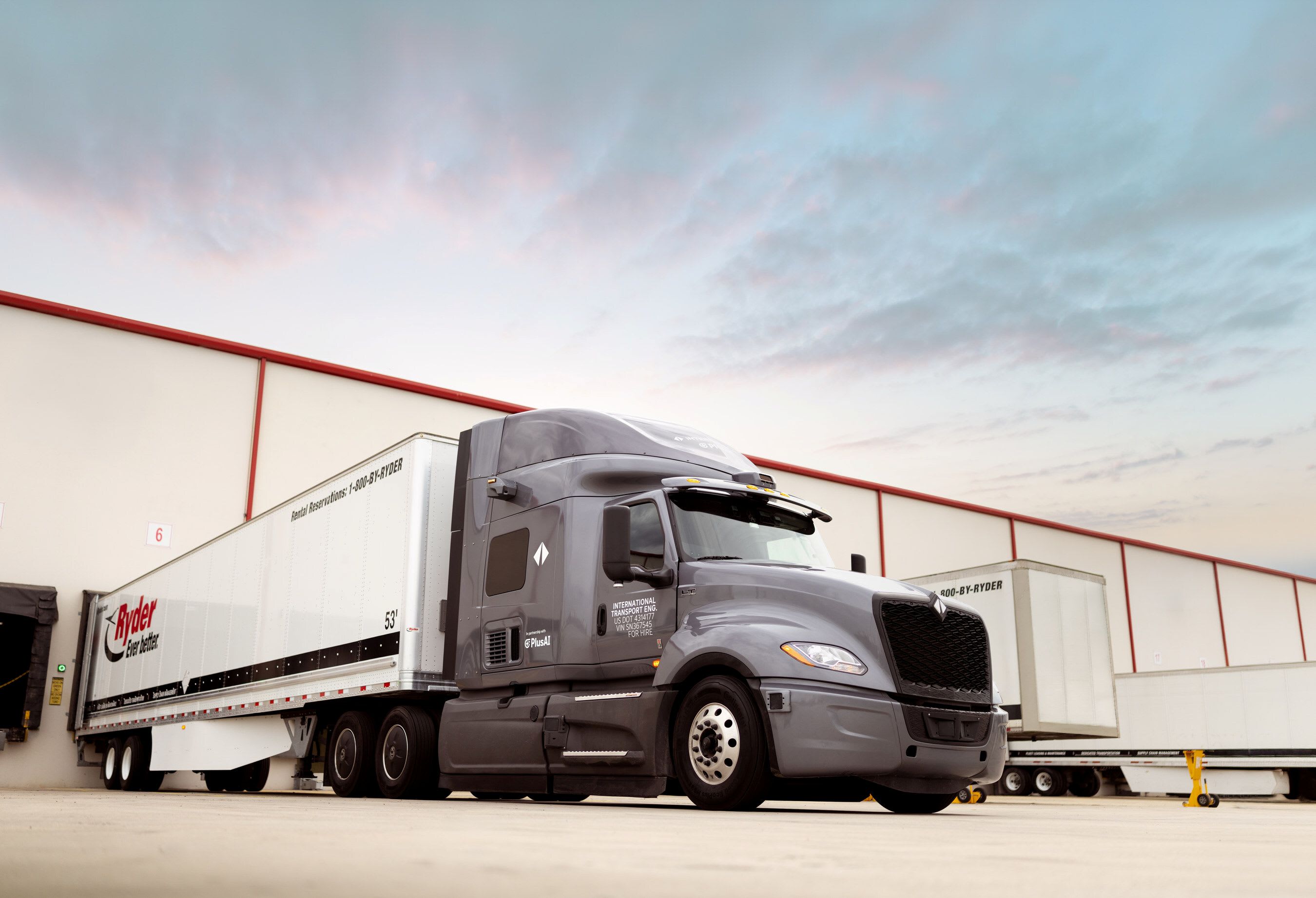
International Motors is taking another step toward commercializing autonomous trucking. The OEM is launching a real-world autonomous truck pilot program with Ryder System. The initiative will put a factory-integrated autonomous truck into daily freight service along a key Texas corridor.
The program marks Ryder as the first fleet to participate in International’s autonomous fleet trial initiative. The companies said early results point to strong on-time performance and high levels of autonomous operation.
Real-World Autonomy Moves Beyond Test Tracks
The pilot centers on a 600-mile round-trip route along Interstate 35 between Ryder facilities in Laredo and Temple, Texas.
Unlike earlier autonomy trials that relied heavily on controlled environments or dedicated infrastructure, this program embeds the truck directly into an existing supply chain operation.
An International LT Series tractor equipped with the OEM’s second-generation autonomous system is running the route daily for a Ryder customer. The goal: validate how seamlessly autonomous technology can integrate into live logistics networks without requiring new hubs or specialized terminals.
That approach reflects a broader industry push to make autonomy practical for fleets already operating nationwide networks.
Factory-Integrated Approach Targets Scalability
At the core of the pilot is International’s factory-installed autonomous platform. This system combines lidar, radar, and camera systems with the S13 Integrated Powertrain.
The truck runs PlusAI’s latest SuperDrive autonomous software, designed to enable long-haul highway driving.
International executives say the emphasis is on delivering an OEM-validated, end-to-end solution that fleets can deploy within their existing operations.
Rather than retrofitting trucks or building parallel infrastructure, the model focuses on integrating “virtual driver” capability directly into production vehicles and potentially lowering barriers to adoption.
Early Results Show Strong Performance Metrics
Initial data from the pilot suggests promising operational performance:
- 100% on-time delivery
- 92% of miles driven autonomously, with a safety driver onboard
- Pre-trip inspections under 30 minutes, aligning with current fleet practices
- Improved fuel efficiency (specific gains were not disclosed)
Those metrics indicate autonomous systems are beginning to meet baseline expectations for reliability and efficiency in long-haul operations—an important milestone for fleets evaluating the technology.
Focus on Practical Use Cases and ROI
Both companies say the pilot is less about proving the technology works and more about identifying where it delivers real value.
Key objectives include:
- Validating autonomy within active logistics networks
- Identifying near-term, high-value use cases
- Gathering operational feedback to refine production-ready systems
For Ryder, the shift from controlled testing to live freight operations represents a critical next phase.
One of the more notable aspects of the program is its focus on point-to-point operations and eliminating the need for dedicated autonomous transfer hubs.
That model could significantly simplify deployment by allowing autonomous trucks to operate directly between existing terminals, rather than relying on relay-style networks.
If successful, it may accelerate adoption by reducing both capital investment and operational complexity for fleets.
Industry Collaboration Drives Next Phase of Deployment
The pilot brings together three key players — International, Ryder, and PlusAI – and highlights the collaborative nature of autonomous trucking development.
The companies are using the program to gather data on:
- Vehicle uptime and serviceability
- Terminal and maintenance processes
- Operational integration within supply chains
Executives from both companies emphasized that real-world experience — not test environments — will ultimately determine how and where autonomy scales.
International said the broader goal is to transition from pilot programs to scalable, commercial deployments.
By validating performance in live freight operations and refining product features based on fleet feedback, the company aims to deliver a launch-ready autonomous solution that integrates vehicles, software, and support services.
Ryder’s participation signals growing fleet interest in moving beyond experimentation and toward practical applications — particularly on predictable, long-haul routes like the I-35 corridor.
Credit: Source link