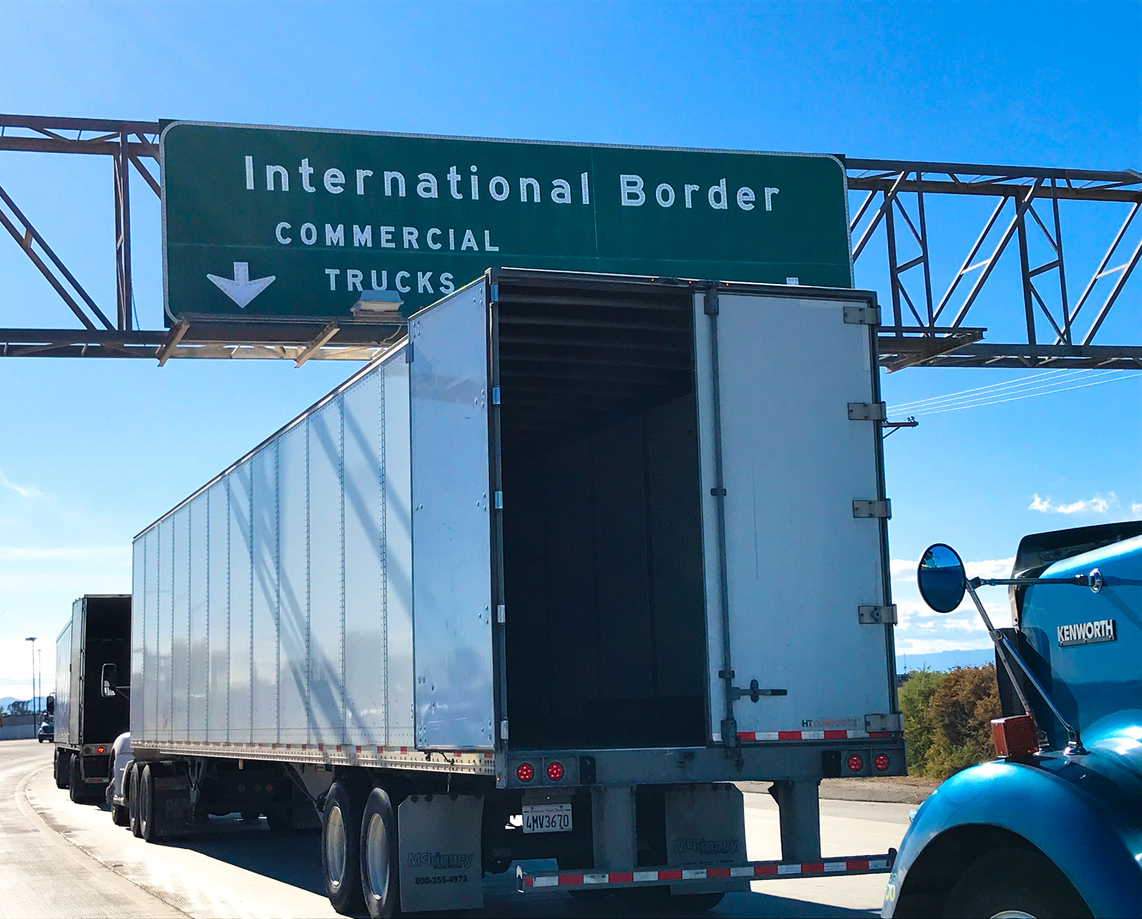
For commercial trucking operations, the opening represents an immediate improvement in efficiency and reliability. Modern customs facilities, expanded inspection capacity, and direct freeway-to-freeway connections will help reduce congestion, improve border processing, strengthen supply chain security, and divert heavy commercial traffic away from residential neighborhoods in Windsor.
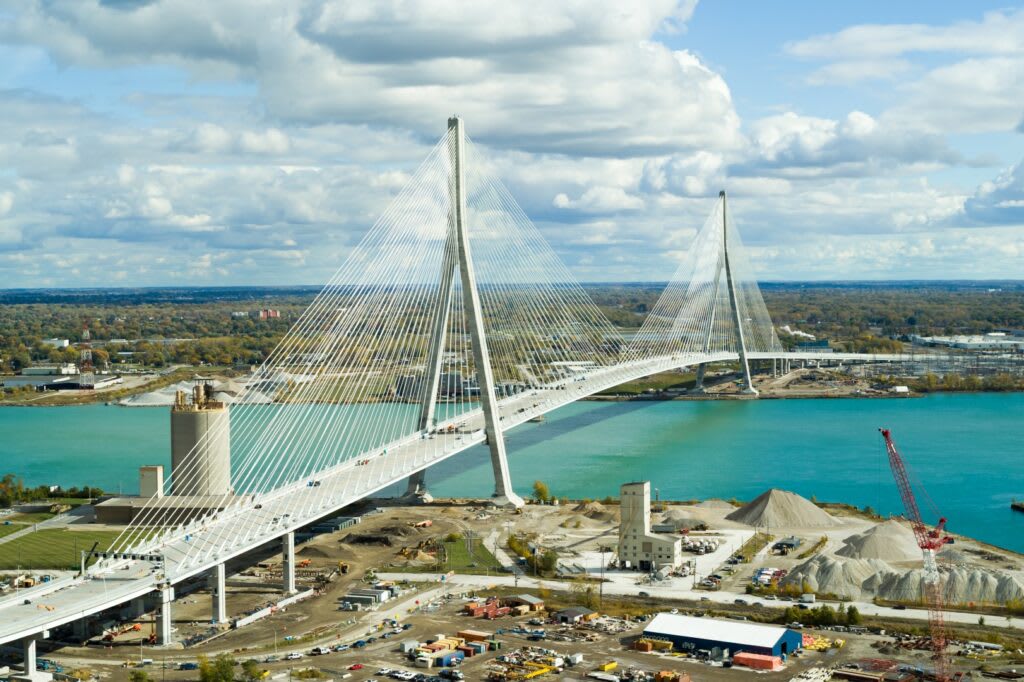
The long-awaited Gordie Howe International Bridge is finally opening, adding another much-needed crossing between Canada and Detroit.
However, the 1.5-mile-long bridge across the Detroit River, connecting Detroit with Windsor, Ontario, has become a flashpoint in the trade dispute between Canada and the United States.
Days before the July 27 planned opening, President Trump announced 50% tariffs on most Canadian goods entering the U.S., prompting Canada to cancel a joint opening celebration scheduled for July 27. This followed the postponement of a previously scheduled opening in June.
Although the joint celebration may not be taking place, as of July 22, the bridge was still scheduled to open to vehicle traffic on July 27.
The bridge was named after the Canadian hockey star who led the Detroit Red Wings to Stanley Cup championships in the 1950s.
About the Gordie Howe Bridge
The bridge provides a direct, highway-to-highway connection between Ontario’s Highway 401 and Michigan’s Interstate 75.
The six-lane, cable-stayed bridge features a half-mile-long main span, the longest of its kind in North America.
The crossing includes modern ports of entry on both sides of the border equipped with advanced screening and border management technologies.
There are 16 toll lanes, and 60 Canada and U.S. inspection lanes.
The toll rate for large commercial vehicles will be $8.60 per axle. Rates are higher for hazardous materials and oversized vehicles. Members of the “Breakaway” toll discount program will get a 20% discount, or $6.90 per axle.
The Windsor-Detroit Bridge Authority, created by Canada, will operate the bridge.
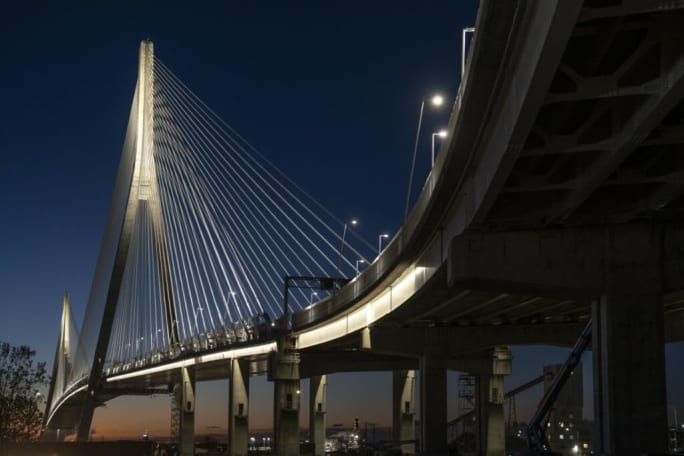
Detroit is the No. 1 port for truck traffic on the U.S.-Canada border. The new Gordie Howe International Bridge is a welcome addition for commercial traffic, which previously only had one option, the privately owned Ambassador Bridge.
Gordie Howe International Bridge
Why Trucking Needed the Gordie Howe Bridge
The new bridge is a big deal for commercial transportation.
The Windsor-Detroit corridor is the most important commercial gateway between Canada and the United States. Detroit is the No. 1 port for truck traffic on the U.S.-Canada border, according to the U.S. Department of Transportation.
Until now, the only route for large commercial trucks between Detroit and Ontario has been the aging Ambassador Bridge, which is privately owned.
For trucking operations, the opening means an immediate improvement in efficiency and reliability. Modern customs facilities, expanded inspection capacity, and direct freeway-to-freeway connections will help reduce congestion, improve border processing, strengthen supply chain security, and divert heavy commercial traffic away from residential neighborhoods in Windsor.
“For years, the Canadian trucking industry, together with manufacturers, exporters, labor organizations, and business leaders, advocated for a modern second crossing at Windsor–Detroit,” said Stephen Laskowski, President and CEO of the Canadian Trucking Alliance.
“The opening of the Gordie Howe International Bridge strengthens North America’s integrated supply chain and reinforces the economic partnership between Canada and the United States.”
A Long, Convoluted Process
It’s been a long, convoluted process to make the bridge a reality.
It started after the 9/11 terrorist attacks in 2001 when officials thought about what would happen if the Ambassador Bridge, the only crossing at Detroit, was attacked.
In the U.S., the bridge effort was led by Michigan Gov. Rick Snyder.
The private company that owns the Ambassador Bridge, fearing the loss of its monopoly on lucrative tolls, fought the bridge, including multiple legal challenges and even backing a 2012 Michigan referendum.
A deal between the two countries to build a new bridge was announced in 2012, but it took several years more to hammer out additional aspects of the deal, with another agreement announced in 2015.
Construction on the bridge began in 2018, with Canada covering the cost.
Credit: Source link