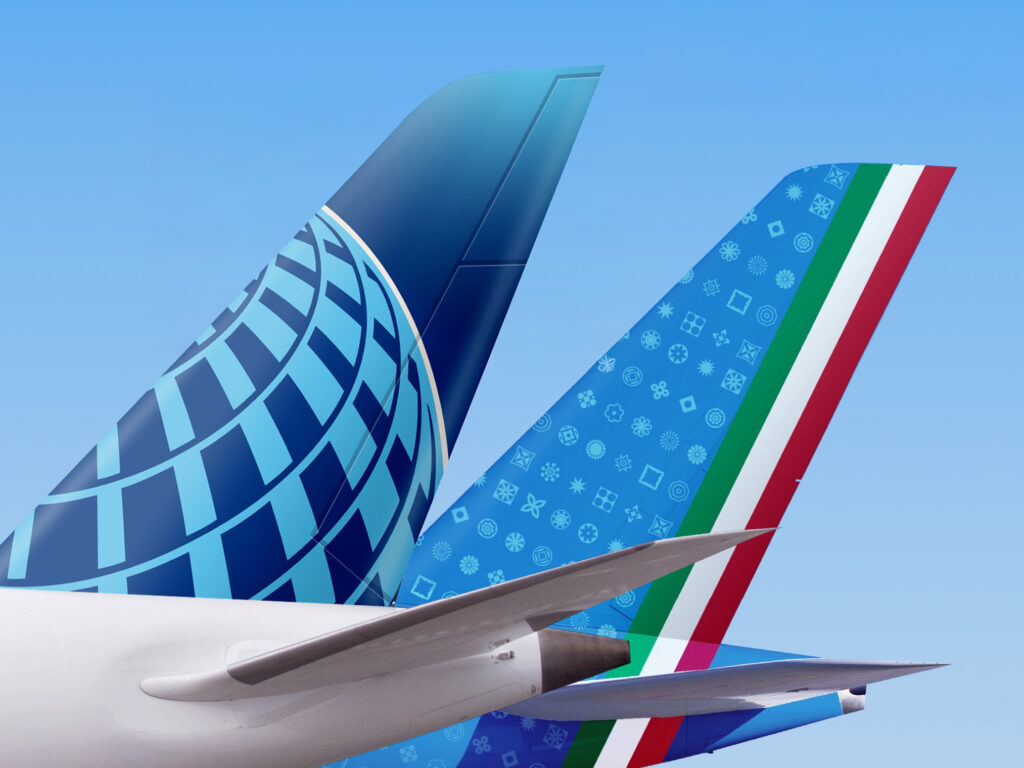
The transatlantic skies between the U.S. and Italy are about to get busier—and far more connected. The U.S. Department of Transportation has approved a new codeshare agreement between United Airlines and ITA Airways, paving the way for the two carriers to sell seats on each other’s flights and extend their reach on both sides of the Atlantic.
The deal comes as ITA—Italy’s national airline—prepares to join Star Alliance in 2026, following its acquisition by Lufthansa Group. Both carriers have been granted blanket authority to place their codes on each other’s services between the U.S., Italy, and onward destinations, subject to regulatory approval.
A New Web of Connections
Under the arrangement, ITA will place its “AZ” code on United-operated transatlantic flights and onward domestic connections from key U.S. hubs such as Chicago (ORD), San Francisco (SFO), Washington Dulles (IAD), and Los Angeles (LAX). In return, United will add its “UA” code to ITA-operated flights between Italy and the U.S., as well as to intra-European and third-country services.

Photo: Courtesy of Air Canada
The move follows a similar agreement ITA signed with Air Canada in July, which includes reciprocal loyalty earning and redemption. “Our partnership allows Air Canada passengers traveling to Rome to book and seamlessly connect to 10 popular destinations across Italy, Africa, Israel, and Albania,” said Mark Galardo, Air Canada’s Chief Commercial Officer. “Likewise, ITA Airways customers arriving in Toronto will benefit from access to 10 key Canadian and U.S. cities across our network.”
These agreements form part of ITA’s strategy to strengthen ties with Star Alliance founding members ahead of its full integration.
Competition Heats Up Over the Atlantic
The U.S.–Italy corridor is one of the most hotly contested transatlantic markets. According to David Casey at AviationWeek, OAG Schedules Analyser data for the week of August 11, 2025, shows ITA is the fourth-largest airline by seat capacity between the two countries, with 33,766 weekly two-way seats and a 16 percent market share. With the recently-launched route between its hub in Atlanta and Naples, Delta Air Lines leads with 27.3 percent, followed by United at 22.4 percent and American Airlines at 20.4 percent.

Photo: Courtesy of GESAC
United currently serves 11 routes between the U.S. and Italy, linking its hubs in Newark, Chicago, and Washington Dulles to cities including Rome, Milan, Naples, Palermo, and Venice.
Conversely, ITA operates from Rome to seven U.S. gateways—Boston (BOS), Chicago (ORD), Los Angeles (LAX), Miami (MIA), New York (JFK), San Francisco (SFO), and Washington (IAD)—but does not yet serve several of United’s major hubs, including Denver (DEN), Houston (IAH), and Newark (EWR).
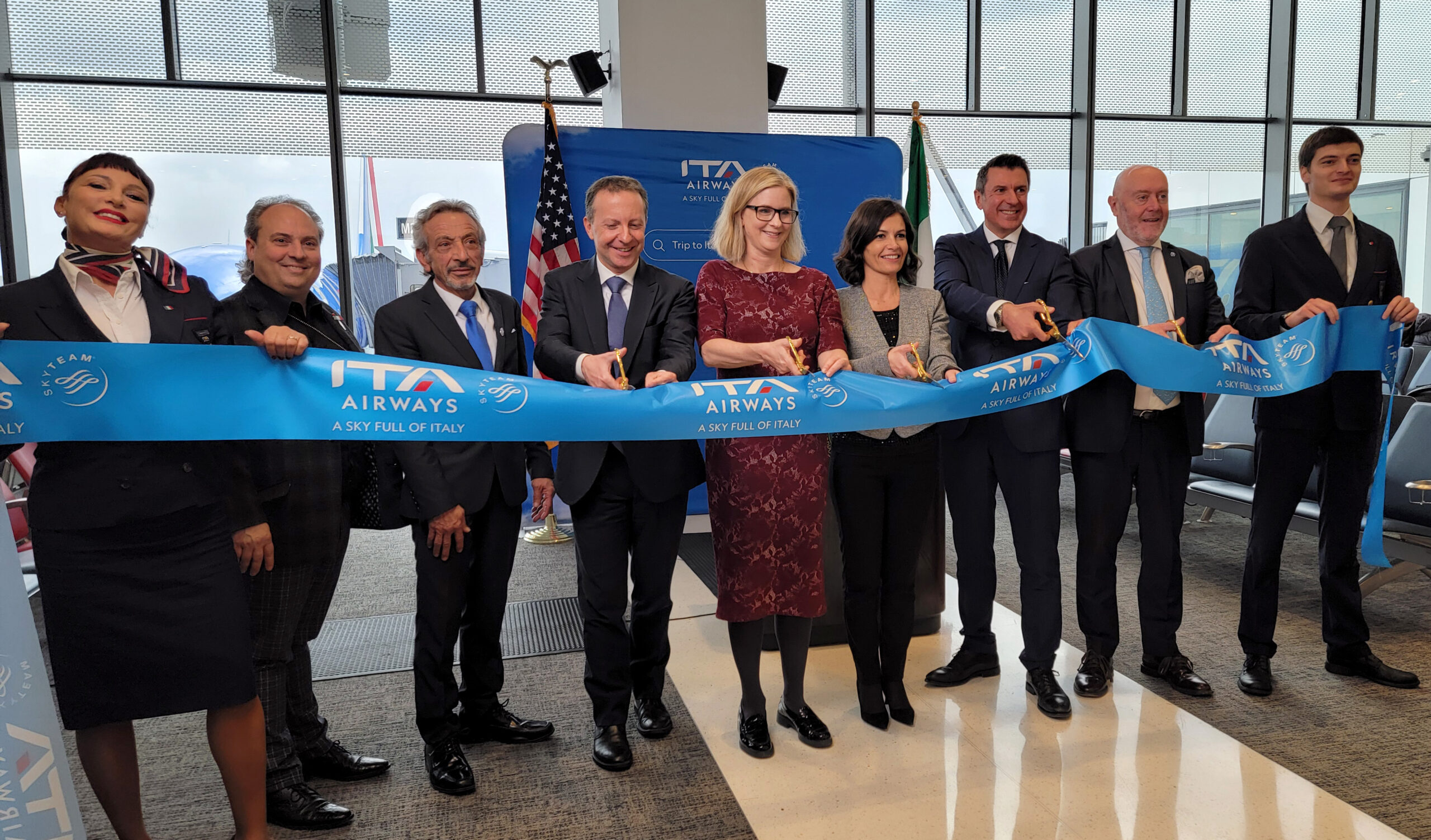
Photo: Ribbon cutting ceremony Chicago – Rome route. Courtesy of ITA Airways
This summer, Casey says, more than 5.6 million two-way seats are available between the two countries—a 12 percent year-on-year increase. The codeshare could give both airlines a stronger competitive foothold in this expanding market.
Ambitious Growth Path
Alongside these network moves, ITA’s Board of Directors has approved a 2026–2030 Business Plan aimed at strengthening the airline’s competitive position and cementing its role as Italy’s reference carrier. The strategy is built on three pillars: expanding long-haul operations, modernising the fleet, and leveraging Lufthansa Group’s global scale through operational and commercial synergies.
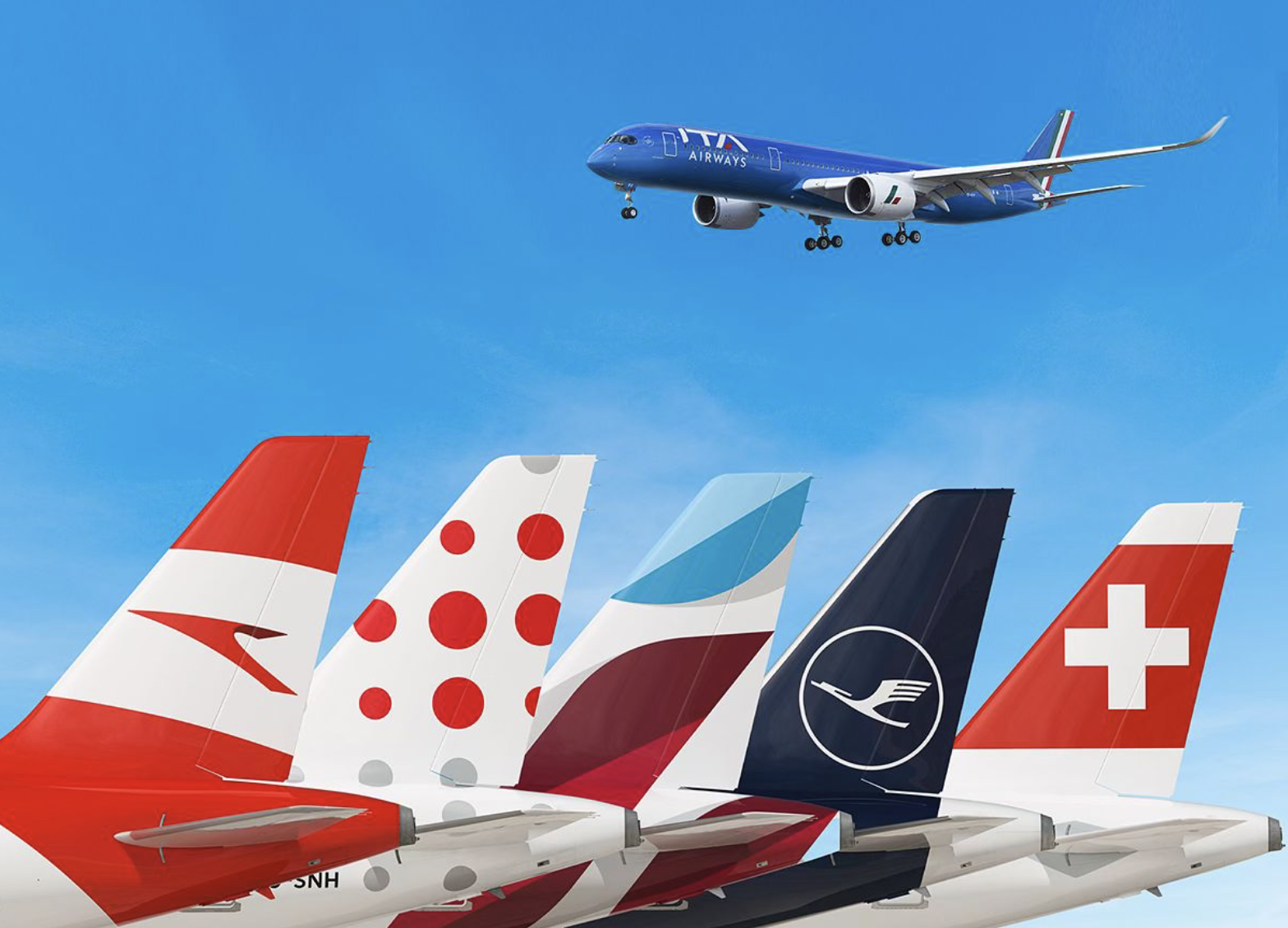
Photo: Courtesy of Lufthansa
Long-haul growth will take center stage, with new intercontinental routes planned from Rome to North America, South America, Asia, and Africa. The expansion is designed to attract inbound tourism, enhance Italy’s global trade links, and increase the airline’s relevance in international aviation.
From 2026, ITA will add one new long-haul aircraft annually, moving toward a 100-aircraft fleet of next-generation models by 2030. This renewal will reduce fuel consumption and environmental impact in line with EU sustainability regulations, while introducing onboard innovations to improve passenger experience.

Photo: Courtesy of Airbus SAS
Full Star Alliance integration is expected by early 2026, alongside pending joint ventures on Europe–North America and Europe–Japan routes. These will connect ITA’s Volare loyalty programme with Lufthansa’s Miles&More, integrate cargo operations, and improve passenger connectivity.
“Today marks another milestone for the company,” said Joerg Eberhart, CEO and General Manager of ITA Airways. “This plan enables us to grow sustainably with the support of Lufthansa Group synergies, expanded connectivity, and a commitment to service excellence.”
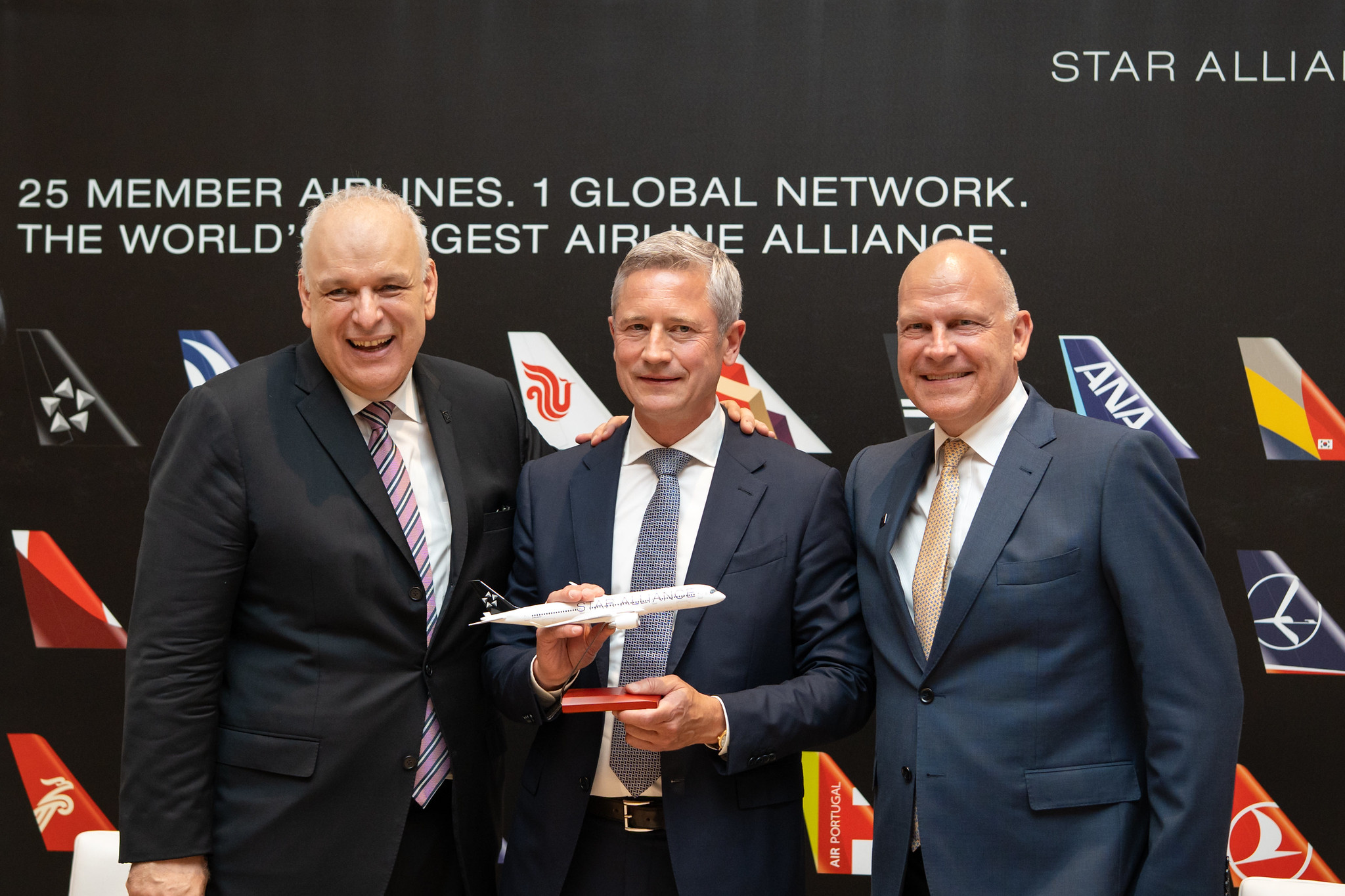
Photo: Theo Panagiotulias, Jorg Ebehart (ITA Airways) and Campbell Wilson (Air India). Courtesy of IATA
Sandro Pappalardo, President of ITA Airways, added: “We are laying the groundwork to continue as Italy’s reference carrier and to enhance our contribution to the national economy.”
A workforce development programme will also launch in 2026, focusing on employee engagement and long-term competitiveness in the global market.
ITA’s Fine Dining Upgrade
Even as ITA strengthens its network and fleet, it’s enhancing the onboard experience. This summer, Business Class passengers on intercontinental flights from Italy are enjoying a menu designed by Moreno Cedroni, the two-Michelin-starred chef behind Madonnina del Pescatore in Senigallia.

Photo: Courtesy of ITA Airways
Cedroni—celebrated for reinterpreting Italian cuisine with global influences—has crafted four seasonal dishes that pay tribute to the sea and the environment. The meal begins with Polpo al vapore e cous cous (steamed octopus with couscous), followed by Matriciana di pesce (seafood-inspired amatriciana). The main course, Filetto di spigola in guazzetto (sea bass in broth), is finished with a rich Mousse al cioccolato fondente.

Photo: Courtesy of ITA Airways
It’s part of ITA’s rotating chef program, which enlists both established and emerging culinary talents to offer passengers an evolving taste of Italy.
Looking Ahead
The United–ITA codeshare is more than a network expansion—it’s a strategic step toward ITA’s Star Alliance debut. For travelers, it promises more seamless bookings, a broader range of destinations, and integrated loyalty benefits.
Paired with the airline’s ambitious growth plan, fleet renewal, and elevated onboard dining, the Rome–Chicago or Los Angeles route—and countless others—may soon feel less like a connection and more like an experience in its own right.
Credit: Source link