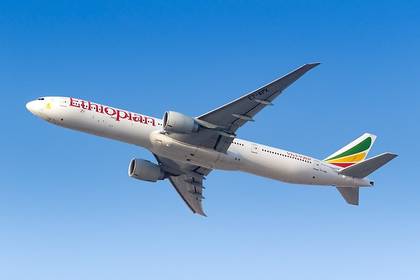
The numbers are staggering when you read the specifications of a Boeing 777-300ER. The flagship widebody can takeoff with a maximum of 45,220 gallons of fuel aboard. The jet’s weight can tip the scales at 660,000 pounds when it’s fully fueled for a 5,600 nautical flight. The question is, how good on gas is this leviathan of the sky? You might be surprised to learn that the 777-300ER can get roughly 70 miles-per-gallon (MPG) when you break it down by fuel used per passenger.
That number is variable depending on how far it actually flies, cargo payload, weather, and how many passengers are actually aboard. The giant  Boeing can seat anywhere from 368 to 550 travelers depending on layout. What engineering brilliance makes it possible for such a gigantic machine to achieve the same fuel efficiency of a motorcycle or hybrid car? Let’s break down the technicals and dive into the details to find out.
777 MPG: Breaking Down The Math

Start with the fuel flow. A 777-300ER cruising on a long intercontinental leg burns around seven tons of jet fuel an hour. Converting that to pounds is 15,432 lbs and then divided by fuel density of 6.7 lbs per gallon. That gives an estimated fuel flow of about 2,300 gallons per hour (gph). In that same hour, the aircraft can cover about 553 miles at a cruising speed of 0.72-Mach (890 kmh). Here’s a video by an actual 777 pilot doing his own version of fuel calculations:
Dividing distance traveled (553 mi) by fuel consumed (2,300 gal) shows that the 300-ton widebody moves only about a quarter-mile per gallon of fuel. To make that modest number translate to the more impressive figure “70 MPG,” simply divide the fuel for every person on board. Multiply the whole plane’s MPG of 0.24 by a realistic long-haul load of roughly 300 passengers. The result is about 70 seat-miles per gallon.
That number is what planemakers and airlines quote as an efficiency figure per passenger, not for the airplane as a whole. That may not seem right at first, but considering that for many flights the plane is replacing the alternative of a road trip, then the comparison is directly relatable. For other flights, the only other option is a long sea voyage, or nothing at all. Every flight is different, so that figure varies, but the average remains close to this figure.
The Heart Of The Beast

Until the development of the GE9X began, the GE90 was the most powerful turbofan engine ever made, pumping out 115,000 pounds (512 kN) of thrust. The GE9X is set to break that record in the future but has yet to enter service. At a ratio of 9:1, the GE90 has one of the highest bypasses of any commercial jet engine ever made. The air volume through the core is lower proportionally, yet the thrust output remains incredibly powerful thanks to GE Aerospace’s innovative design which saves fuel without dropping performance.
In 2006, GE heralded the outstandingly successful service entry of its GE90-115B, which was chosen by Boeing to power the 777-300ER, as well as the 777-200LR and 777 freighter. It even surpassed predictions, using 3.6% less fuel in service than anticipated. GE estimated that saving was equal to 1.3 million liters of fuel. Lorraine Bolsinger, vice president, Ecomagination, for General Electric Company commented in a company news release:
“For well over a decade, Boeing and GE have worked together to create a long-range aircraft with unprecedented efficiency. Boeing’s longer-range 777s are changing the face of aviation.”
The first example was put through its paces by Air France from 2004 to 2006 and demonstrated the engines incredible power, reliability, and efficiency. In its first two years, the engine proved to be 99.97% reliable based on GE’s data. At the time of its launch, the engine helped make the 777-300ER one of the most fuel-efficient long-haul jets ever made and remains high on the leaderboard despite newer aircraft coming online in the years since then.
By The Numbers: 777-300ER Specs

The 777-300ER at first glance looks to simply be a stretch of the original 777-200, yet almost every major area was re-worked. Those small enhancements gave the giant twin-engine jet a payload-to-range balance once reserved only for four-engine flagships, like the 747. At the core of the redesign is the GE90-115B with its 128-inch composite fan, whose carbon-fiber blades were a first in commercial turbofan engines.
Boeing replaced conventional winglets with two-meter raked tips, extending wingspan while reducing drag without. The raked tip works in concert with sealed control-surface gaps, optimized fairings and a re-profiled inboard wing box to handle the heavier engines. Below is a snapshot of the key specifications according to Boeing:
|
Spec |
777-300ER |
|---|---|
|
Seats (2-class) |
392 (variable) |
|
Range NM (km) |
7,370 NM (13649 km) |
|
Length |
73.9 m (242 ft 4 in) |
|
Wingspan |
64.8 m (212 ft 7 in) |
|
Height |
18.5 m (60 ft 8 in) |
|
Engine |
GE90-115B |
In service, the big Boeing jet burns around 22 tons less fuel (or more) than most quadjets (four-engine) like the A340, 747 or A380 over a similar distance. The -300ER also only takes about 300 meters more runway to takeoff than the shorter 777-200ER. The clear economics hooked nearly all long-haul passenger operators, pushing deliveries to over 800 airframes. Its exceptional performance and efficiency has made the 777-300ER the benchmark against which all long-range twins, including Boeing’s own 787 Dreamliner, 777X and Airbus’s A350XWB, are measured.
State Of The Art Jet Design

Digital pre-assembly helped correct outer skin deviations within thousandths of an inch, giving the 300ER a coefficient of drag lower than first-generation 777s. More drag savings come from an automatic aft-body fuel-ballast system that rebalances weight in cruise, helping trim the jet slightly nose-up and lowering drag even more.
The stretched fuselage would normally threaten a tail-strike at rotation, so Boeing invented what it calls the semi-levered main landing gear. It is essentially a second hydraulic strut inside the main gear. The system delivers a few extra degrees of rotation without demanding a longer runway, then retracts to leave the gear in conventional configuration for taxi and landing.
Structural weight was brought down even as payload went up, thanks to special aluminum alloys that replaced conventional aluminum in the center wing box and floor beams, trimming weight while adding stiffness. Large portions of the control surfaces and secondary structure were moved to carbon-fiber composite. The innovative control surface construction removed hundreds of fasteners, saving weight and several dozen inspection points at the same time.
The High Tech Flight Deck

Boeing’s 777-300ER aircraft has undergone significant changes in its cockpit, also helping with fuel savings. The flight controls are powered by triple-redundant fly-by-wire computers that work hand-in-hand with the engines. The cockpit features six large-format LCD digital panels that help pilots keep the energy-management picture in view at all times.
The flight computers automatically adjust control surface positions in turbulence to unload the wings and keep the ride smooth. Controller-pilot datalink (CPDLC) allows the crew to request altitude or route changes by text message instead of waiting for a congested frequency. Those displays also show “step-climb” prompts, helping the pilots move the jet to thinner air where the fuel consumption of the GE90s improves even more.
The flight computer constantly feeds in live wind data updates, making tiny course corrections to use the favorable jet stream or dodge headwinds, cutting fuel burn on transoceanic and transcontinental legs. The permanent, panel-mounted Class-3 electronic flight bag (EFB) performs performance calculations in seconds, optimizing engine performance and extending life. The satcom carries engine-health snapshots to airline operations centers every five minutes, allowing maintenance planners to schedule optimal preventative maintenance.
The Next Generation Widebody: 777X

Boeing’s new flagship will be the 777X when it debuts next year. Boeing claims it will be 10% more fuel efficient than today’s 777-300ER, with lower emissions to match. The planemaker estimates about 13-15% better economy when comparing MPG by seat. The 777X will have industry-first folding wingtips and new GE9X powerplants with a 134-inch composite-blade fan that is even larger than a 737 fuselage.
|
Spec |
777-9 |
|---|---|
|
Seats (Typical 2-class) |
426 |
|
Range |
7,285 nmi (13,500 km) |
|
Length |
251 feet, 9 inches (76.72 m) |
|
Wingspan |
On ground: 212 feet, 9 inches (64.85 m) Extended: 235 feet, 5 in (71.75 m) |
|
Engine |
GE9X, supplied by GE Aviation |
It has a 10:1 higher bypass ratio and fewer fan blades than the GE90 with double the parts durability, quieter noise levels, and even more thrust – peaking at 134,000 pounds. Stan Deal, president and CEO of Boeing Commercial Airplanes:
“Our Boeing team has taken the most successful twin-aisle jet of all time and made it even more efficient, more capable and more comfortable for all. Today’s safe first flight of the 777X is a tribute to the years of hard work and dedication from our teammates, our suppliers and our community partners in Washington state and across the globe.”
Weight is the third pillar of the 777X fuel savings. Although the 777-9 is four frames longer and carries 34 more passengers in a typical two-class cabin, its operating empty weight is within one ton of its predecessor. It will also have a much more modern and spacious cabin, with integrated LED cabin lights, and bigger overhead bins. The new model even features a rare upgrade for no-clean-sheet designs: enlarged windows with integrated dimming technology. The next iteration of the 777 series promises to be one of the greatest installments yet in the storied legacy of Boeing widebody jets.

- ICAO Code
-
B77W
- IATA Code
-
77W
- Amount Built
-
332
- Crew
-
2
- Passengers
-
365 – 500
- Engine Count
-
2
- Length
-
242 ft 4 in (73.86 m)
Credit: Source link