Billions in potential U.S. tourism revenues are lost annually. There is no offsetting gain in protecting cruise-ship building jobs.
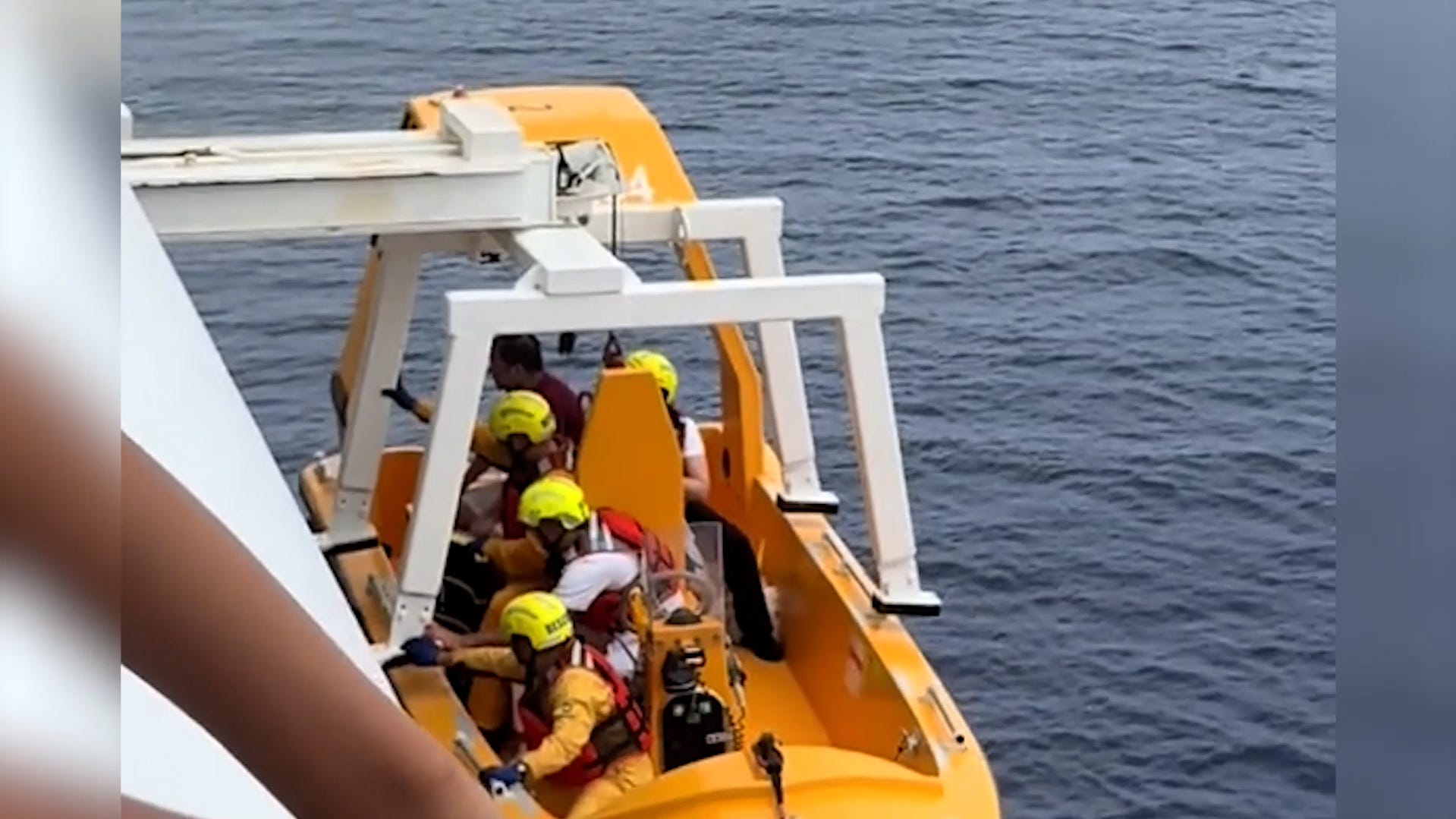

Father rescues daughter after she falls overboard from Disney cruise
A father jumped after his young daughter who fell overboard while on a Disney cruise ship.
As summer vacations begin, millions of families board cruise ships in Florida, New York, Texas, Washington state and California to set sail for the Caribbean, Europe or Alaska. For many, it’s a vacation with too much food, lots of sunshine, over-the-top entertainers, and the luxury of needing to unpack only once.
Behind every smiling tourist is a quiet economic engine: this industry supports middle-class livelihoods for tens of thousands of workers on board — from places like India, the Philippines and Ukraine — about 290,000 jobs in the United States and more in ports worldwide.
Modern cruise ships are floating cities. They require people to run, clean, and maintain them, as well as feed and care for guests on board. Moreover, they are the products of a vast, ill-advised multi-continent industrial policy strategy. Like many industrial policies, from solar panels to semiconductors, the cruise provides a model of what is wrong with such policies.
Here’s how the cruise industry works
Although U.S. politicians across the political spectrum have supported national policies to subsidize and protect “key” industries, they are still a bad idea. The cruise industry provides a vivid microcosm of how it works: the policies cost billions of tax dollars, benefit people they weren’t intended to, and harm the economies that impose them.
In the cruise industry, Europe gets the worst deal. It builds almost all the world’s cruise ships. Governments in Italy, Germany and France own controlling shares of the major shipyards. But cruise ship margins are razor-thin, and all of the yards have required bailouts and subsidies. The market is tiny, with only a handful of major buyers worldwide, and all of them are massive, sophisticated companies with leverage. So, Europe builds cruise ships at a loss for firms with tremendous bargaining power.
And the profits from operating the ships? They mostly leave the European Union. Of the four dominant cruise operators — which control more than 80 percent of the global market — three (Carnival, Royal Caribbean and Norwegian) are publicly traded in the United States, put top executives in Florida, and cater mainly to U.S. customers. The fourth, MSC, is a Swiss company with many cruise executives in Miami and is privately held.
Branding, themes, shows, culinary design, and much interior styling are produced by largely American and British teams, primarily targeting U.S. or U.K. tastes. The EU bolts together metal. America and, to a lesser extent, the UK gets the money, imagination and joy.
There’s more. Even though the United States is a net beneficiary of the EU’s industrial policy, American laws ruin the win. Enter the Passenger Vessel Services Act (PVSA), enacted in 1886. That law requires that any cruise entirely within the United States take place on a ship owned, staffed and built by Americans. This is impossible because the United States doesn’t build cruise ships and never has. To comply with the PVSA, any cruise ship that begins and ends in a U.S. port must first stop in a foreign country. Worse, unless the foreign stop is in a “distant” port (not Canada, Mexico, most of Central America or any nearby islands), the ship must return to the same U.S. port where it began its cruise.
US loses billions in potential tourism, annually
The costs are real. Ships sailing from the West Coast to Alaska or Hawaii sometimes make unnecessary foreign stops where nobody can disembark. More damagingly, the PVSA outlaws entire business models. You can’t run a one-way family cruise from New York to Port Canaveral as a theme park vacation kickoff. You can’t offer foliage-season cruises from Baltimore to Portland, Maine. Even a closed-loop Miami–Key West–New Orleans-Miami trip is illegal.
Billions in potential U.S. tourism revenues are lost annually. There is no offsetting gain in protecting cruise-ship building jobs. Throughout the post-World War II era, the United States built one large passenger vessel, the ocean liner SS United States, which was launched in 1951. Although it was different from a cruise ship, small by modern standards, it received significant taxpayer funding based on its potential military use.
Why does the PVSA endure? Likely due to the Jones Act, a 1920 maritime law that protects a real (if inefficient and economically destructive) domestic cargo industry by imposing U.S.-built-owned-operated and crewed requirements. The PVSA just hides under its lobbying umbrella.
Eli Lehrer is president and co-founder of the R Street Institute. He wrote this for InsideSources.com.
Join the Conversation: The Palm Beach Post is committed to publishing a diversity of opinions. Email us at [email protected]. Letters are subject to editing, must not exceed 200 words and must include your name, address and a daytime phone number to confirm the letter is for publication. We only publish names and cities with the letters.
Credit: Source link