
Brakes will be a commercial vehicle inspection focus August 23-29 during the Commercial Vehicle Safety Alliance’s Brake Safety Week.
During this seven-day focused inspection and enforcement initiative, inspectors in Canada, Mexico and the U.S. will conduct routine commercial motor vehicle inspections with a special focus on brake systems and components.
Vehicles with brake-related out-of-service violations, or any other out-of-service violations, will be removed from roadways until those violations are corrected.
During 2025’s Brake Safety Week, commercial motor vehicle inspectors placed 2,296 vehicles out of service due to brake-related violations. That is a 15.1% out-of-service rate.
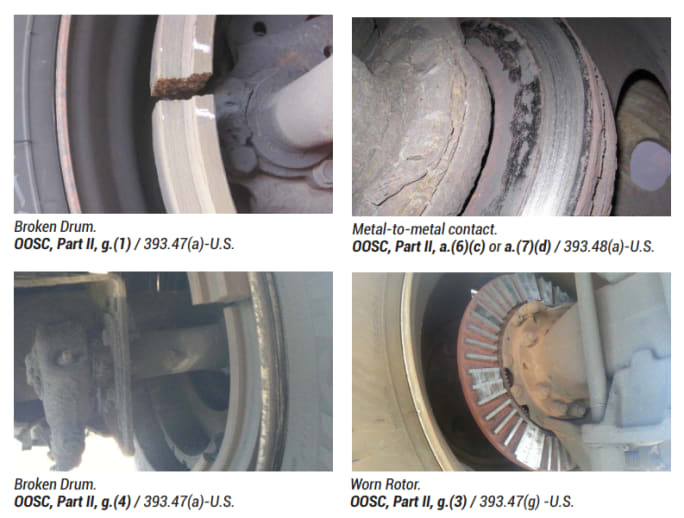
Examples of drum and rotor problems found during brake inspections.
This year, inspectors will focus on drums and rotors, as they did in 2025.
In 2025, 113 drum-and-rotor violations were found during 15,175 inspections. Thirty-nine commercial motor vehicles were placed out of service for rotor and/or drum violations.
Brake drum and rotor issues not only affect your brake efficiency. Broken pieces of drums and rotors can become dislodged on the road, damaging other vehicles or causing injuries or fatalities.
What is Brake Safety Week?
During Brake Safety Week, inspectors will report data to CVSA about vehicle inspections and brake-related violations. CVSA will collect and analyze all submitted brake-related data and release the results later this year.
In addition to inspections, CVSA said Brake Safety Week also emphasizes education and awareness. Inspectors and officials will engage with drivers, motor carriers and mechanics to highlight the role of preventive maintenance in reducing crashes and saving lives.
Motor carriers and drivers are encouraged to perform thorough pre- and post-trip inspections and ensure all brake components are in proper working condition before operating their vehicles.
CVSA Brake Inspection Tips
CVSA offered some tips from commercial motor vehicle inspectors for drivers and motor carriers.
- Inspect visible portions of the drum or rotor as part of your pre- and post-trip inspections.
- Look for signs of cracked or broken pieces in the friction surface of the rotor.
- Look for cracks that run through to the outer portion of the drum or missing pieces, where visible.
- On disc brakes, pay attention to the condition of the rotor. Heavily rusted rotors across the entire friction surface indicate an inoperative brake.
- If the rotor is grooved, indicating metal-to-metal contact, that means the brake pads are worn and the shoe is making contact with the rotor.
- Ensure the rotor is not worn to the extent that the center vents are exposed.
- Make sure all repairs are consistent with the brake manufacturer’s requirements and guidelines.
- Note any issues in your driver vehicle inspection reports and report them to the motor carrier.
Credit: Source link