Winter roadway “pileups” aren’t one crash — they’re a chain reaction. Here’s what triggers them, how truck drivers can spot the danger early, and what to do if suddenly trapped in the mess.
If you’ve driven winter highways for any length of time, you’ve seen the videos on YouTube. Snow blowing violently. A wall of white, taillights flashing, and then, one by one, cars and trucks alike sliding, skidding, and crashing into a growing tangle of twisted metal.
The media calls them winter “pileups” and covers them like they’re one giant crash.
But they usually aren’t.
Lt. Mike Shaw, a public information officer with the Minnesota Highway Patrol, says what the public thinks of as a single event is more like “20 to 25 smaller traffic crashes” stacked on top of each other.
He compares it to Daytona during a NASCAR race. He says there are usually too many vehicles traveling in a tight pack, too fast for conditions. None of those drivers has the room they need if anything unexpected happens.
And in winter driving, Shaw says, the unexpected always happens.
One driver checks up. Someone else hits the brakes. The first impact happens. And the rest, he says, is basically physics and bad decisions.
Are Pileups Becoming More Common?
Winter pileups are in the news a lot these days. But are they happening more often? Or does it just seem that way because it’s easier for media outlets to get video, from individuals with phones, dashcams, highway traffic cameras, and drones?
In fact, troopers say they are seeing more of these chain-reaction events than they used to.
Shaw agrees that the prevalence of cameras makes it much easier for a large winter pile-up to go viral now.
But he also points to something more troubling: Riskier driving behavior. This includes tailgating, drafting, and overconfidence.
“We see a lot more of this behavior from drivers today,” Shaw says. “Including from commercial drivers. And state troopers will tell you that weather doesn’t cause crashes. Drivers do.”
Troopers in the Upper Midwest will tell you these multi-crash events aren’t new.
What’s changing is the scale of the crashes.
That’s because there are more vehicles on the road, more pressure to keep moving, and more drivers who don’t recognize the moment when “manageable” weather becomes unsafe.
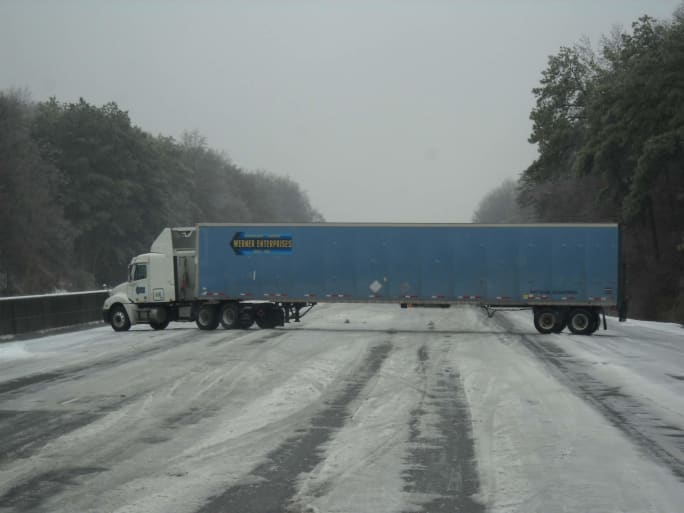
Strong winds and icy conditions can cause semi-trucks to jackknife,one of the most common causes of winter pileup crashes.
In both Minnesota and North Dakota, the common thread is the same: People driving like the road is perfectly fine.
Until it very suddenly isn’t.
North Dakota Highway Patrol Lt. Luke Hendrickson says reduced visibility is a key accelerant. Drivers get disoriented, lose reference points, and don’t even know where they are on the roadway.
In North Dakota, he adds, strong, blizzard-force winds can dial the danger up dramatically — especially for lightly loaded or empty tractor-trailers.
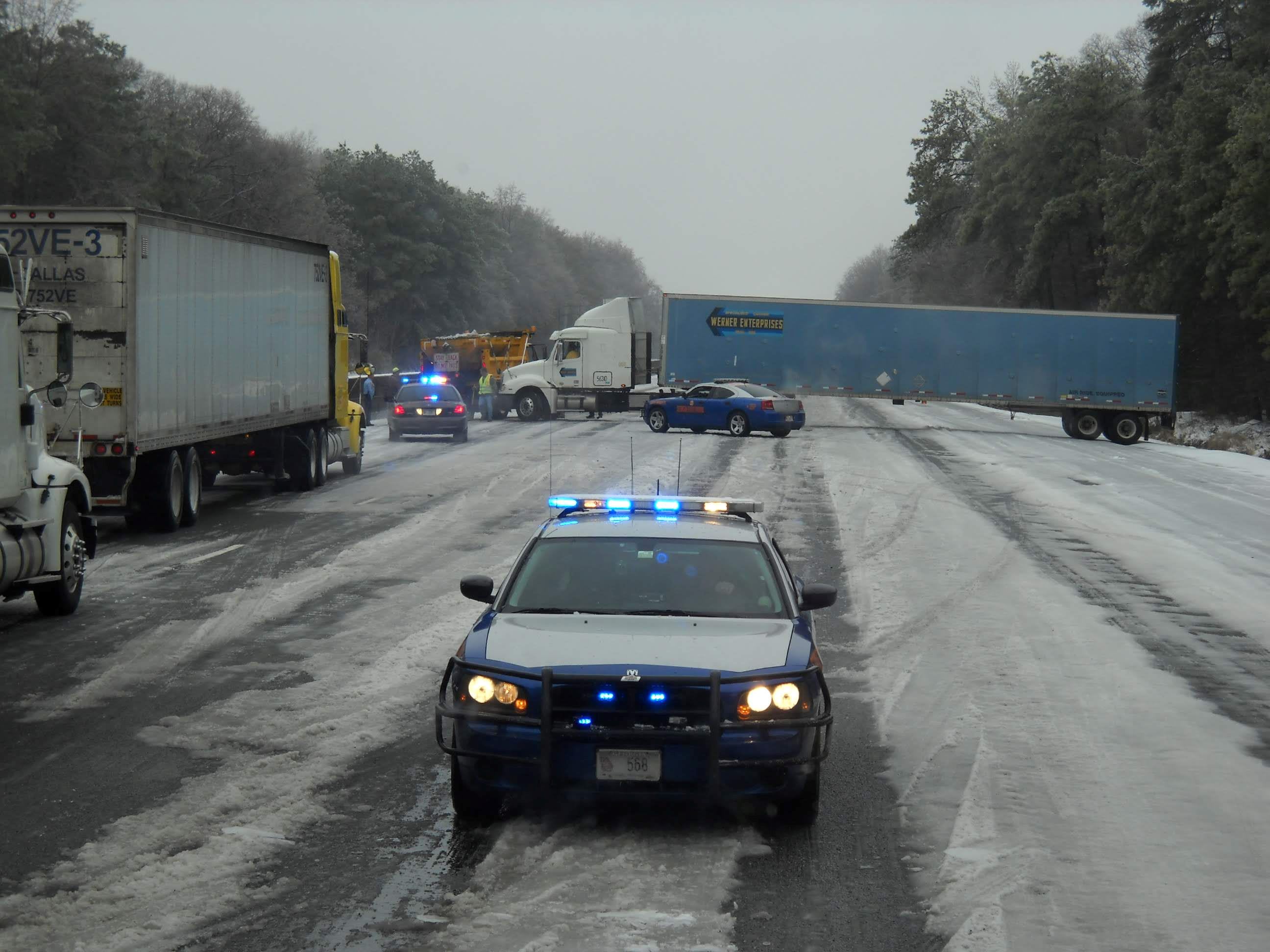
“Winter weather conditions can change in the blink of an eye in North Dakota,” he warns. “And if a truck is underloaded, or light, or the wind catches them right, they’re going to leave the roadway. Then they jackknife and potentially block a lane, or several lanes. And then trailing vehicles start to hit them from behind.”
Sometimes it isn’t even a classic “pile-up,” Hendrickson adds. One truck goes off the road, other vehicles get stranded behind it, and suddenly, there are disabled or parked vehicles stacked up in a zero-visibility corridor.
That’s how a bad day becomes a closed interstate and a long night for stranded drivers.
Defensive Driving for the Win
In inclement weather, the best course of action is to simply not be on the road at all.
But that’s not how the real world works. And it’s worth noting that winter weather conditions can degrade with stunning speed. And it’s not always easy for inexperienced drivers – particularly those from warmer climates where snow and ice are rare – to spot those changes and know when it’s time to get off the road.
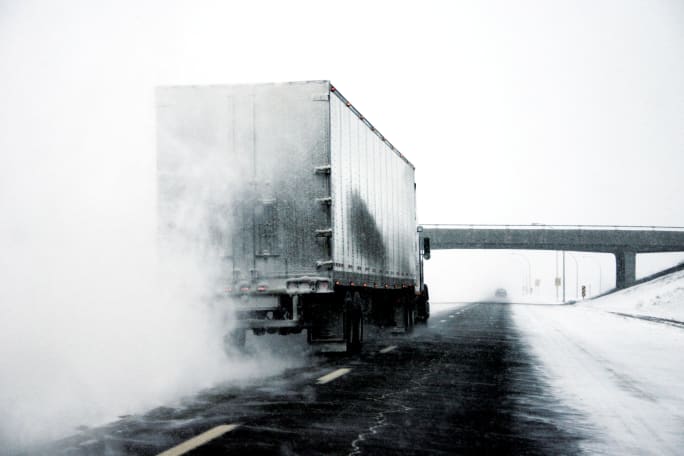
State troopers say that when visibility starts degrading due to snow, sleet or ice, it’s already way past time to get off the highway.
That said, experts say there are really two components that indicate the potential for a pile-up crash is increasing. One is the actual weather conditions. The second is the behavior of other drivers on the road reacting to those changing conditions.
Professional driver and safety advocate Rob Carpenter puts it in plain terms.
“The instant you can’t see 15 to 50 feet ahead of you, you’re in trouble,” he says. “Once the taillights in front of you disappear into the snow plume, you’re out of runway. And if you’re at a point that you can feel the vehicle losing traction, you just need to park it.”
Defensive driving is always the best course of action on the highway. But it becomes exponentially more important when winter weather strikes.
Shaw says Minnesota troopers are seeing more “drafting” lately. And vehicles following too closely create a simple problem when visibility drops during a snowstorm: Drivers can’t see far enough ahead to stop. And they don’t have the reaction time or distance they need if they do have to get on the brakes.
When road conditions deteriorate and an incident occurs, drivers tend to panic-brake. In a tractor-trailer, that action can trigger jackknifing and skidding, which can lead to accidents with stunning speed.
Likewise, Hendrickson says that if your tractor-trailer is getting pushed around by the wind, it’s time to call it a day.
“We often see lightly loaded commercial vehicles crawling along at 20 mph with their hazards on in storms,” he says. “And they think they’re being safe. But if your trailer is getting pushed around by the wind, you’re not ‘pushing through’ the storm. That’s the storm telling you it’s time to get off the road.”
“The hard truth is that if your gut says things are sketchy, it’s already too late,” Shaw says. “At that point, your job is to put space between you and other vehicles, buy time, and get out of the danger zone as quickly as possible.”
Shaw’s advice for that “visibility is dropping fast” moment is simple:
- Turn on your hazard lights
- Ease off the throttle
- Don’t stab the brakes.
- Create distance
- Do what you can to stop the “pack” mentality that takes hold among drivers
- Work to the right and get over as soon as you can.
“Just a Few More Miles” and Other Bad Ideas
Another trap troopers point to is realizing that it’s time to get off the road, but pushing on “just a few more miles” to make it to the next truck stop or exit ramp.
David Henry is a Canadian trucker with more than 40 years of experience behind the wheel. And he says he tells young drivers to think like an NFL quarterback. That means planning your day in advance, and knowing what your next play is going to be when things don’t go the way you were hoping.
“When I was a young driver, it was hard to get reliable weather reports,” he says. “But now, we can get reliable weather reports in real time. And that makes it much easier to plan out what you’re going to do before you ever get rolling in the morning.”
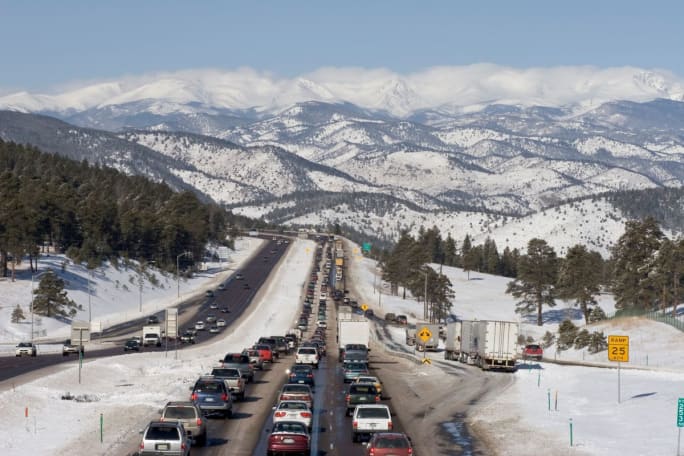
Winter pileup crashes can lead to long, dangerous delays for unprepared drivers.
When winter weather is threatening, Henry says he takes time before starting out to review his route and make note of safe exits he can divert to if conditions worsen.
“That way, if things start getting bad, you already know what your plan is. And you can get off the road quickly and safely, he says. “You always need to have an exit strategy.”
He also pays close attention to other traffic to get clues as to what is happening up ahead.
“If you know you’re heading into a storm and you don’t see any traffic coming at you from that direction, that’s a sign that things are pretty bad up ahead,” he says. “I’ve had instances where I’ve seen cars stop coming down the other side of the road. And I pulled over and waited until traffic flow from the opposite direction picked up again. I’ve dodged more than one bad storm using that tactic.”
Forget where you want to get to – exit the highway as soon as you can.
In rural North Dakota, where exits are few and far between (and truck stops are even rarer), Hendrickson recommends using any available off-ramp as a refuge.
“Take the first available off-ramp and park on the on-ramp side so you’re completely away from higher-speed traffic,” he says. “You might not have any amenities like you would at a truck stop. But you’re safe. And you’re not parked on the shoulder with traffic slipping and sliding past your truck.”
In the Event the Unthinkable Happens
No matter how careful you are, Mother Nature can be cruel. And the unthinkable can – and does – happen.
If the winds are howling, the snow is blowing, the temperature is freezing, and you’re suddenly in an accident, what should you do?
Shaw says the first instinct most drivers have is to leave the vehicle. You want to understand how bad the accident is and how badly your vehicle is damaged. And render first aid if anyone is hurt.
“You really need to fight that instinct,” he says. “In near-zero visibility, that’s how drivers get hurt or even killed.”
If you fear you’re in a chain-reaction accident event, do not leave the vehicle, Shaw says. And stay buckled in your seat.
The exceptions that Carpenter points to are fires or the risk of falling off an overpass or a ledge. Barring those instances, stay put.
“You want to stay in the cab of that truck with all of that protective metal around you,” Shaw explains. “That way, if another vehicle does hit you, your truck absorbs all that impact energy, not your unprotected body.”
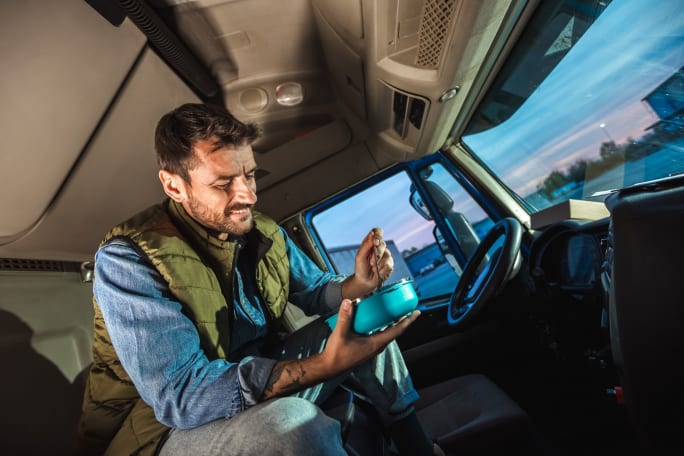
Make sure you have plenty of food, fuel, water and other seasonal survival gear on hand in case you have to wait out a long delay because of winter crash.
Next, Shaw says, get your phone out and call 911 – even though pretty much everyone else involved in the crash is doing the exact same thing.
Hendrickson agrees.
“Stay put and give the 911 dispatcher your best location estimate and what you can see,” he says. “But also understand that response times may be longer than usual because the first responders are driving in the same mess you’re now sitting in.”
Predicting Winter Pileups
The bottom line? Winter pileups aren’t random. They’re predictable.
The conditions for a pile-up begin in winter weather, when drivers are running too fast and too close together for the conditions they’re in.
And pileups explode out of nowhere when visibility suddenly deteriorates. All it takes is for one driver to panic-brake, and a chain reaction of accidents is set into motion.
So when the snow wall starts forming, and the pack tightens up, don’t be the next link in the pile-up chain.
Back off. Create space. And get the hell off the road as soon as you can.
Credit: Source link