Prime Minister Mark Carney has criticized New Brunswick’s plan to set up a highway toll by its boundary with Nova Scotia amid efforts by his government to remove domestic trade barriers.
Carney said Thursday he will increase pressure on provinces to do their part after his government adopted legislation to remove all federal barriers to interprovincial trade.
“No, I’m not happy … with the intention of New Brunswick, and we’ll continue to discuss with them,” Carney told reporters in Ottawa.
In response to U.S. tariffs on Canadian products like aluminum and steel, federal, provincial and territorial governments have been working to reduce internal trade barriers that limit labour mobility and the movement of goods.
Earlier this year the International Monetary Fund said knocking down internal barriers to trade could raise Canada’s GDP by 7% — nearly $210 billion.
“We have a series of tables — or negotiations — at the provincial level for the provinces to do what they should,” Carney said. “We will continue to put pressure and we will increase that pressure with the provinces.”
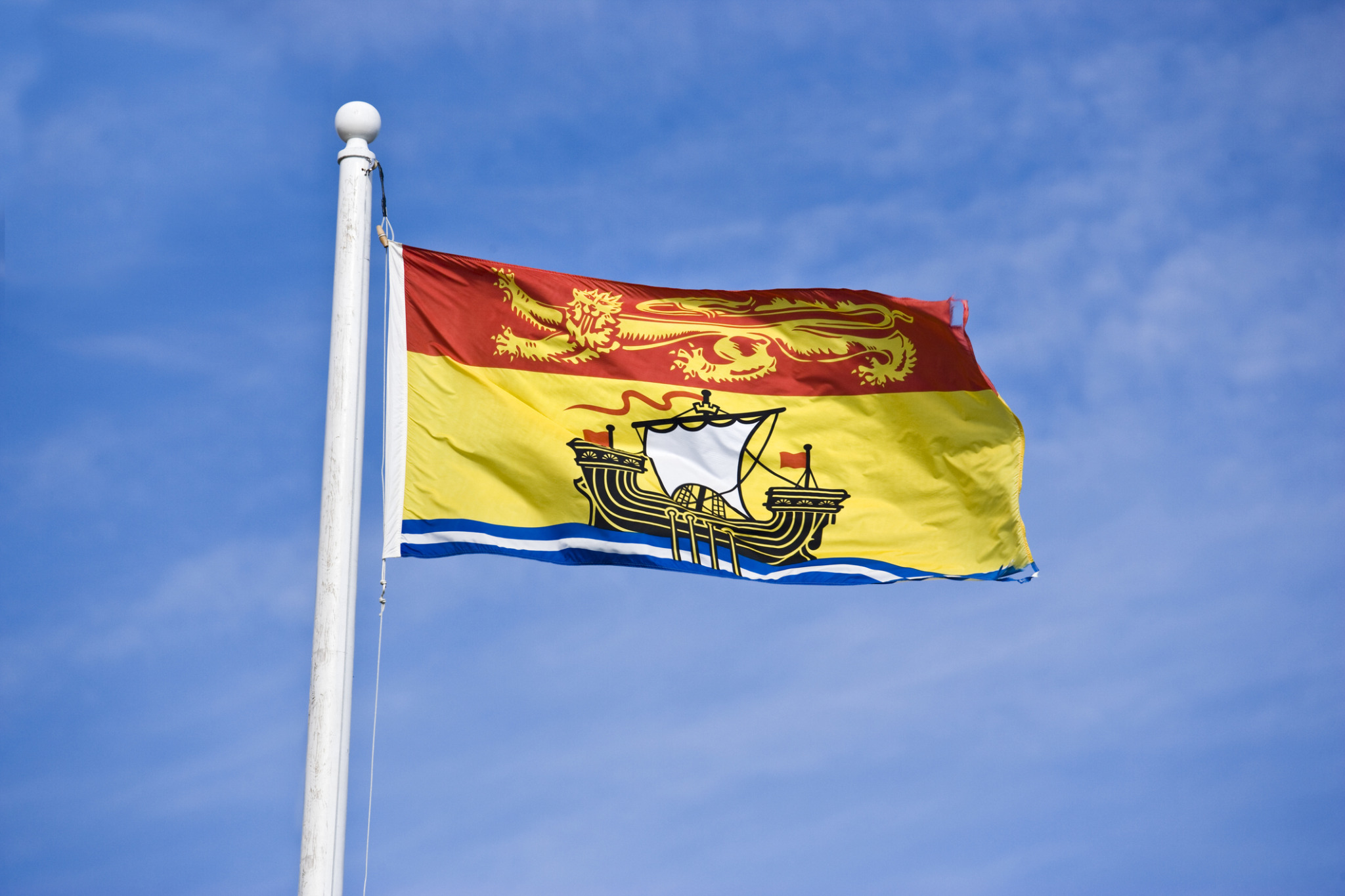
Over the past year, New Brunswick has taken some actions to ease interprovincial trade by introducing legislation and signing unilateral agreements with other provinces. But the province’s Liberal government announced in March that it would start tolling out-of-province vehicles by 2028 on a highway in Aulac, N.B., located near the boundary with Nova Scotia.
The toll was included in the government’s 2026-27 budget — which forecast a record $1.3-billion deficit — as a way to raise an estimated $10 million in revenue for road maintenance.
Premier Susan Holt repeated her government’s reasoning in a statement responding to Carney’s comment. “New Brunswick is leading the way when it comes to reducing barriers to trade and strengthening our regional economy,” Holt said.
“This proposal is about ensuring we can continue to maintain the critical infrastructure that supports it.”
Her government has received backlash over the toll, which could end up charging $4 per vehicle without a New Brunswick licence plate.
The Atlantic Chamber of Commerce has said the proposed toll goes against efforts to boost interprovincial trade and will discourage investment.
Stephen Laskowski, president of the Canadian Trucking Alliance, said earlier this month the toll would target out-of-province carriers and was “likely unconstitutional.”
Holt has repeatedly defended the levy by noting that other provinces have tolls, too.
“Right now, New Brunswick is the only province in the Maritimes without a toll. Both Nova Scotia and Prince Edward Island already have user-pay systems in place,” she said Thursday. “Aligning with that reality is reasonable.”
Nova Scotia’s Cobequid Pass toll was put in place in 1997 to pay for the construction of the highway. The toll was eliminated for Nova Scotia-registered vehicles in 2021 but remained in place for all others.
In Prince Edward Island, the Confederation Bridge has tolls collected by the federal government to pay an annual subsidy to its private operator. The bridge connects the Island to New Brunswick.
P.E.I. Premier Rob Lantz said earlier this week he was uncomfortable with both Holt’s proposed toll and Nova Scotia’s existing Cobequid Pass levy. “Exempting citizens of specific provinces doesn’t sit entirely well with me,” Lantz said, as he stood next to Holt during the news conference.
Despite the “tight fiscal situations” of the Atlantic provinces, Lantz said he hoped Holt would be open to discussing more about the toll.
Carney and Holt met on Monday and spoke about how their governments could partner on energy, health care and natural resources.
This report by The Canadian Press was first published April 23, 2026.
Credit: Source link