In late August, the Maryland Department of Transportation released another round of updates detailing temporary road closures and changes in traffic patterns required in Silver Spring and Bethesda as construction of the light-rail Purple Line grinds on. Residents who drive or live along the route of the line, which will run from Bethesda to New Carrollton hardly needed the reminders: Every day, particularly in downtown Silver Spring, they navigate a maze of orange traffic barriers clogging or closing local streets and sidewalks—and blocking access to businesses.
After years of construction marked by delays that have pushed the line’s completion at least five years behind schedule, many wonder when it will end.
More than nine years ago, Pete Rahn, the state’s transportation secretary at the time, made a confident prediction as Maryland’s Board of Public Works in April 2016 approved a decades-long, multibillion-dollar contract with a consortium of private companies to build and operate the Purple Line along a 16.2-mile corridor through Montgomery and Prince George’s counties.
The end of “construction will be no later than the spring of ’22—so the governor in his second term can be cutting the ribbon,” Rahn declared, referring to Gov. Larry Hogan.
It’s been nearly three years since Hogan left office, but a ribbon-cutting ceremony remains off in the distance: It will be at least the end of 2027 before the Purple Line begins carrying passengers along a route from Bethesda through Silver Spring and the University of Maryland’s College Park campus to its eastern terminus at New Carrollton’s Amtrak stop.
And that timing assumes ongoing operational testing of the line—expanded recently from a 1-mile test track to several points along the permanent route—doesn’t reveal issues that require further attention.
Former Maryland Transportation Secretary Paul Wiedefeld—who spent 2½ years in that post before his resignation as of Aug. 1—recalls that he, as general manager of the Washington Metropolitan Area Transit Authority, held up the opening of Metrorail’s Silver Line to Washington Dulles International Airport for several months over operational concerns. In his more recent role overseeing the Purple Line project for the state Department of Transportation, Wiedefeld declined multiple times to firmly commit to the current opening target.
Full-scale operational testing “is still one of those things we really haven’t gotten into yet, to see how that works—so that’s the reason I keep bringing it up,” Wiedefeld says in a May interview with Bethesda Magazine.
“We still have challenges ahead,” Holly Arnold, the head of the Maryland Transit Administration, acknowledged during a Board of Public Works meeting late last year. “This project is not over the finish line yet.”
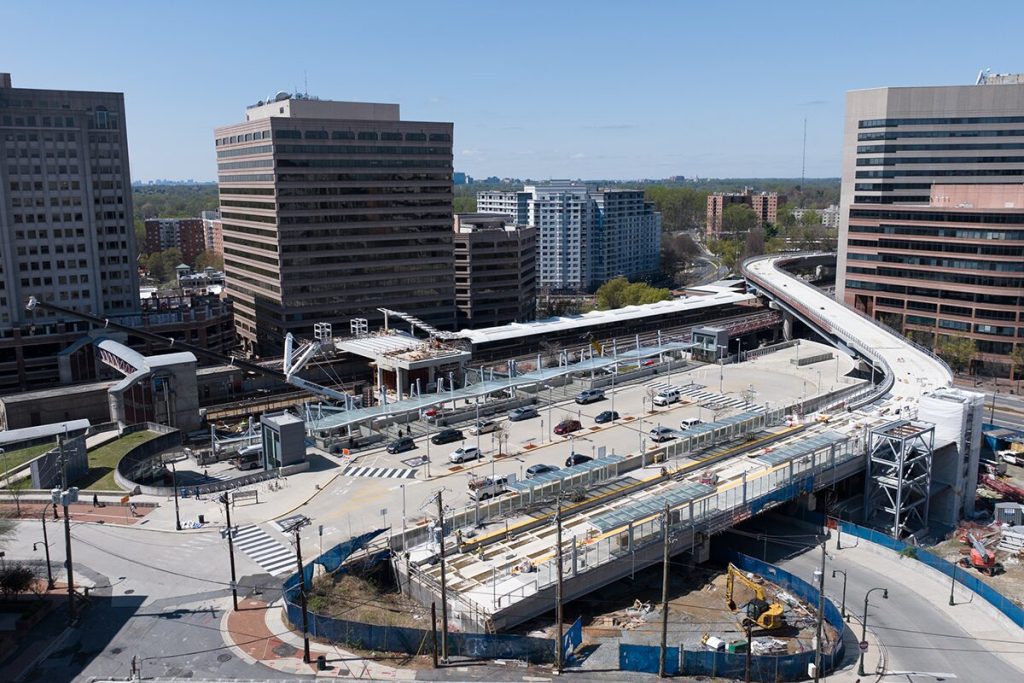
In January 2022, just short of the opening date Rahn had predicted six years earlier, the Board of Public Works—comprised of the governor, comptroller and state treasurer—ratified a revised Purple Line contract.
Purple Line 2.0 followed the collapse of the initial public-private partnership (a P3 in industry parlance) that had been put together in 2016. Its unraveling, which coincided with the arrival of the COVID-19 pandemic in early 2020, was triggered by cost overruns that the construction arm of Purple Line Transit Partners—the private “concessionaire” hired by the state to build and operate the line—claimed had reached $800 million.
Under the revised agreement between the state and the reconstituted version of Purple Line Transit Partners, the construction cost of $2 billion at the outset of Hogan’s tenure jumped to more than $3.4 billion with a year remaining in his second term—as the time allotted to build the line expanded from six to 10 years. The cost increased by another $563 million after Hogan’s successor, Wes Moore, took office, making the project’s construction tab $4 billion, double the initial price tag.
Meanwhile, the overall Purple Line price tag for four decades—including repayment of construction loans and a $50 million annual operations cost over 30 years once the line begins carrying passengers—is approaching $10 billion, jumping from $5.6 billion in 2016. About $250 million of the cost is being borne by Montgomery County, a majority of which involves construction of a south entrance to the Bethesda Metro station, where riders will be able to transfer between the Purple Line and Metro’s Red Line.
While vowing to complete the project, Moore, a Democrat, has taken aim at his Republican predecessor for the delays and cost escalations. “Even though we did not create this boondoggle of challenges, we will refuse to ignore them,” Moore said during a Board of Public Works session in March 2024, attributing the Purple Line’s woes to “unwise policy decisions that were made long before we had the chance to take office and address it—so we are still cleaning up this mess from years of mismanagement on this project.”
During a visit to Montgomery County this past summer, Moore doubled down in an interview with Bethesda Magazine. “Whenever you put together a project, and particularly something as massive as a transportation project … there’s a problem when you have projects that are not able to go on time and on budget,” Moore says.
He adds: “When the Key Bridge collapsed [in Baltimore in March 2024] and people said it would take upwards of 11 months to clear the channel, we got it done in 11 weeks. Part of it was because we just wanted to show this administration can move quickly, but part of it was that we wanted to show this administration actually honors its promises—and we feel like the Purple Line is one example of a broken promise that happened from the previous administration.”
For his part, Hogan has placed a significant portion of the blame for the Purple Line’s woes on a federal lawsuit—alleging adverse environmental impacts—brought by two Chevy Chase residents and an advocacy group for the adjacent Capital Crescent Trail before construction could get underway. In an August 2016 ruling, U.S. District Court Judge Richard Leon suspended federal environmental approval of the project and ordered a new ridership forecast based on decreasing passenger traffic on Metrorail, with which the Purple Line route will intersect at four of its 21 stations.
“It was these anti-transit activist folks that brought a frivolous lawsuit that tied us up for years and years, which is primarily the reason for all the delays and all the cost overruns,” Hogan said at a Board of Public Works meeting a year before leaving office.
Although Leon’s decision was stayed by an appellate court within 11 months, allowing work to proceed in the summer of 2017, state transportation officials have echoed Hogan’s contention that the early delay rippled adversely throughout the first years of Purple Line construction.
But the tale of why and how original expectations for progress on the Purple Line derailed so badly goes well beyond its early legal troubles, according to interviews with more than two dozen involved individuals—several of whom requested anonymity in order to speak candidly—as well as a review of public documents and hearings over the past decade.
In the early phases, continuing differences between the state and its private partners over language in a nearly 900-page contract came to a head at the onset of the pandemic. Additionally, several involved sources acknowledge that the difficulties of injecting a major new piece of transportation infrastructure into a highly developed area may have been underestimated.
As Samantha Biddle, then the state’s deputy transportation secretary (she’s now the department’s acting secretary) wryly observed during a Committee for Montgomery meeting last year: “This project has definitely had a storied trajectory so far.”
In the early years of the project, there were frequent disagreements among state transportation officials and Purple Line Transit Partners, an amalgam of three private firms that came out on top of three other contenders in the initial selection process.
The disagreements emerged over key tasks ranging from the acquisition of nearly 240 parcels of land for rights-of-way along the Purple Line route to obtaining necessary environmental permits—as well as a protracted clash over erecting a “crash wall” where the Purple Line will run adjacent to the CSX Metropolitan Branch railroad freight line near Silver Spring. Purple Line Transit Partners’ construction arm ultimately claimed that delays associated with these three issues set the project back by two years, on top of the nearly yearlong holdup from the 2016 court ruling.
The state’s response to these claims is reflected in documents filed with the Board of Public Works in January 2022, when the revised pact between the Maryland Department of Transportation and Purple Line Transit Partners was approved.
“While there was no disagreement that project delays had occurred, [Maryland Department of Transportation] and [Purple Line Transit Partners] were unable to agree on the extent of the delays, appropriate remedy, and responsible party for those delays,” the document read. “After months of unsuccessful negotiations, [Purple Line Transit Partners] sought to terminate the P3 agreement.”
That language does not mention another court battle that was triggered in mid-2020 when Purple Line Transit Partners took advantage of an unusual clause in its contract with the state to walk away from the project. After the state sued in a bid to prevent the move—and Purple Line Transit Partners countersued—Baltimore City Circuit Court Judge Jeffrey Geller sided with Purple Line Transit Partners in September 2020. He cited “clear, direct and absolute” contract language giving the private consortium the right to walk away if delays to the project extended for more than a year. (That clause was later removed in the revised agreement with the state.)
Two months after Geller’s ruling, Purple Line Transit Partners reached a deal with the state Department of Transportation to continue as the private partner in the P3. But Texas-based Fluor Corp., a minority shareholder in Purple Line Transit Partners, withdrew from the project. Fluor was also the major player among three firms that made up the consortium’s construction arm, Purple Line Transit Constructors.
It took more than a year to solicit and hire a replacement for Purple Line Transit Constructors as the so-called “design-build” contractor: a joint venture of two U.S. subsidiaries of Spain-based firms Dragados and OHLA, doing business as Maryland Transit Solutions.
Between Purple Line Transit Constructors’ departure in late 2020 and the arrival of Maryland Transit Solutions on-site in the summer of 2022, 18 months had elapsed with limited progress. The overlay of the global pandemic intensified the labor shortage-related delays and rising costs already plaguing construction activities.
In between the departure of Purple Line Transit Constructors and the arrival of Maryland Transit Solutions, the state stepped in, hoping to maintain momentum. In early 2022, Arnold told the Board of Public Works that the Maryland Transit Administration had “taken on oversight of 150-plus contracts … to keep the project moving while [Purple Line Transit Partners] worked aggressively to bring on a new design-build contractor.”
A major goal was to complete the remaining work on utility line relocation—regarded as among the most difficult tasks of any transit project—before Maryland Transit Solutions took over construction in the summer of 2022. The state’s utility relocation work ended up taking until the end of 2023 to complete.
The opening of the line, already pushed back four years to the fall of 2026 by that point, was delayed further to the current projected opening in late 2027. The delay in completing utility relocation meant keeping construction crews at work for months longer, resulting in the need for additional payments by the state—$148 million in July 2023 and $415 million in March 2024.
The state takeover of the utility relocation work underscored the unanticipated complexities of building a transit line through a heavily developed area with aging infrastructure. Some of the most difficult terrain encountered in this phase was said to involve a section of Wayne Avenue from Cedar Street to Dale Drive in Silver Spring—a significant portion of the downtown area has been transformed into a construction zone for the past eight years by the Purple Line project.
“They ran into some conditions—soil conditions, rock conditions—that no one would have known,” says Wiedefeld, who has spent four decades as a transportation planner and manager. “It’s one thing to do something on paper—but once you get into the field, it’s totally different.” He adds, “It’s hard to explain to the public, but that’s just the reality: In certain [types of] construction, you find things that no one could have imagined.”
At best, Hogan was ambivalent about the proposed Purple Line—the subject of continuing debate and controversy for three decades before he assumed the governorship.
He campaigned against building the line during the 2014 election. When he won in an upset, Hogan inherited plans by his predecessor, Democrat Martin O’Malley, that called for construction to begin in 2015 with an original timetable that foresaw the completion of the Purple Line in late 2020.
In mid-2015, six months after being sworn in as governor, Hogan—after reviewing the project and under heavy lobbying by the business community in suburban Maryland—announced the Purple Line project would proceed, but that construction costs would be trimmed from $2.45 billion under O’Malley, to slightly less than $2 billion.
Some Purple Line supporters, such as Maryland Comptroller Brooke Lierman and Del. Marc Korman (D-Bethesda), have since criticized Hogan’s claimed cost reductions—with Korman calling them “illusory”—while contending that his early decisions as governor helped lead to the overruns that later plagued the project. (Hogan did not respond to multiple requests to be interviewed.)
“They were touting all these savings—were they really savings, or were they just sort of pushed- off costs?” Korman, who chairs the House of Delegates’ Environment and Transportation Committee, asks rhetorically. “Hogan, for whatever reason, decided to kill the [Baltimore] Red Line [light-rail project] and keep the Purple Line, but wanted to put his own stamp on it—and was looking for ways to do that and to crow about how he saved the state money. There’s a cost to that, and I think we saw that pretty quickly with how this performed.”
Lierman, who grew up in Bethesda, characterized Hogan’s strategy for building the light-rail line as “penny-wise and pound-foolish” during a Board of Public Works meeting in July 2023. In an interview, she says, “What [Hogan] ended up doing by both renegotiating the agreement and prioritizing cost over ability, he trapped the state in a high cost, low value relationship.”
Lierman was referring to the Hogan administration’s acceptance of the 2016 proposal from Purple Line Transit Partners—which, at $5.6 billion for the life of the contract, was $490 million less than the next lowest bidder. But the winning proposal scored a technical ranking that was only third among the four proposals.
Rahn, who left the Hogan administration at the end of 2019 and is now a transportation consultant, defends that choice in an interview. “Even though they were ranked third in technical, they still had a passing evaluation. And so there was nothing there that indicated that they were not competent and, fairly, those firms [in Purple Line Transit Constructors]—Fluor, Lane and Traylor Bros.—are successful construction firms,” Rahn says. “When you can get a good technical score, that gives you additional points in selection, but the technical score is usually much less of a factor in selection than cost.”
The cost of that proposal in comparison to other bids has raised questions among critics as to whether it was artificially low—and if it then opened the way to demands for hundreds of millions of dollars in unscheduled payments during the construction phase. (Doran Bosso, CEO at Purple Line Transit Partners since 2021, declined to be interviewed.)
In 2020, as the breakup of the first iteration of Purple Line Transit Partners was looming, The Washington Post quoted an unnamed former Maryland official involved in the original Purple Line contract negotiations as saying the state had planned to seek a “best value” contract based on price, technical expertise and innovation—but that Rahn was singularly focused on the price. “Pete Rahn said, ‘We’re not paying more than X,’ ” the former official, who requested anonymity to maintain business relationships, told the Post. “It put an artificial lens on the review process. One contractor’s price proposal was so below everyone else.”
In response, Rahn says in an interview with Bethesda Magazine: “That sounds accurate, quoting me to say we’re not going to pay more than X. But I don’t believe that gave an artificial lens to the selection—I think that gave an incentive to the companies that want[ed] the project.”
After the original contract between state officials and Purple Line Transit Partners was approved and the yearlong delay from the federal lawsuit had been resolved, it didn’t take long for squabbling over provisions of the contract.
Within Purple Line Transit Partners, there were complaints that less than half of the rights-of-way needed for the project had been acquired by the state when the time came for construction to move ahead, according to sources. There were delays in property acquisition traceable to the first half of 2015 when Hogan was deciding whether to go ahead with the project, and then later during the federal court action.
While the State Highway Administration legally possesses so-called “quick take” authority for obtaining needed property, the Maryland Transit Administration does not. For the Purple Line, “we could use quick take only if the property was adjacent to state highways,” Rahn notes. The remaining land had to be acquired through a protracted process of “us making an offer, them rejecting it, [and then] having to go through a commission to make decisions,” he says.
“We admitted to Purple Line Transit Partners that we were not going to meet what the contract calls for” on the timing of property acquisition, Rahn acknowledges. “But we also said, ‘You tell us where you want to work, and we will concentrate [on] getting those properties in place in time for you to do your work.’ And it’s my understanding that we pretty much accomplished that.”
When Purple Line Transit Partners moved to terminate the first P3 in 2020, the delays that its construction arm claimed had been caused by the property acquisition issue—about three months—paled in comparison to the holdup it attributed to new and changing requirements on the part of the Maryland Department of the Environment, a contention disputed by the state. But the contractor claimed the delays from that matter had reached a year and a quarter.
Several individuals familiar with this issue say the problems arose from difficulties navigating through the regulatory sphere in a state as environmentally conscious as Maryland. According to Ross Capon, a co-founder of the Action Committee for Transit—a leading advocate of the Purple Line—the private consortium hired to build the project “talked with subcontractors with Maryland stormwater experience, but decided their price was too high and thus largely went without their advice.”
Adds Capon, a Bethesda resident who for many years headed the National Association of Railroad Passengers: “When you hear about ‘changes in stormwater regulations,’ any engineer with knowledge of Maryland’s regulations and related politics could have saved them a lot of time.”
Then there was the dispute over the 2.75 mile-long crash wall, located between the Purple Line and CSX freight tracks leading into Silver Spring that CSX had insisted be built. Purple Line Transit Partners claimed CSX’s “deferred approval” of the crash wall design led to more than five months in construction delays. (CSX officials did not respond to multiple requests to discuss this matter.)
The accumulation of these delays prompted Rahn—in late 2019, as he was preparing to resign as transportation secretary and return to his permanent home in New Mexico—to seek a settlement that would keep Purple Line Transit Partners on the job.
Rahn tells Bethesda Magazine that his settlement effort—first disclosed by Washington Monthly in mid-2022—called for claims by the private contractor that had reached $800 million to be settled for $167 million. “That is literally the last thing I did. I signed the agreement to settle the claim and walked out the door,” Rahn says, adding that the agreement called for 5 miles of the Purple Line to be operating by December 2022, with the remainder in operation by the middle of 2023.
But the deal Rahn worked out wasn’t ratified by the Department of Transportation following his departure. The reasons remain unclear. Instead, the first version of Purple Line Transit Partners came apart, and state officials at the end of 2020 reached an agreement with that consortium to settle claims for $250 million, followed by the 18-month process of bringing in Maryland Transit Solutions as the new design-builder.
Rahn says he never discussed with Gregory Slater, his successor as transportation secretary, the reasons for the settlement not being accepted. Slater, who left Maryland at the beginning of 2022 to become CEO of Florida’s Tampa Hillsborough Expressway Authority, declined multiple interview requests.
It appears that under Slater’s watch, Rahn’s proposed settlement was seen by some state transportation officials as a stopgap solution that did not address several problems within the initial P3. Rahn acknowledges that the settlement he worked out “did not prevent [Purple Line Transit Constructors] from filing future claims on the project.”
He adds: “The concern by some—and this is potentially a reason that drove decisions after I left—is that environmental issues could have been a claim filed by the constructors. There was no settlement of environmental issues. And, of course, those can be quite large.”
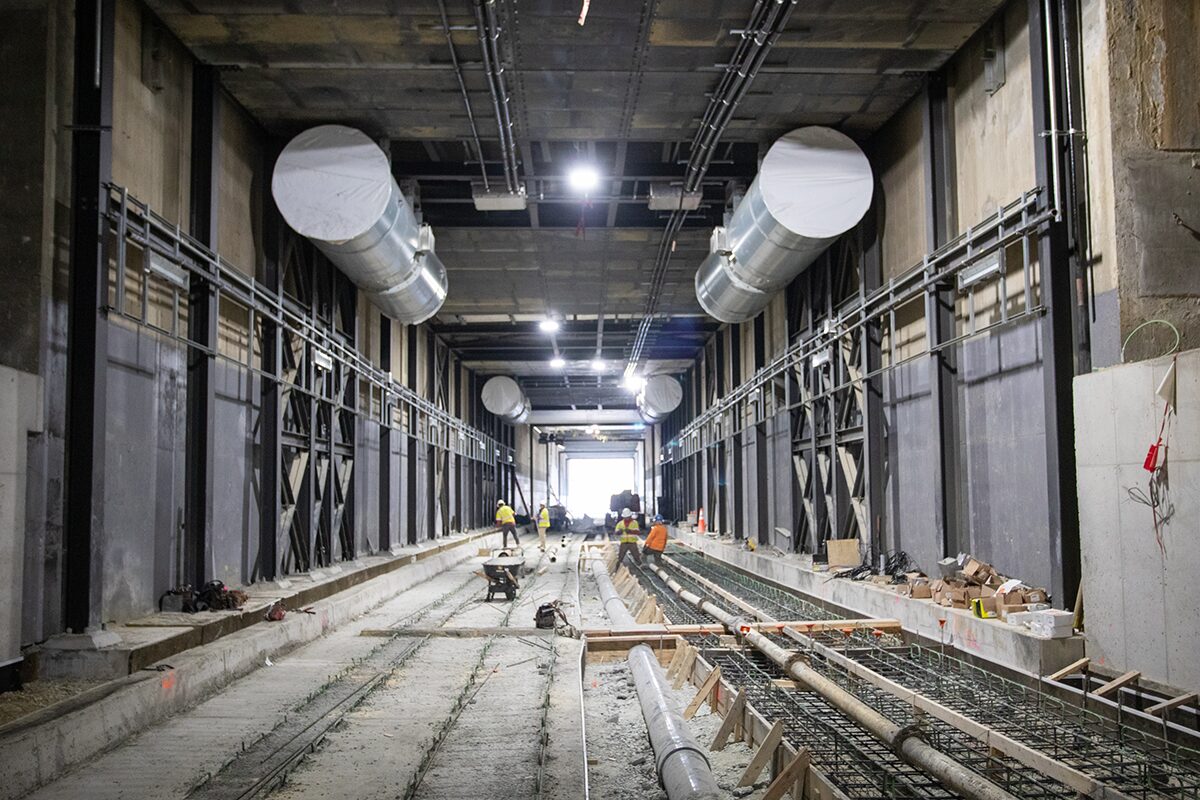
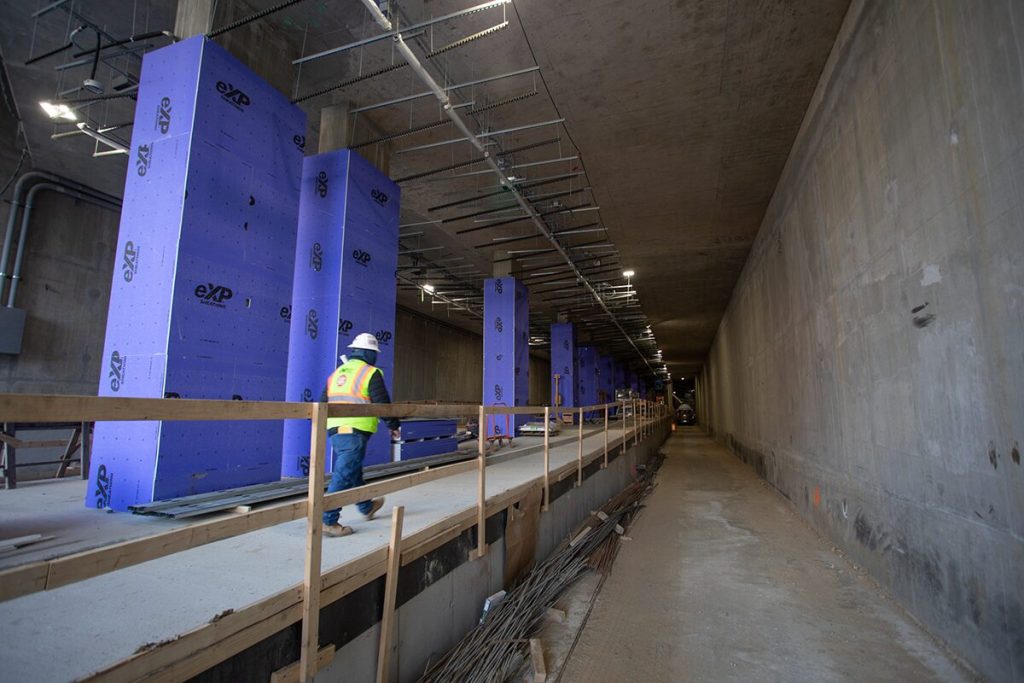
According to Ray Biggs II, the Purple Line’s senior project director since 2022, construction of the route—which was 80% complete by this summer—has required 26 bridges but just “one true tunnel, and that’s the Manchester tunnel once you pass by the [Silver Spring] library, that goes to Wayne Avenue.”
For Lierman, there appears to be some light at the end of the proverbial tunnel under the revised Purple Line P3 in the aftermath of her biting criticism of the project’s early years.
“Based on the work that I’ve seen, as I’ve been out walking the line with the [Department of Transportation], I do believe they will be able to meet the latest deadline that they have created,” she says. “They have a strong team in place now, they have recovered from the challenges of the utility work and … things are moving much more quickly than they have been for years.”
Louis Peck has covered politics at the local, state and national level for more than five decades, and is a contributing editor at Bethesda Magazine.
Credit: Source link