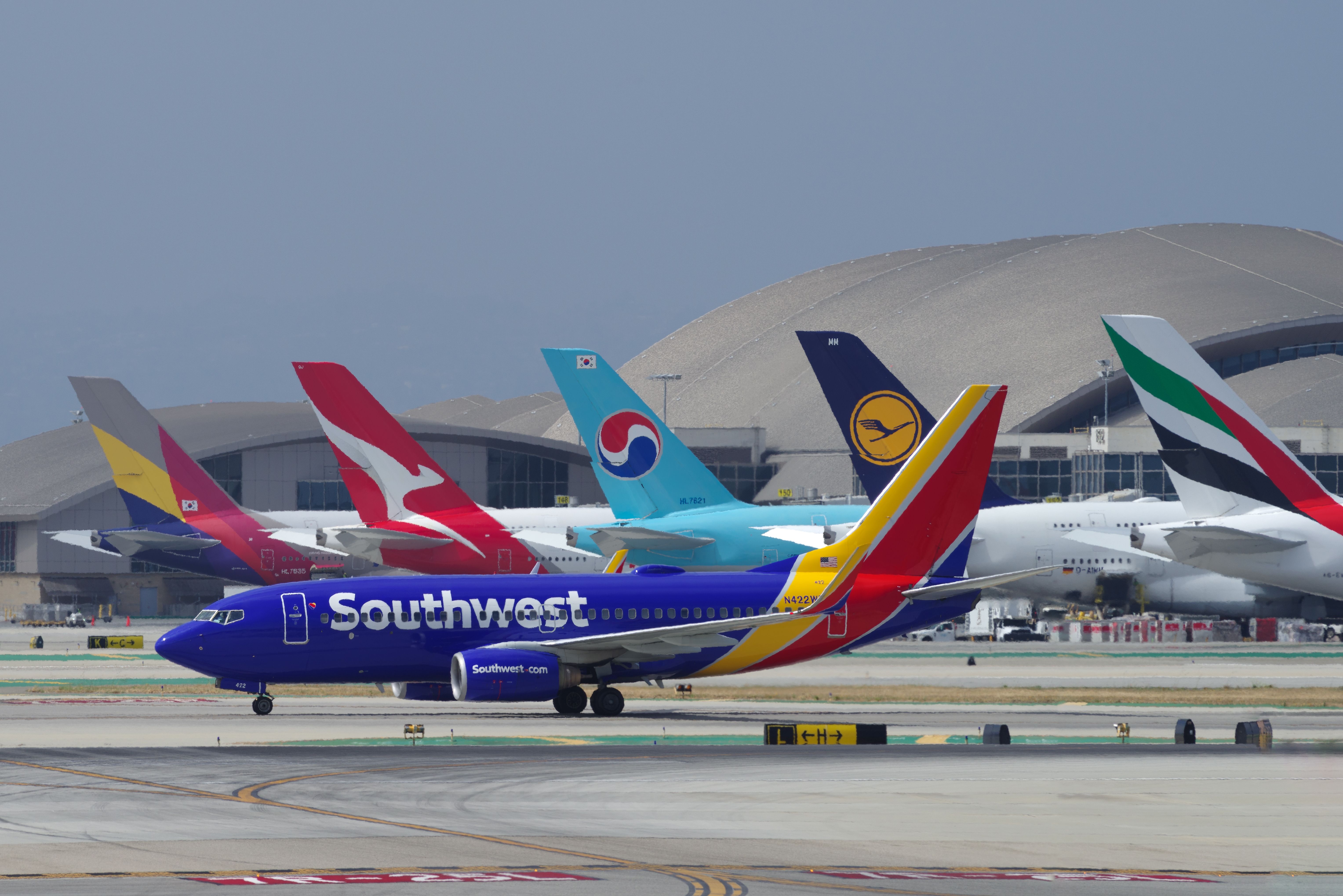
Southwest Airlines has recently announced a new partnership with China Airlines, the flag carrier of Taiwan. According to Southwest Airlines, tickets will go on sale later this year, and these connections will begin operating in early 2026. This is an interline agreement, allowing customers to book tickets that Southwest operates on one leg, and China Airlines on the other, connecting via one of China Airlines’ West Coast gateways.

- IATA/ICAO Code
-
WN/SWA
- Hub(s)
-
Baltimore/Washington International Thurgood Marshall Airport, Dallas Love Field, Denver International Airport, Harry Reid International Airport, Hartsfield-Jackson Atlanta International Airport, Houston Hobby Airport, Los Angeles International Airport, Midway International Airport, Oakland International Airport, Orlando International Airport, Phoenix Sky Harbor International Airport
- Year Founded
-
1967
This partnership comes as part of a substantial overhaul of Southwest’s business model. Once an all-economy airline with generous perks that wouldn’t sell tickets anywhere but its own website and would only fly its passengers within North America, Southwest is changing. This recent partnership is the second that the Dallas-based carrier has announced this year, after a similar interline agreement with Icelandair.
A Basic Level Of Cooperation

Under this new agreement, Southwest will sell you an itinerary to Taipei or beyond, with the leg across the Pacific being operated by China Airlines. China Airlines will do the same. Your bag will be checked all the way to your final destination, and you’ll receive one boarding pass. While this is significant for Southwest, given that the carrier historically kept to itself, this is the least comprehensive type of airline partnership.
Other agreements, such as codesharing and joint ventures, allow for airlines to share revenue, coordinate schedules in the case of joint ventures, and offer passengers frequent-flyer perks. There’s also no incentive for an airline to direct passengers to an interline carrier. An interline agreement can be viewed as more of a starting point, a way for Southwest Airlines to dip its toes into the pool of airline partnerships.
In the words of Southwest,
This agreement brings the opportunity for China Airlines’ customers to experience our renowned Southwest Hospitality. Initially, China Airline Customers will be able to seamlessly connect from their west coast destination points at Los Angeles (LAX), San Francisco (SFO), Ontario (ONT), and Seattle (SEA), on through to our Southwest network.
What This Brings For China Airlines

China Airlines flies to five airports in the United States with passenger aircraft (there are additional cities served with cargo planes). This partnership covers four of these five airports, with New York-JFK not included. Southwest is a major player in Los Angeles, but its presence in these other gateways is minimal. Then again, China Airlines doesn’t have much of a choice.
China Airlines is a member of SkyTeam, and so is Atlanta-based Delta. However, these two carriers have very minimal cooperation because of Delta’s trans-Pacific joint venture with Korean Air. These two airlines act as one on routes between the US and Asia. This means that Delta directs passengers to Korean Air-operated flights, while the joint venture essentially competes with China Airlines.
|
Destination |
Flight number |
Equipment |
Frequency |
|---|---|---|---|
|
Los Angeles International Airport (LAX) |
CI 6, CI 8 |
Airbus A350-900, Boeing 777-300ER |
10x weekly |
|
New York John F. Kennedy International Airport (JFK) |
CI 12 |
Boeing 777-300ER |
4x weekly |
|
Ontario International Airport (ONT) |
CI 24 |
Boeing 777-300ER |
Daily |
|
San Francisco International Airport (SFO) |
CI 4 |
Boeing 777-300ER |
Daily |
|
Seattle-Tacoma International Airport (SEA) |
CI 22 |
Airbus A350-900 |
5x weekly |
China Airlines already has an interline agreement with Alaska Airlines, effectively covering service in Seattle and San Francisco. In Los Angeles, however, Southwest has a larger presence. While this allows Southwest to grow its worldwide reach with little risk, this also helps fill up China Airlines flights on the competitive route from Los Angeles to Taipei, again with little risk.

Related
Analysis: A Closer Look At China Airlines’ Longest Non-Stop Airbus A350 Flights
The carrier has scheduled almost 900 flights with the widebody twinjet this month.
How This Mirrors The Icelandair Partnership

Southwest Airlines started out flying within Texas and grew to become one of the largest airlines in the world. It focused on strengthening its network within North America, and except for a few short-lived interline agreements in the past, Southwest kept to itself. It broke with tradition earlier this year when it announced an interline with Icelandair.
This was launched back in February, initially covering Baltimore, and now covering Denver as well as Nashville. Unlike the interline with China Airlines, this agreement includes major Southwest hubs. Denver, in particular, is the carrier’s largest operating base, giving Icelandair access to huge feed.
The airline market in the US is changing. Customers are paying a premium to fly premium classes abroad, which doesn’t favor an all-economy, mainly domestic carrier. These agreements are limited in their scope, but they set the stage for increased cooperation. Some question the long-term viability of the broader changes that the legendary airline has implemented, but for now, Southwest can send its customers to both Europe and Asia, with closer agreements certain to come in the future.
Credit: Source link