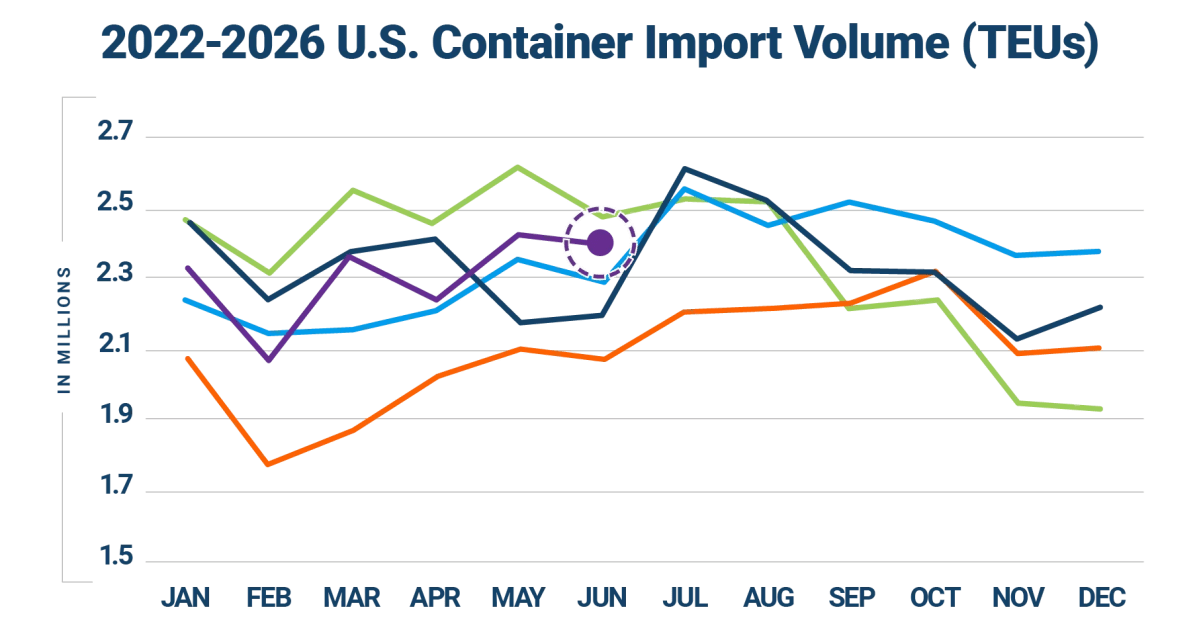
Loaded imports through the ports of Seattle and Tacoma in May were down 30% from April and 21% from May of last year.
SEATTLE — Steep declines in imports and exports through the ports of Seattle and Tacoma last month are raising alarms about the broader regional economy, which is already grappling with weak consumer spending, sluggish employment growth, and ongoing uncertainty.
Steve Balaski, director of business development at the Northwest Seaport Alliance, said May’s cargo volumes reflect a sharp drop in demand following a wave of new U.S. tariffs, particularly on Chinese goods.
RELATED: King County hotels struggle against rising costs and slow growth
Loaded imports in May were down 30% from April and down 21% from May of last year, Balaski confirmed. Exports followed the same trend. He attributed the slowdown largely to an executive order signed in April that imposed broad tariffs on nearly all U.S. trading partners, with the steepest penalties affecting Chinese imports.
Because China is the largest origin country for containerized goods at Northwest ports, the fallout has been significant. Balaski said a major transload operator reported cutting shifts in half, dropping from 50–70 containers per shift to just 20–35, forcing operational reductions from seven to four days a week.
“This negatively impacted over 100 employees at their facility,” Balaski said.
Exporters also reported disruptions, with some companies retrieving cargo from terminals after orders were abruptly canceled due to pricing volatility or loss of competitiveness.
RELATED: Ports of Seattle, Tacoma warn of empty retail shelves, fewer labor hours for truckers, longshoremen
King County Chief Economist Lizbeth Martin-Mahar said these supply chain shifts are just one part of a broader regional slowdown.
Taxable sales in King County fell 0.5% in 2024, and the region saw a 13% year-over-year decline in the construction sector, according to Martin-Mahar. She cited high interest rates and economic uncertainty as key drivers.
Job growth across King County has also stagnated. Martin-Mahar noted that while the county averaged 1.5% annual job growth over the past two decades, this year has brought little to no increase.
RELATED: New Washington state coalition challenges Trump tariffs
Jan Duras, interim director and chief economist for the Seattle area, echoed those concerns, placing the risk of a regional recession in the next 12 months between 40% and 50%.
Consumer spending in the Seattle metro area has declined about 4% this year, while it’s still growing modestly nationwide, according to Duras. “Any sort of downturn will be potentially much worse in the region than in the national economy.”
The construction sector is particularly vulnerable, facing compounding headwinds: soft demand, labor shortages worsened by immigration restrictions, and rising materials costs tied to tariffs. Commercial office vacancy rates remain high, further dampening development.
Tourism is also declining. According to new data from Oxford Economics, international overnight visits to the Seattle area are expected to fall, with Canadian travel seeing the sharpest drop of 18% from 2024 to 2025.
Credit: Source link