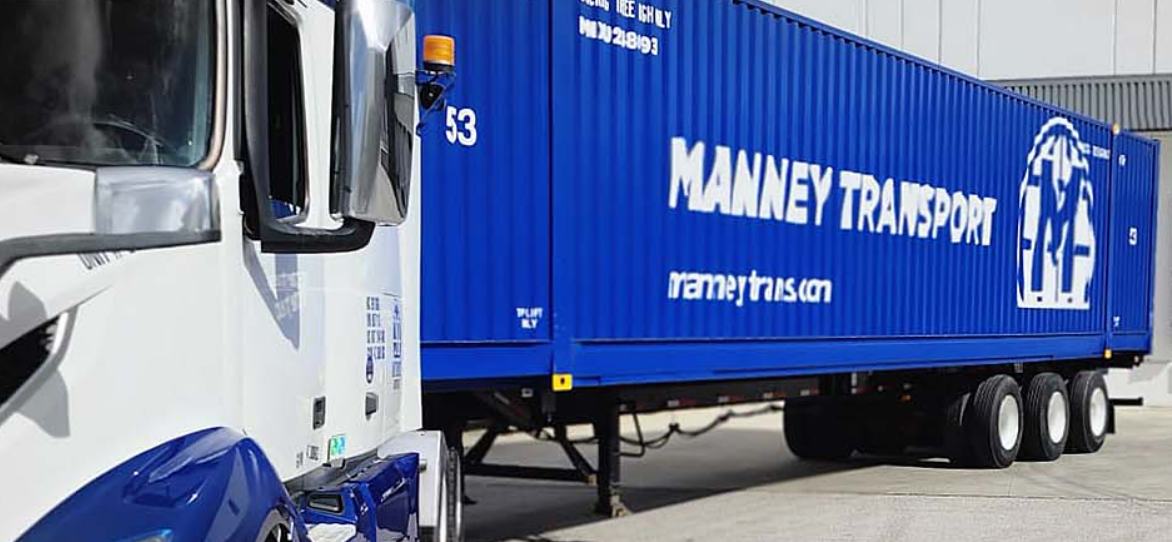
The US trucking industry has long been the backbone of the country’s economy, employing over 8.4 million people in 2022 and accounting for the majority of overland freight movement. But this once thriving sector has been wrestling with unique challenges that have led to an overall decline in recent times.
In fact, late last year, the industry entered a bottoming phase of the classic truckload cycle. Additionally, a nationwide shortage of qualified drivers is making the situation worse.
In the face of these challenges, innovative solutions are necessary for survival and growth. A wider adoption of modern technology, specifically an approach that pushes for the better integration of digital technology, holds promise, which one entrepreneur recognized early on.
Lucas Grizz, the founder and CEO of Raven Cargo, is recognized in the industry for his focus on sustainability and technology. This Polish immigrant joined the logistics industry straight after college. Working for REMPREX, Grizz climbed the company’s corporate ladder, going from a night technician to a manager and finally Vice President of Information Technology.
During his formative years in the logistics sector, Grizz observed the benefits of automation after witnessing its potential through his employer’s automated gate processes that significantly streamlined its operations.
This curiosity formed the cornerstones of what would become Raven Cargo, Grizz’s own freight brokerage venture founded in 2020. “It took me two years of research and due diligence to understand the industry and convince experienced individuals to join me in this venture.”
Grizz highlights that, while concerning, the declining trend of the logistics industry isn’t a surprise since it’s been ripe for an overhaul for a while.
“The industry’s been plagued with many issues over the years, and it’s not just about driver shortage or the inflation,” he says. “We’ve seen some critical challenges pertaining to unethical business practices and double brokerage, for instance.”
Shipment consolidation, where multiple shipments are loaded onto a single truck, and double brokering, a practice where a broker subcontracts to another, creating a problematic custody chain of intermediaries, are most evident in dedicated freight.
Designed to provide reliable freight for small and mid-sized fleets, this system is thus often manipulated to the detriment of carriers. Grizz states that with shipment consolidation and double brokering, the most worrying issue is related to transparency, increased costs, and potential delays, which erode customer satisfaction and trust.
At Raven Cargo, Grizz and his team have tried to tackle these problems head-on with their optimization tool named RavenEye. This integration layer caters specifically to the logistics sector, connecting disparate data systems to close software gaps, boosting operational efficiency, and maintaining data accuracy.
Supported by an AI-powered architecture, RavenEye maintains a cohesive flow of information across platforms. This way, it eliminates redundancy and inconsistency but, most importantly, improves visibility and document exchange.
“When a customer sends us a contract, bill of lading, or any other relevant document, our system automatically distributes it to the appropriate systems, such as accounting and transportation management,” Grizz explains. “If a customer requests a specific document, the software searches for it based on the customer’s name or unique identifier and retrieves the file from the appropriate system.”
Using its algorithms, RavenEye aims to eliminate the need for manual searching, enhance transparency and overall productivity, and reduce the possibility of human error.
Since its creation, this tool has been an indispensable ally to countless businesses that wish to streamline their logistics operations and achieve a unified and transparent view of their data processes.
“Many companies are increasingly outsourcing their operations to places like Colombia to streamline their processes. This involves multiple personnel handling invoices, account statements, carrier information, and other documents, which puts data safety at risk,” Grizz shares. “With RavenEye, people don’t have to worry about all these complex technicalities. They can focus on what matters most: their ventures.”
In just three years, Raven Cargo has grown from a three-person project to a team of 80, with a projection to hit the $80 million revenue mark this year. Its efforts in promoting ethical and more sustainable practices are equally visible in the company’s collaboration with big names in the industry.
Looking ahead, Grizz and his team remain steadfast in their mission to innovate in order to meet the evolving needs of their customers. They also hope to inspire others in the industry to exercise their due diligence.
As Grizz says, “The industry’s been facing unprecedented challenges, but with every one comes an opportunity for innovation. As experts, we need to seize these opportunities at any chance we get.”
Credit: Source link