Volvo says advances in combustion and aftertreatment helped its new EPA 2027 D13 engine avoid the fuel-economy penalties many once expected from tighter NOx emissions limits.
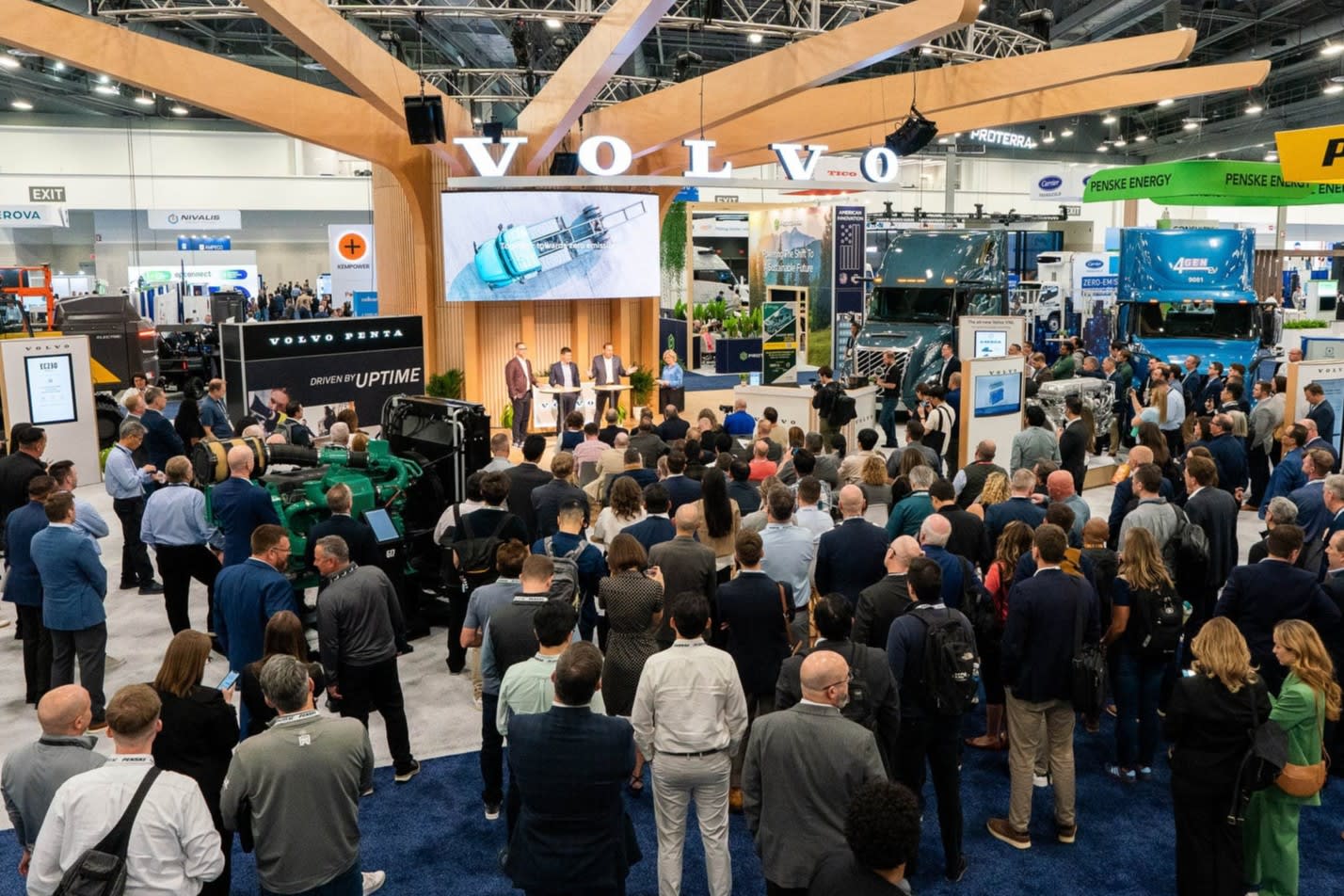
Volvo Trucks North America launched its next-generation Volvo D13 engine for EPA 2027 emissions requirements and teased a fourth model in its battery-electric truck lineup during the Advanced Clean Transportation Expo in Las Vegas.
In a booth highlighting not only VTNA but the entire Volvo family, including electric construction equipment and Volvo Autonomous Solutions, Volvo officials said the new Volvo D13 engine is designed to meet emissions requirements in all 50 states and Canada, including EPA’s 2027 35-milligram limit for nitrogen oxides, or NOx.
The new engine slashes NOx by over 80% compared with current standards.
Many of the changes were featured in 2024 in the “reimagined” VNL and last year with the launch of the all-new VNR, but Volvo has built on those improvements for EPA 2027.
More Power, More Efficient
Volvo’s new engine offers expanded horsepower and torque options, with ratings available from a 405-hp engine with 1,450 950 lb.-ft. of torque up to 540 horsepower and 1,950 lb.-ft. of torque.
Not only does the engine offer up to 540 horsepower. It also delivers up to 630 braking horsepower.
“So make sure your seat belt’s buckled with this one,” Duane Tegels, Volvo powertrain marketing manager, told HDT in an interview.
The enhanced engine braking performance offers stronger downhill control and better drivability for heavy loads and steep grades.
At the same time, the all-new in-house developed engine will save even more fuel in a wider range of user applications and segments than the previous D13, such as regional haul and vocational fleets.
When California started pushing for low-NOx regulations in 2016, there was concern in the industry about being able to meet those limits without sacrificing fuel economy, with engine makers testifying that there was a “well-documented trade-off between NOx reduction and engine efficiency.”
In fact, however, engine makers appear to have not only avoided losing efficiency but actually improved it, while slashing NOx at the same time.
When asked about this, Tegels said, “that was one of our goals, is not affect fuel economy, not affect performance, and also total cost of ownership.”
Volvo customers today who are already running Volvo’s turbocompounding technology will see no difference in fuel economy, he said. “Those coming from a VGT today production will see about a 4% improvement.”
DEF consumption will remain very similar for long-haul customers, he said. Fleets in operations such as vocational or regional haul may see a slight increase in DEF use.
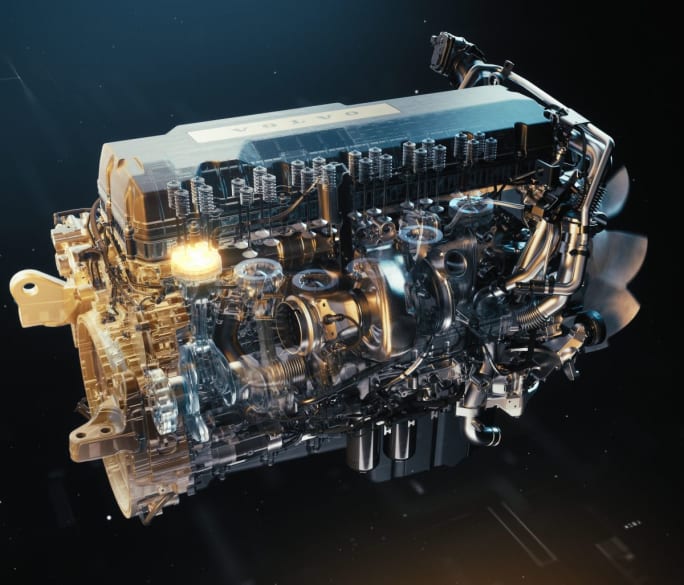
Volvo’s new D13 is its cleanest, most fuel-efficient Variable Geometry Turbo engine ever, the company said.
Volvo Trucks North America
So How Did Volvo Get There?
The foundation of the new engine is a compressed graphite-iron block, Tegels said.
“That gives us 75 % increased tensile strength. It also allows us higher cylinder pressures. So that’s changed us from an 18-to-one to a 20-to-one compression ratio.”
The new engine uses an exterior-mounted high-pressure common rail pump that feeds the common rails up to 35,000 psi, Tegels said.
And the company has moved from its previous seven-wave piston to a 14-wave piston.
Volvo’s wave piston design dates back to the EPA SuperTruck program and first appeared in its 2017 powertrain. The new design added six “wave” bumps on the side of the piston bowl, optimizing air and fuel mixture control for more efficient combustion. Volvo improved it with a seven-wave piston introduced in 2024.
Aftertreatment
EPA 2027 regulations require advanced aftertreatment systems that operate effectively during cold starts, low-load, and idling conditions. Different engine makers are taking slightly different approaches to this challenge. Volvo said its approach builds on aftertreatment technology that has been in commercial use for more than a decade.
Volvo’s aftertreatment system integrates pre‑heating, DOC/DPF, and dual SCR chambers into a compact design. A pre-heater and heater lead to the main DOC/DPF chamber. This all sits atop dual SCR chambers.
“There are two grid heaters in the aftertreatment system,” Tegels told HDT. “They’re to maintain heat in there and reduce the DEF into ammonia during that cycle.”
The 48-volt alternator for the aftertreatment will only operate at light loads or during initial start-ups, he said.
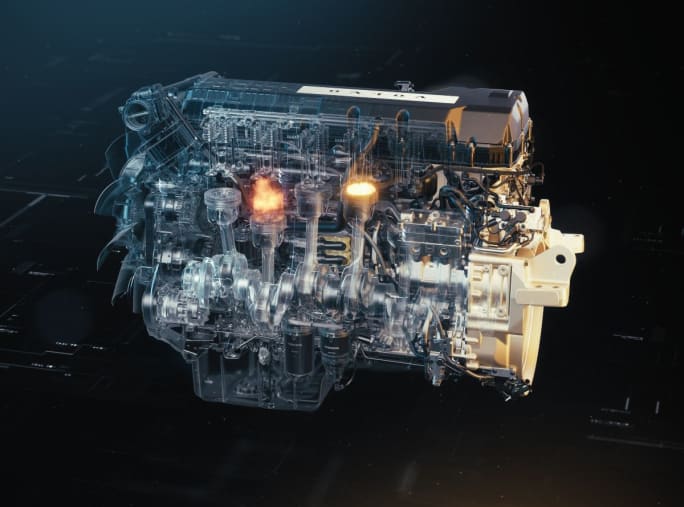
Volvo’s wave piston technology optimizes fuel burn. For the new D13 moved from its previous seven-wave piston to a 14-wave piston.
Volvo Trucks North America
Ready for January 1, 2027
The new D13 engine is compatible with renewable diesel (R100) and biodiesel blends up to B20, giving fleets added flexibility as alternative fuel options become more widely available.
The new engine will be available across all Volvo truck models and has been developed in parallel with Volvo’s production operations, dealer network, and service infrastructure to support the transition when the EPA 2027 standards take effect on January 1, 2027.
“This engine is our most powerful, fuel-efficient engine ever and delivers on every front for our customers: lower emissions, strong performance and compatibility with the fuels and systems fleets already use,” said Peter Voorhoeve, president, Volvo Trucks North America.
“The 2027 standards build on technology the industry knows well, and we have aligned our production, supply chain, and dealer network so customers have what they need from day one.”
Credit: Source link