Many in trucking are treating today’s fuel-price surge as a temporary disruption. History suggests they may be making a costly mistake.
I don’t think Iran has any interest in ending its current conflict with the United States and reopening the Strait of Hormuz anytime soon.
I know. The current official line is that fuel-price spikes associated with the war are just a temporary disruption that will correct itself once the fighting ends.
But I think that’s a false narrative.
And I think history proves it.
I’d actually been thinking about this for several weeks before Jamie Hagen, owner of Hellbent Xpress, brought it up during an HDT Talks Trucking interview we recorded in late May.
Hagen noted that he had seen economists warning that for every day the Strait of Hormuz remains closed, it could take roughly a week for fuel prices to return to pre-war levels once the disruption ends.
Based on the duration of the conflict as of late May, that would have pushed a return to normal fuel prices into November 2027. Using that calculus, as I’m writing this on June 8, that timeline has now slipped into early 2028.
And that’s assuming Iran actually wants the war to end.
History Suggests Otherwise
And that’s the problem: As I said, I don’t think Iran currently has the slightest bit of interest in ending the war anytime soon.
I hold a History degree from the University of Alabama with a specialization in 20th Century History. And I’ve always been fascinated by the intersection of history, transpiration and technology.
And History provides a fairly clear roadmap for how Iran’s leadership tends to approach these confrontations with the United States.
Revolutionary Iran’s defining moment came with the seizure of the U.S. Embassy in Tehran in 1979.
Iran took 66 Americans hostage after storming the Embassy. Ultimately, the new hardline leaders of the country detained many of them for 444 days. The crisis consumed American politics and helped bring down a presidency.
Fortunately, Iran doesn’t have American hostages this time around.
But it does have something else.
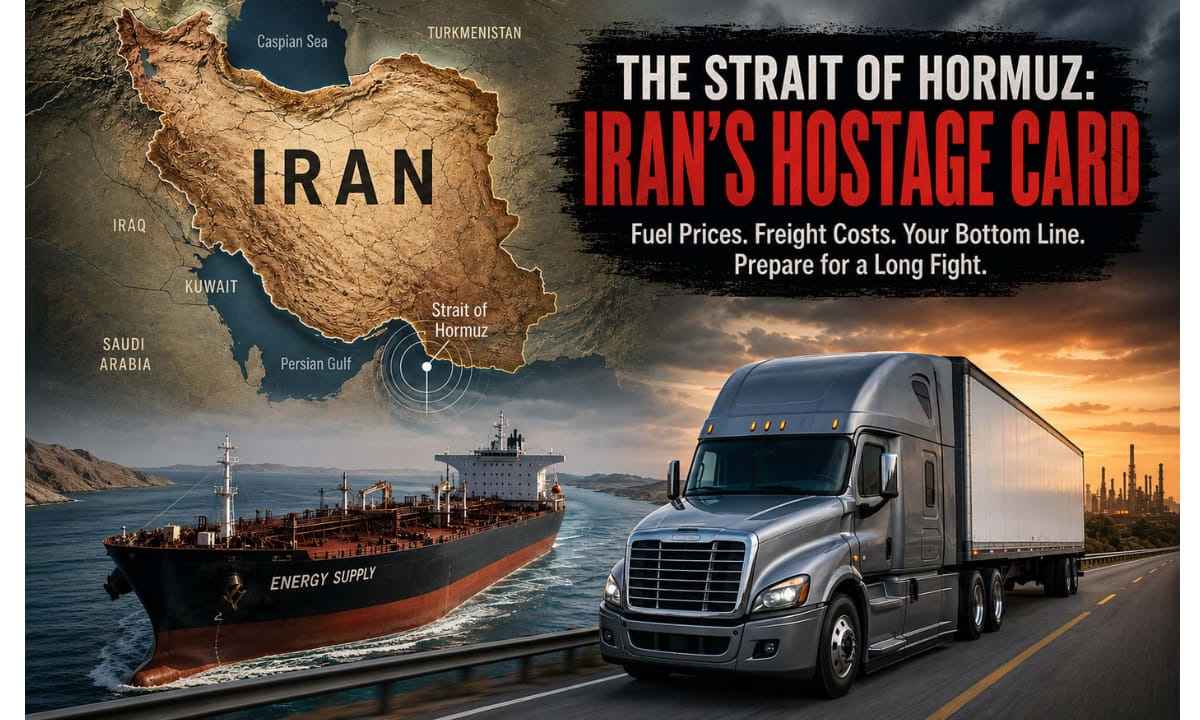
It now controls access to one of the most strategically important waterways on Earth: The Strait of Hormuz.
The World’s Most Important Energy Chokepoint
In 2024 and 2025, roughly 20 million barrels of oil and petroleum products moved through the Strait of Hormuz on Iran’s southern border every day.
That’s about 20% of global petroleum consumption and roughly one-quarter of all seaborne oil trade.
Other vital trade goods — notably agricultural fertilizers — also rely on transit through the Strait to reach world markets, including U.S. markets.
Simply put, the Strait of Hormuz is arguably the most important energy chokepoint in the world.
Which is why I believe the Strait itself has become Iran’s hostage this time around.
It’s the single most powerful piece of leverage the regime possesses.
And I don’t see them surrendering that leverage anytime soon.
The leadership of Iran is made up of individuals whose hostility toward the United States and the broader Western world has defined their worldview for decades. These hardliners have repeatedly demonstrated a willingness to inflict economic pain on their adversaries whenever the opportunity presents itself.
That’s why I believe Iran is unlikely to become serious about negotiations until at least after the U.S. midterm elections this November.
And that’s the optimistic scenario.
They could very well decide to keep the Strait disrupted for far longer — perhaps until November 2028, if history is any indication.
What This Means for Trucking
I hope I’m wrong about all of this.
I hope President Trump finds a way to break the current impasse.
And I hope fuel prices fall quickly once a resolution is reached.
But from where I sit today, I don’t see an easy path to any of those outcomes.
That’s why fleets that are simply trying to tough it out for a few weeks until diesel prices “return to normal” may want to recalibrate their expectations.
It’s time to begin considering the possibility that what we’re experiencing is not a short-term spike, but the beginning of a prolonged period of elevated fuel costs.
Because if history teaches us anything, it’s that geopolitical conflicts involving critical energy corridors rarely resolve themselves as quickly as markets hope they will.
And if the Strait of Hormuz remains disrupted for an extended period, the consequences for global energy markets, diesel prices, freight transportation, and trucking profitability could be felt for months — or even years — to come.
That’s the possibility fleet executives need to be thinking about today.
Not next quarter.
Not next year.
Today.
Credit: Source link