Taking the Russian Far East would alleviate or even solve a lot of China’s problems
-
By Courtney Donovan Smith 石東文 / Staff Columnist
War in the Taiwan Strait is currently a sexy topic, but it is not the only potential Chinese target.
Taking the Russian Far East would alleviate or even solve a lot of China’s problems, including critical dependencies on fuel, key minerals, food, and most crucially, water.
In a previous column (“Targeting Russian Asia,” Dec. 28, 2024, page 12) I noted that having following this topic for years, I consistently came to this conclusion: “It would simply be easier to buy what they need from the Russians, who also are nuclear-armed and useful partners in helping destabilize the American-led world order. Not worth the cost and risks involved.”
Photo: AP
However, I also noted the possibility that conditions could lay the groundwork for a more implicit or even explicit takeover.
More of these conditions are materializing.
JUICY PRIZE
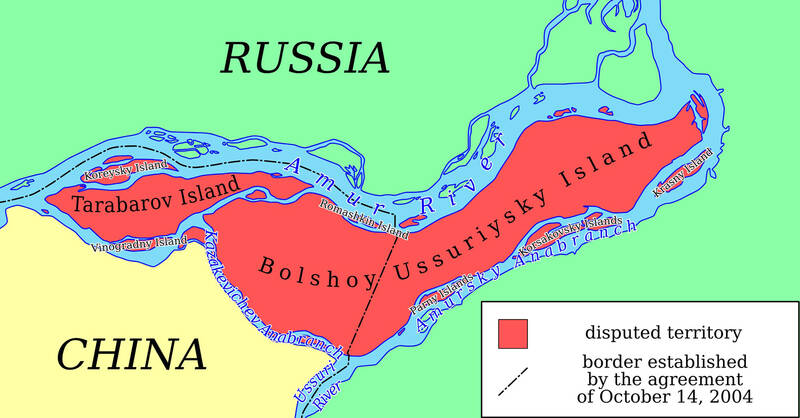
Photo courtesy of Wikimedia Commons
China is at the mercy of several key chokepoints. Essentials needed to function and for basic survival are imported, and in case of war could be disrupted, especially via the first island chain and the Strait of Malacca.
Water is the most crucial, with much of northern China — including Beijing — surviving on less water than the Saudis.
The Russian Far East, which stretches from the Ural Mountains to the Pacific, is vast and contains most of what China desperately needs, including the world’s largest body of unfrozen fresh water, Lake Baikal.
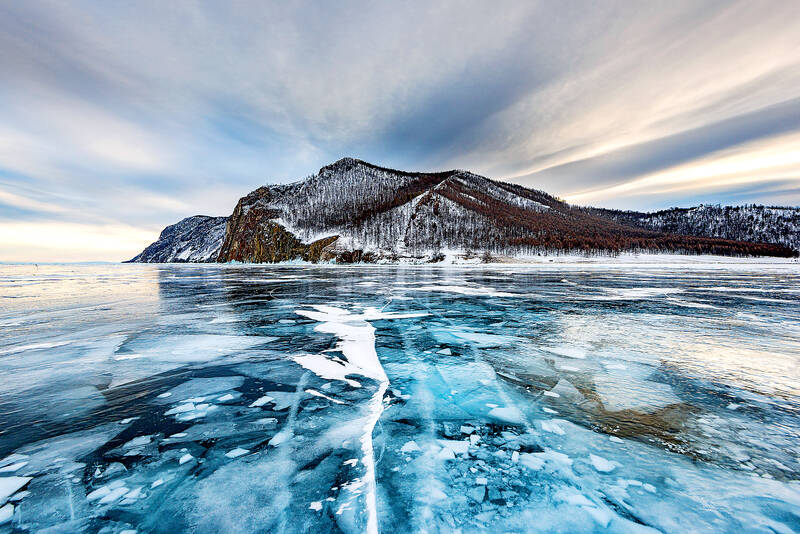
Photo courtesy of Wikimedia Commons
It is also increasingly indefensible.
The territory is vast and lightly populated, with only over seven million people, and a population density of only 1.1 people per square kilometer. It is also facing a demographic collapse even worse than Russia’s as a whole, which has been dire since the collapse of the Soviet Union.
Before the Ukraine war, the region was emptying as people moved to the Russian heartland west of the Urals in search of a better life. To feed the Ukraine war, Russia has been relying heavily on recruiting soldiers for their “meat wave” assaults from poorer regions and ethnic minorities, especially in this region.
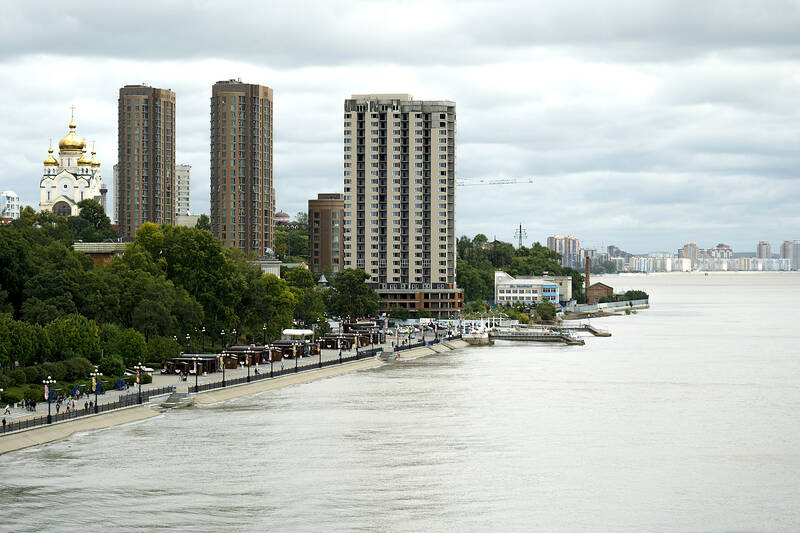
Photo: AP
To their alarm, the Russians have had to rely on migrants from Central Asia, North Korea and China. They are aware of the national security risks, but have little choice.
Just across the border, the three nearby provinces in northeast China alone have officially nearly 100 million people and a population density of 124 people per square kilometer.
Sanctions depriving Russia of key parts and components, and melting permafrost, are causing widespread logistical problems, and crucial infrastructure is becoming harder and costlier to maintain just the war is sucking away resources to keep it all functioning.
With Putin’s back to the wall, Russian media disclosed that during the Putin-Xi meeting in March 2023 that the Chinese agreed to directly invest more than US$160 billion in 79 major projects. China typically uses their own workers on these projects, increasing the Chinese presence.
Increasingly, Russian localities are dependent on Chinese investment — which almost certainly comes with bribes to local leaders to grease the wheels. Reportedly, some local Russian leaders are visiting Beijing more often than Moscow, showing where their priorities lie.
SIGNALING FROM BEIJING
Beijing has been signaling expansionist intent for several years.
During the late 19th century, the Qing Dynasty was forced to cede vast territories of historical Manchuria to the Russian Empire. Recent official Chinese maps have substituted traditional Chinese names for places in the region and dropped Russian ones.
Previously, the two sides agreed to jointly administer the contested but highly strategic Heixiazi/Bolshoy Ussuriysky Island near the city of Khabarovsk, splitting it 50-50, but since 2023, Chinese maps have marked it as entirely Chinese territory. Via a free trade zone, the Chinese effectively control the entire island.
Since 2018, China has billed itself as a “near Arctic power” in an attempt to get a seat at the table, though not very successfully. It has been building out capacity to operate in the Arctic, including icebreakers.
As Arctic ice melts, shipping via the Northern Sea Route could become more viable. Considerable mineral and aquatic resources could also become accessible.
Occupation of the Russian Far East would give them ports, infrastructure, and possibly a seat at the table.
On June 7, the New York Times released a report on leaked Russian FSB documents that described the Chinese as the “enemy.” Among the revelations were Russian suspicions of widespread infiltration and spying, and fears of China specifically targeting the Russian Far East and Arctic.
UNGOVERNABLE
For a long stretch, there is only one railway and one road linking the region to the Russian heartland.
They bottleneck through the Urals, crossing over many bridges, many over deep ravines and valleys. A surgical strike in the right locations could cut off the Russian Far East by road and rail for months or even years.
Russia is already cannibalizing commercial aircraft for parts due to sanctions. Shipping from western Russian ports is slow.
The Ukrainians may have constrained themselves from conducting such strikes over fears they could be blamed for a humanitarian catastrophe.
However, such a strike would cut off not only vast resources feeding the Russian war machine, but also North Korean military aid and Chinese goods.
It would also make it very difficult for Moscow to effectively govern the country east of the Urals.
But China could.
The Ukrainians proved they are capable of such a strike. Recently, they took out nuclear-capable long-range bombers with drones deep inside the Russian Far East.
Much of the press noted that those bombers were a threat to the US, but they were more of a threat to Beijing. Possibly that this was a message from the Ukrainians to the Chinese.
Terrorist organizations such as ISIS-K have also proven they can conduct strikes there as well.
A false flag terrorist attack organized by the Chinese Ministry of State Security is not out of the question.
WHEN CHINA INVADES
In 1962, the Chinese Communist Party (CCP) launched a surprise invasion into northern India. In 1979, the CCP similarly surprised the Vietnamese.
Both occurred during internal CCP power struggles and leadership transitions.
Rumors are coming out fast and furious out of China that this is what is happening now.
There are reasons to be skeptical. Typically, around this time of year, rumors spike. Additionally, it is impossible to verify the rumors, their sources, or the agendas for spreading them.
However, something is going on; the scale of recent purges at the top levels of the military indicates that not all is well in Zhongnanhai. The scale and specificity of the rumors could also be significant.
It also might not be the power struggle breathless analysts think it is; there are other plausible explanations. Perhaps Chinese leader Xi Jinping (習近平) is simply cleaning house to ensure more effective military leadership, which would suggest he is firmly in control and becoming more so with each purge.
Unable to confirm anything, taking a wait-and-see approach is prudent.
I still think that the more likely scenario is that China will continue to infiltrate and subvert the region to get what it wants, and will avoid a full-out war.
But the incentives to invade are growing, and it is becoming an increasingly real possibility.
Xi and the CCP have tied their fortunes to reversing the so-called “100 years of humiliation.”
Most have focused on Taiwan, but reclaiming vast Qing territories seized by imperialist Russia would not only fit that narrative, it would provide China with far greater economic benefits at potentially far lower cost than invading Taiwan.
Russia’s war machine is much diminished, and would face a two-front war. No one would come to Russia’s aid.
The CCP is holding all the cards, assuming they can avoid a nuclear war.
That could be the only thing holding them back.
Donovan’s Deep Dives is a regular column by Courtney Donovan Smith (石東文) who writes in-depth analysis on everything about Taiwan’s political scene and geopolitics. Donovan is also the central Taiwan correspondent at ICRT FM100 Radio News, co-publisher of Compass Magazine, co-founder Taiwan Report (report.tw) and former chair of the Taichung American Chamber of Commerce. Follow him on X: @donovan_smith.
Credit: Source link