Severe winter weather and diesel price volatility took a bite out of the first-quarter results of many publicly traded trucking fleets. However, earnings reports and conference calls featured a growing optimism that the U.S. Department of Transportation’s regulatory crackdown and an uptick in demand at the end of the quarter will lead to stronger months ahead.
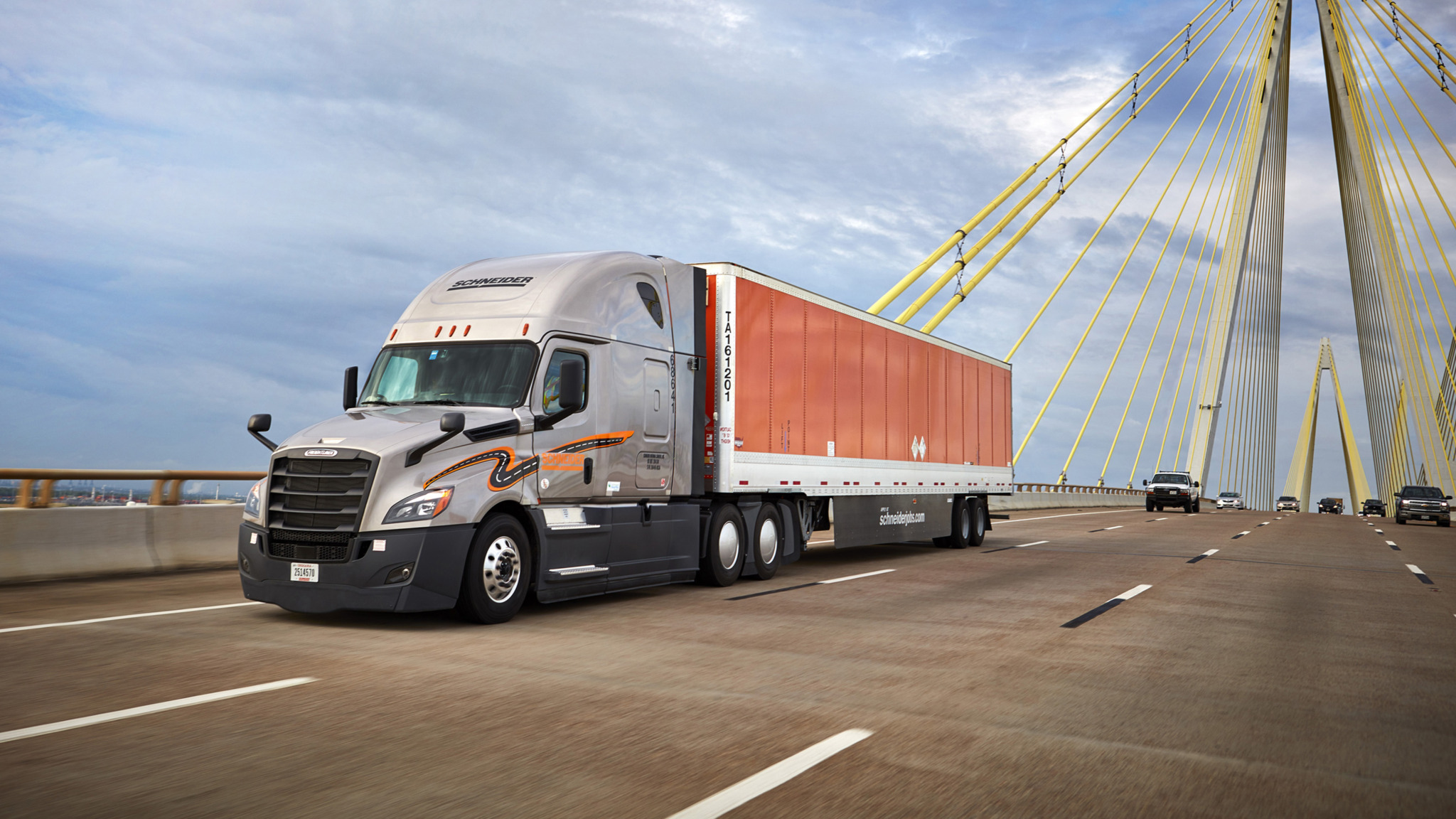
“The encouraging trends seen in March have persisted into April, with continued strength in the spot market, traction in rate recovery and volume retention in our allocation events, and indications of moderate customer restocking and seasonal volume activity,” said Jim Filter, group president of transportation and logistics at truckload carrier Schneider National.
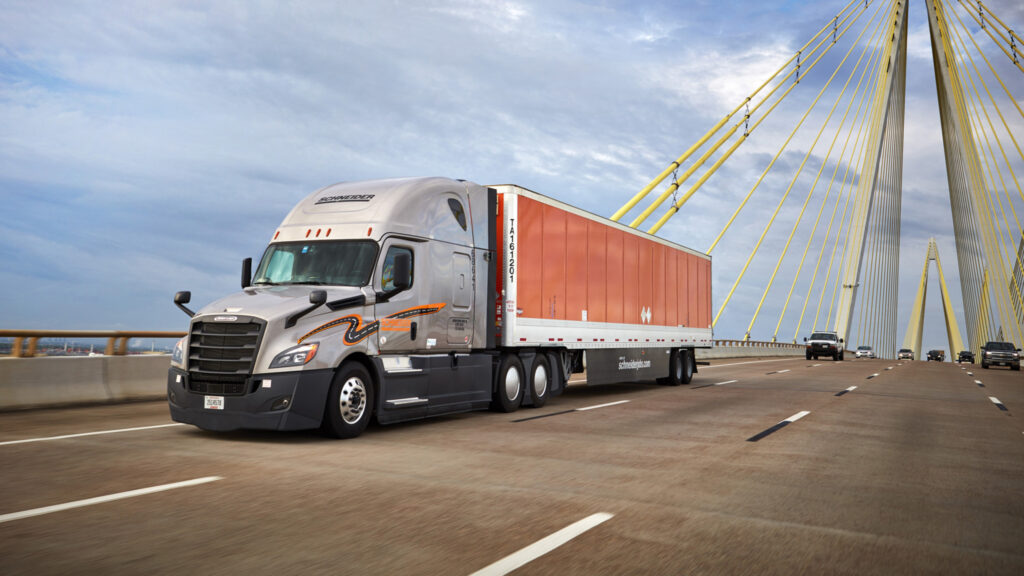
Schneider, based in Green Bay, Wis., posted a net income of $20.4 million, or 12 cents a share, for the three months ended March 31. Total operating revenues were flat at $1.4 billion.
“We believe that we will see more supply exit in totality than what was removed by the 2017 ELD mandate, while also restricting the funnel of new entrants,” said Filter. “We continue to expect that the removal of this capacity will restore the market to more normal conditions after several years of irrational supply dynamics.”
Filter will replace Mark Rourke as president and CEO in July. Rourke will remain with the company as executive chairman.
Truckload carrier Werner Enterprises, which purchased FirstFleet for $245 million earlier in the first quarter, said its adjusted earnings were 2 cents a share, compared to a loss in the prior-year period. First-quarter revenues for the Omaha, Neb.-based truckload carrier rose 14% to $809 million.
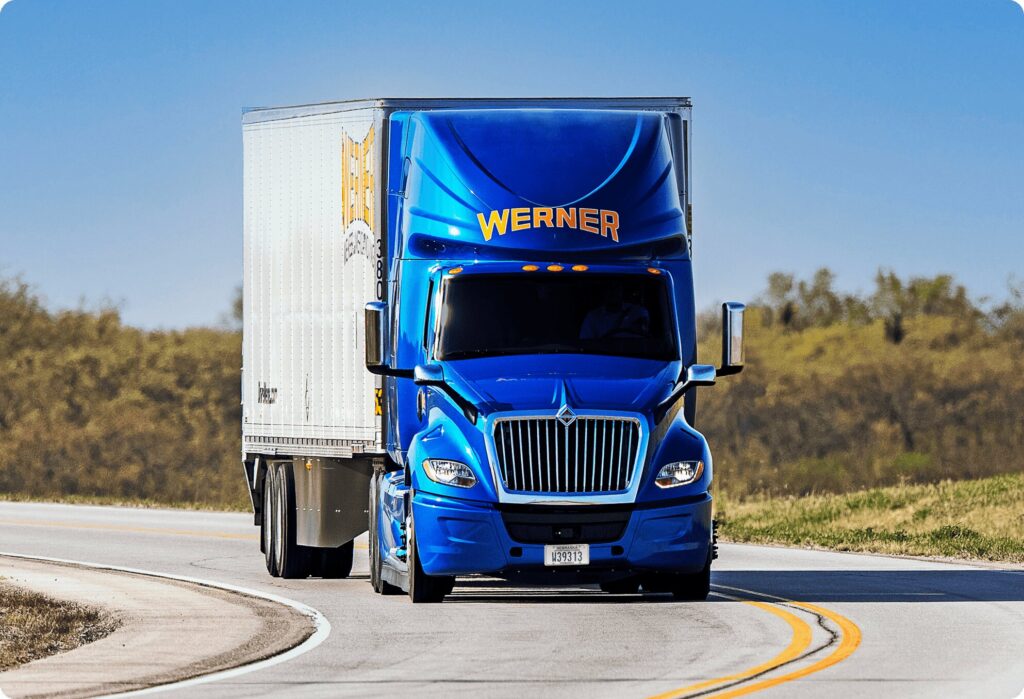
“The recovery in rates has been largely supply driven, as capacity continues to exit at an accelerated pace due to regulatory enforcement,” said Werner Chairman and CEO Derek Leathers. “As the supply and demand dynamic tightens, we are seeing rate lift and early positive momentum in the bid season. We expect pricing gains to continue with more meaningful improvement in the third and fourth quarters,” said Leathers.
Knight-Swift Transportation Holdings reported earnings of 9 cents per share, in line with the lowered guidance the Phoenix-based truckload carrier provided last month. Revenues of $1.85 billion grew 1.4% year over year.
Looking ahead to the rest of 2026, CEO Adam Miller said: “There are now more reasons to be optimistic about our industry than we have seen in over four years now.” He noted several shippers have already initiated discussions about peak season, which he said is not typical this early in the year.
These comments align with J.B. Hunt Transport Services, which last month reported higher first-quarter earnings and said it was seeing signs of a recovery.
Landstar System was among the other fleets that cited an improved price environment during the first quarter. The Jacksonville, Fla.-based company reported net income of $39.4 million, or $1.16 a share, compared with $29.8 million, or 85 cents, during the same period in 2025. Total revenue increased 1.6% to $1.17 billion.
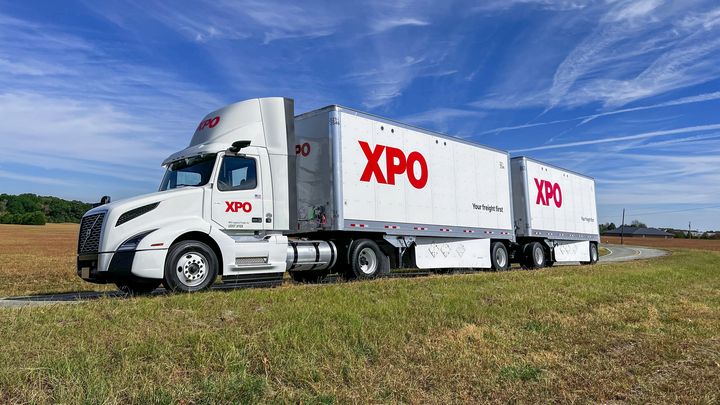
In the less-than-truckload space, XPO reported adjusted earnings of $1.01 a share, above analysts’ expectations. Chairman and CEO Mario Harik said a recent survey of customers found that very few plan any “deceleration” in business in the second half of the year.
“We haven’t seen those kinds of survey results going back to 2021, which is very encouraging,” he said.
Quick rise of diesel prices outpaces surcharges
ArcBest reported a net income of 32 cents a share, which also beat analysts’ estimates, on revenue of $998.8 million. Chief Financial Officer Matt Beasley said second-quarter projections for shipments, tonnage, weight per shipment, and revenue per hundredweight pricing are all strong. At the same time, ArcBest said that high fuel prices were becoming “more pronounced.”
“Higher fuel costs increased fuel surcharge revenue, but they also raised operating costs across the network,” said Beasley. “While our fuel surcharge mechanisms are designed to recover higher fuel costs over time, periods of rapid fuel price movement can create short-term timing differences between when revenue is recognized and when those costs are incurred.”
Likewise, Saia Inc. President and CEO Frederick Holzgrefe said the less-than-truckload carrier was “negatively impacted” during March as diesel prices jumped 30% in a matter of days. CFO Matthew Batteh said the rapid increase in diesel costs “resulted in an approximately $3.5 million margin headwind.”
Despite the U.S. diesel average above $5.50 a gallon and regular gasoline at $4.45, Covanent Logistics Group Founder, CEO, and Chairman David Parker said he remains “more excited than I have been in these [last] four years.”
Parker expressed confidence that as pump prices begin to move lower, “the American people will sense that and feel that, and I think they’ll continue to spend.”
Credit: Source link