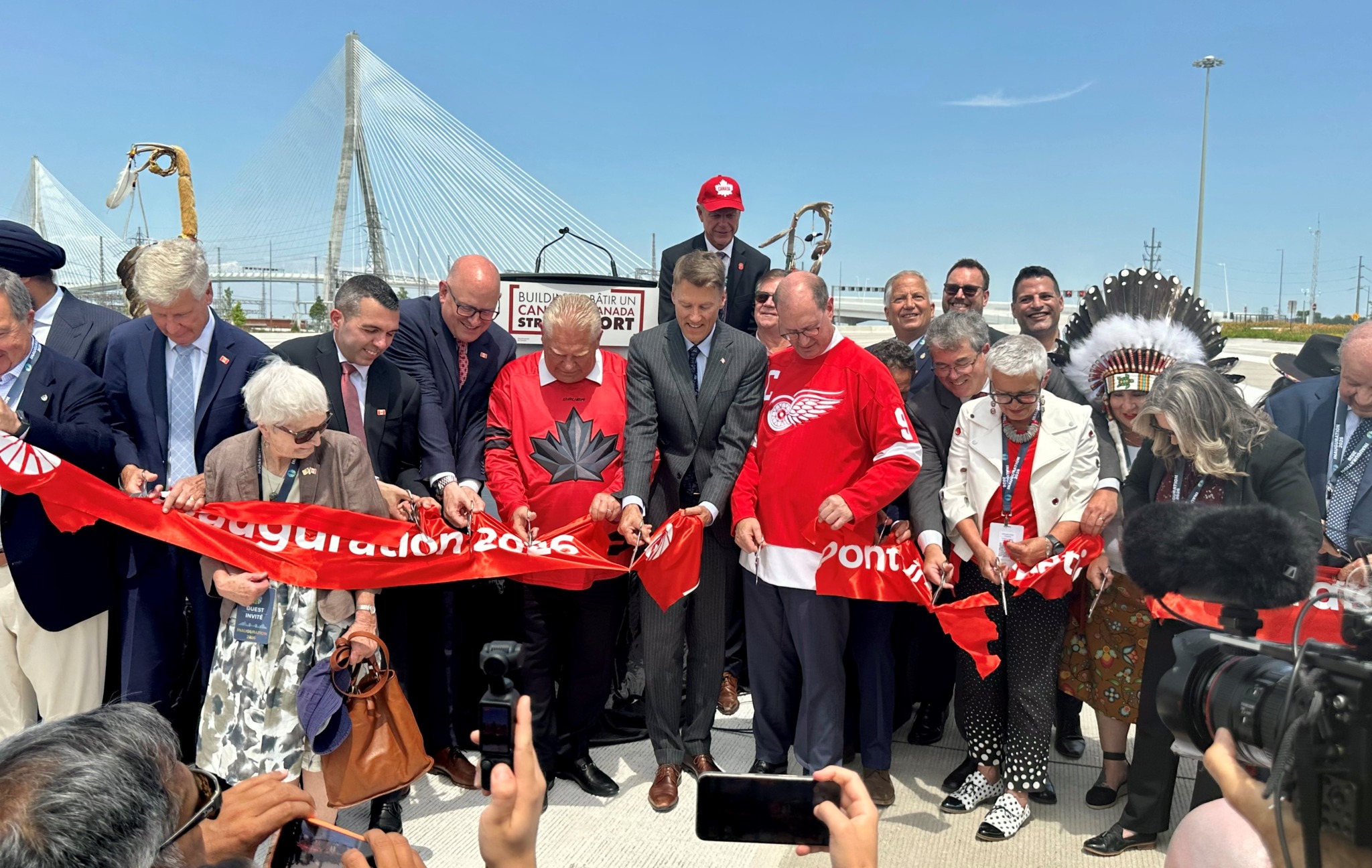
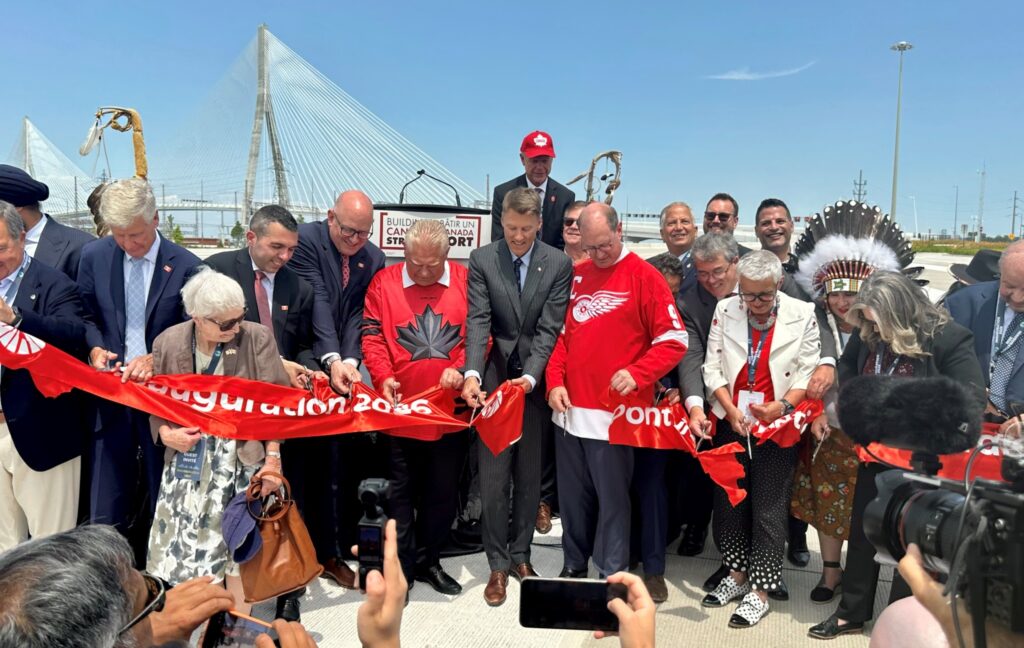
Canada officially opened the Gordie Howe International Bridge on July 24, unveiling a border crossing designed to move commercial freight more efficiently between Canada and the United States.
With trucks and four-wheelers set to begin using the span on July 27, carriers are expected to benefit from faster highway access, expanded inspection facilities and border technology aimed at reducing delays along North America’s busiest trade corridor.
The first new crossing between Ontario and Michigan in more than 60 years is expected to save commercial carriers about 850,000 hours annually, according to Gregor Robertson, Canada’s minister of housing and infrastructure and minister responsible for Pacific Economic Development Canada.
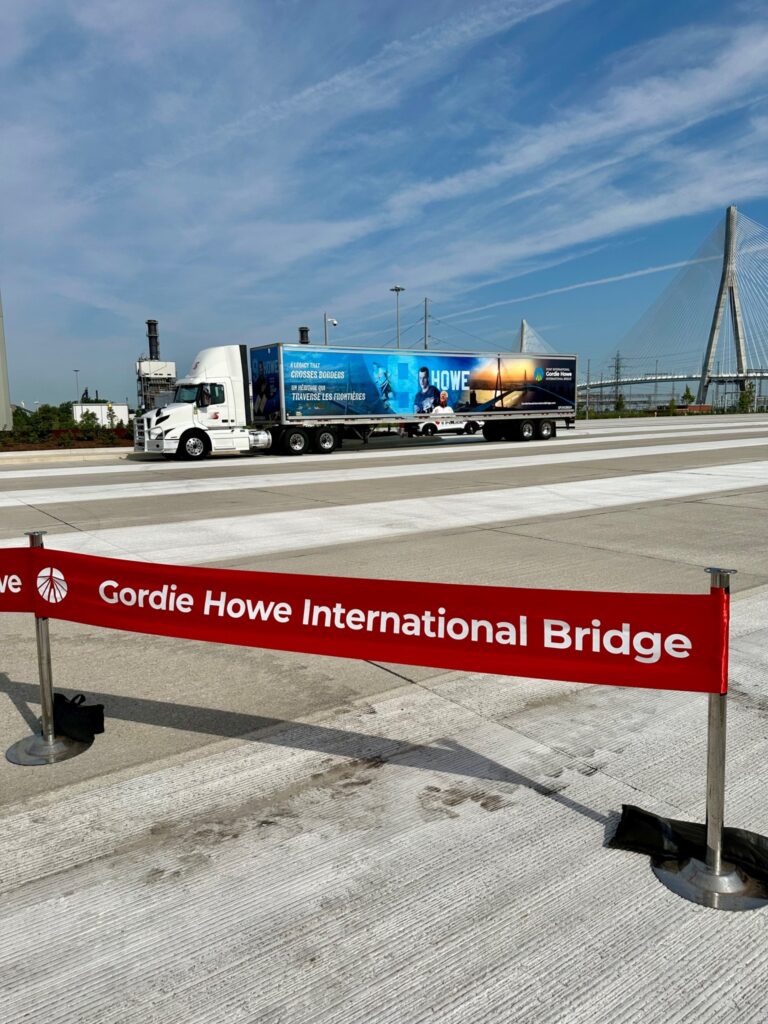
Direct connections between Highway 401 and Interstate 75 eliminate traffic lights between the freeway and the border, while larger customs plazas on both sides of the Detroit River have been built to accommodate growing freight volumes.
“The great day will be when the trucks start rolling across,” said Stephen Laskowski, president of the Canadian Trucking Alliance (CTA). “I think it will be a great signal to the supply chains on both sides of the border that we now have certainty that the bridge is open.”
For trucking companies, the improvements extend well beyond a new route across the Detroit River.
Laskowski said one of the biggest operational advantages is the ability to move directly from the freeway to the border without stopping at traffic lights. Equally important, many inspections that once required freight to be unloaded can now be completed using advanced imaging technology.
“A lot more of the inspections that would have normally required offloading don’t at this bridge,” he said. “They’re going to go through the X-ray machine.”
Agricultural and meat inspections can also be completed within the border complex instead of at off-site facilities, reducing delays and allowing truck drivers to return to the road sooner.
The Canadian port of entry has been designed to help commercial trucks move smoothly, according to Sydney Kale, director of the Canada Border Services Agency’s Gordie Howe International Bridge District Southern Ontario Region.
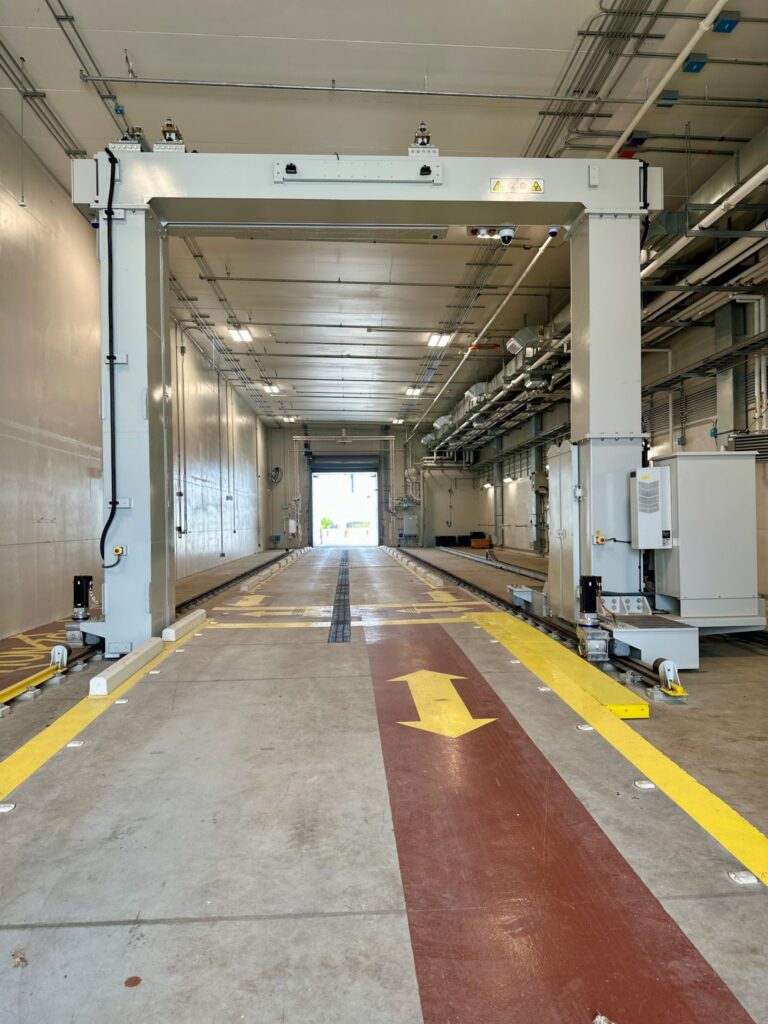
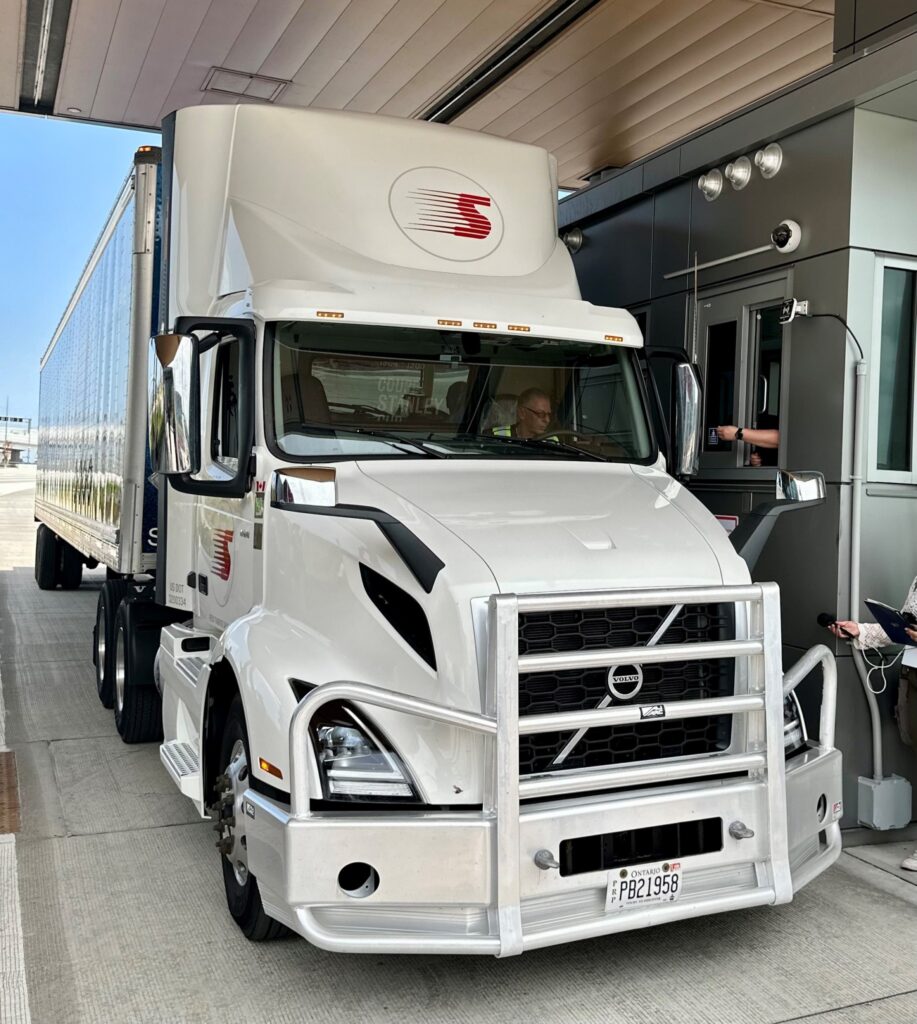
The commercial plaza includes 14 secondary examination bays — the most at any Canadian port of entry — and a permanent large-scale imaging X-ray building operating around the clock. Unlike mobile imaging systems used at many crossings, the fixed installation enables officers to conduct rapid, non-intrusive scans of tractor-trailers to identify anomalies without automatically requiring a full cargo examination.
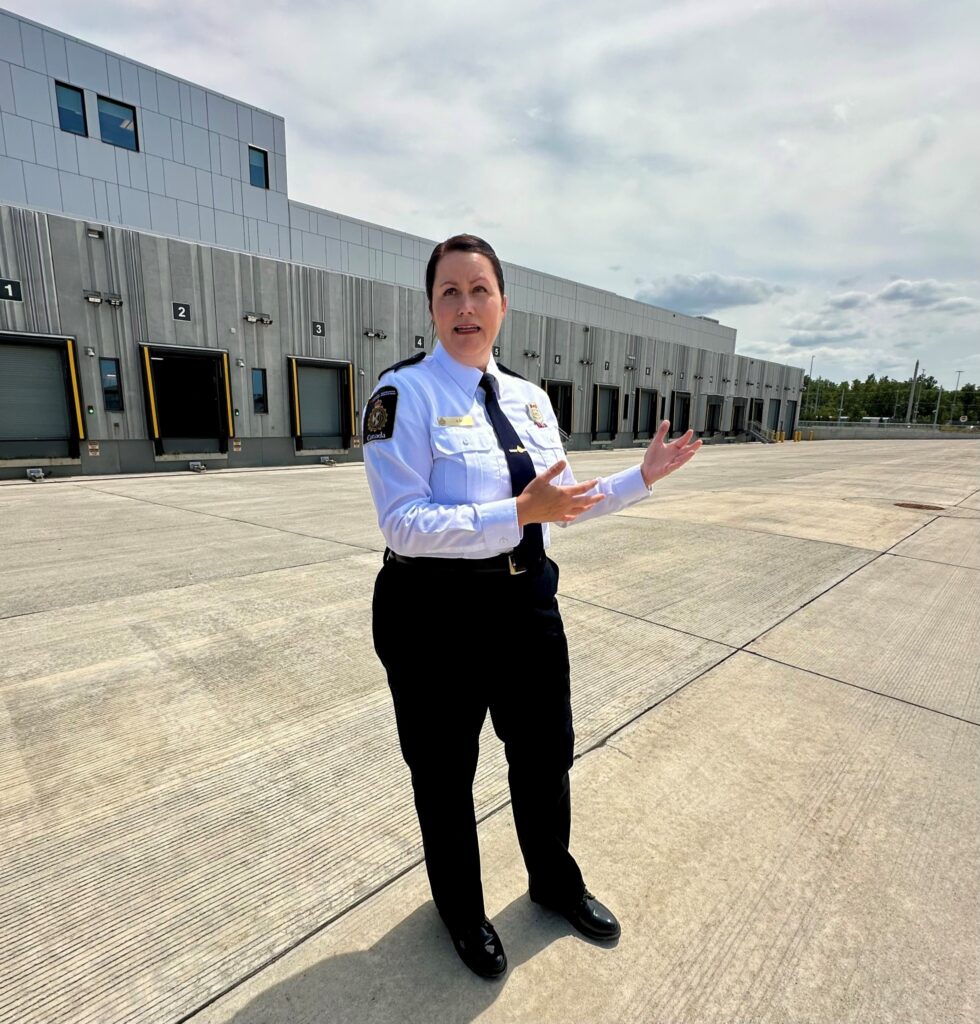
“It helps us identify loads that we might want to consider for additional examination,” Kale said. “Our officers get extensive training in how to read the various images and the various types of materials that might be secreted within, and then they’re able to effectively select things that need to have another look, as opposed to taking a commercial truck driver’s time with a full offload and an intensive exam when it might not be necessary.”
Kale said the port can operate up to 16 commercial primary inspection lanes during periods of heavy truck traffic, giving it the highest commercial processing capacity in Canada. Every inspection booth is equipped with technology allowing any lane to become a FAST lane, enabling the CBSA to quickly increase capacity for trusted traders as freight volumes fluctuate.
The commercial inspection area also includes an oversized vehicle lane, a hazardous goods examination canopy and a commercial office where truck drivers can receive assistance with customs documentation. The hazardous goods facility features a self-contained environmental system that allows officers to safely inspect leaking loads while protecting workers, the public and the surrounding environment.
Beyond X-ray imaging, the CBSA has equipped the crossing with trace detection equipment, scopes, detector dog teams and other inspection technology. Officers use those tools alongside the imaging system to determine which shipments require additional examination while minimizing unnecessary delays for compliant carriers.
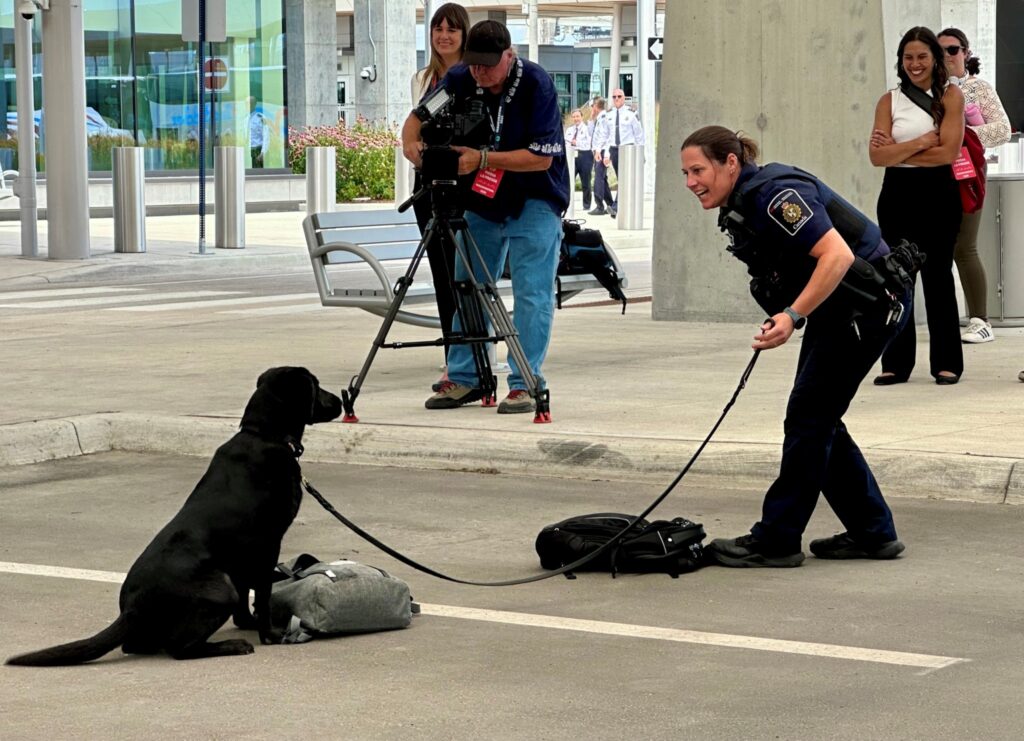
Although commercial traffic drove much of the bridge’s design, Kale noted the overall Canadian port of entry includes 24 primary inspection lanes — the most in the country — with the flexibility to shift capacity between passenger vehicles and commercial trucks based on demand. The same technology also allows the CBSA to increase or reduce the number of FAST and NEXUS lanes in real time.
The bridge itself stretches 2.5 kilometers across the Detroit River between Windsor, Ont., and Detroit. Named after Canadian hockey legend Gordie Howe, features 16 toll lanes on the Canadian side, while the U.S. port includes 36 inspection lanes. Robertson said the added capacity, combined with direct freeway connections, will allow trucks to move more seamlessly through the crossing.
“This bridge is a testament to what we can build when we work together,” Robertson said. “Every year, our two countries exchange approximately $1.3 trillion in goods and services, making this the largest trading relationship in the world.”
He added that the Windsor-Detroit corridor alone handles more than $300 billion in annual trade.
Canadian Ambassador to the United States Mark Wiseman said nearly 3 million trucks cross between Windsor and Detroit each year, carrying roughly one-quarter of all goods traded between Canada and the United States.
“Truckers are the drivers of our economy,” Wiseman said. “Over its expected lifespan of 125 years, the Gordie Howe International Bridge will become one of the main economic arteries of the Great Lakes region.”
Laskowski said the bridge also sends an important signal to businesses considering investments on either side of the border.
“Where there’s growth in freight, there’s growth in jobs for trucking, and that’s what matters the most,” he said.

Ontario Premier Doug Ford described the crossing as “an incredible symbol of the potential and opportunities that await workers and families on both sides of the Detroit River,” saying it will strengthen the highly integrated Canadian and American economies despite ongoing trade tensions.
Dr. Murray Howe, son of the late hockey legend, said the bridge reflects his parents’ lifelong commitment to bringing people together. “They dedicated their lives to building bridges between people, between families, between communities and between nations,” he said. “This bridge will serve as an unmistakable symbol of the priceless bond and true friendship between the people of Canada and the people of the United States.”
Credit: Source link