Practical advice on adopting alternative fuels and ZEVs from HDT’s 2026 Top Green Fleets, from renewable diesel and natural gas to electric trucks.
There are both benefits and challenges to adopting alternative fuels and zero-emission vehicles into your trucking fleet. So we asked this year’s HDT Top Green Fleets for advice and lessons learned.
These fleets are pursuing a wide range of sustainability solutions, from renewable diesel and renewable natural gas to battery-electric trucks. Some operate entirely zero-emission fleets. Others are still experimenting.
But regardless of where they are on their sustainability journey, we saw some consistent themes in their advice.
There Is No Silver Bullet
One of the clearest lessons? Fleets should resist the temptation to look for a single answer.
Averitt advises fleets that in the quest to reduce emissions, start with what they can control — equipment efficiency, network design, and idle reduction — and then layer in alternative fuels where they make operational sense.
“Ditch the silver bullet mindset,” says Werner, adding that decarbonization will likely require a multi-fuel strategy. A route that works well for battery-electric trucks may not be a good fit for longer-haul operations. Renewable diesel is a drop-in solution, but it’s not available everywhere.
This reflects what the North American Council for Freight Efficiency has dubbed trucking’s “messy middle” — a period when diesel efficiency improvements, renewable fuels, natural gas, and zero-emission vehicles are all being used, sometimes within the same fleet.
The goal isn’t to find the perfect technology. It’s to find the right technology for your specific operations.
Old Dominion Freight Line emphasized that fleets need to understand their duty cycles, range requirements, and network needs before investing in any technology.
Match the Technology to the Lane
Fleets that have had success with alternative fuels often point to one key factor: predictable operations.
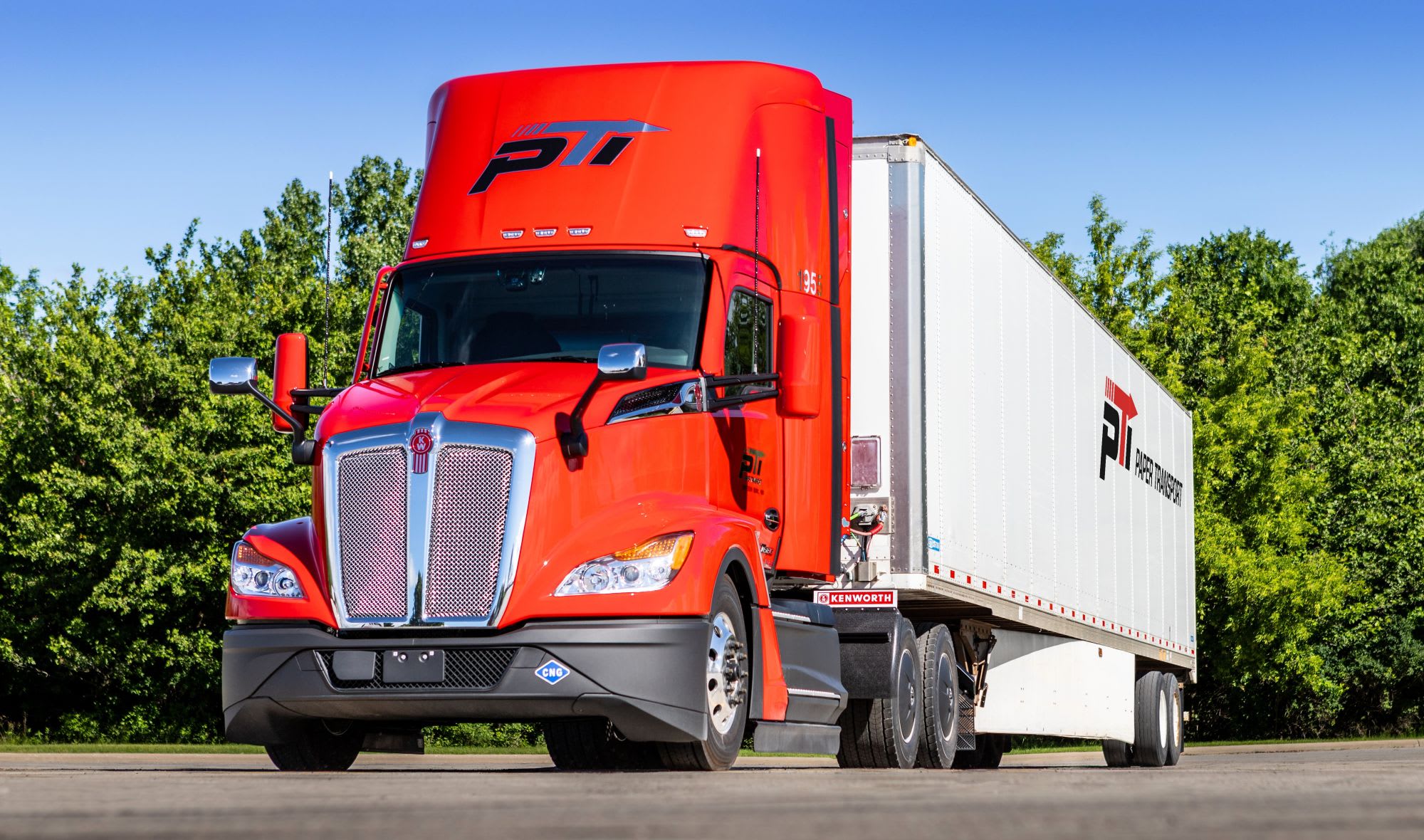
Paper Transport began investing in natural gas shortly after the 2008 financial crisis, when diesel price volatility prompted it to look for alternatives. Over the next several years, many fleets tried natural gas, but abandoned it because of higher equipment costs, engines that couldn’t match the performance of a diesel in a heavy-duty truck, maintenance challenges, and limited technician support.
Paper Transport stayed with it.
Today, the fleet has logged more than 80 million natural gas miles, but company officials say success depends on more than choosing the right fuel. Dedicated freight, repeatable lanes, reliable volume, and established fueling corridors all make alternative fuels easier to deploy successfully.
“Maximizing equipment utilization via slip seating and creative scheduling ties it all together,” the company said. “But the real lynchpin is a dedicated partner.”
That’s not always realistic for every fleet, but the broader point holds: The more predictable the operation, the easier it is to make alternative fuels work.
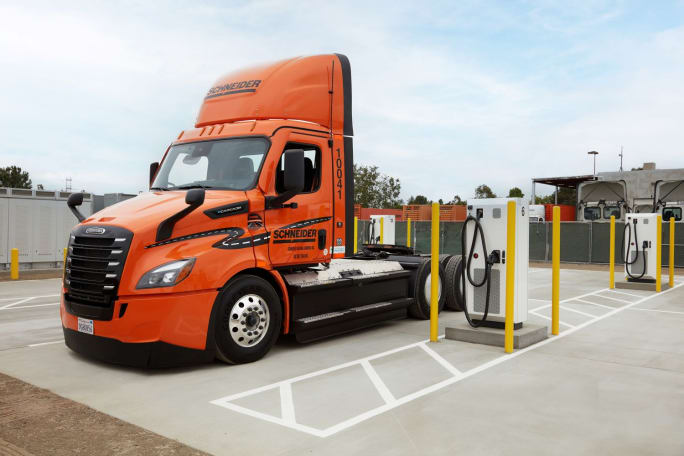
In 2023, when Schneider was part of the Run on Less Electric Depot demonstration project, it told NACFE that process of converting to electric trucks and installing modern charging infrastructure was challenging and meant many adjustments.
Infrastructure Can Make or Break a Project
Why are predictable operations such as dedicated fleets or regular local/regional routes a good fit for alternative fuels or zero-emission vehicles? It makes the charging or fueling infrastructure feasible.
Brad Bayne of 4 Gen Logistics, which operates a fully zero-emission drayage fleet in California, says fleets considering battery-electric trucks should start with a conversation that has nothing to do with trucks.
“If a company plans to go the BEV route and have a behind-the-fence charging application, the first thing they should do is have that conversation with their local utility company on power availability,” he said.
Another thing to understand is how long it will take to bring capacity online.
One of NFI’s biggest lessons from EV deployment was to involve the utility provider from the very beginning. Utility timelines are often outside a fleet’s control. Even small delays can quickly cascade into much longer waits.
“They are making infrastructure plans several years in advance,” said Mike McDonald of B-H Transfer, who has worked with electric trucks at previous jobs. Delays at the utility level can ripple through an entire project timeline.
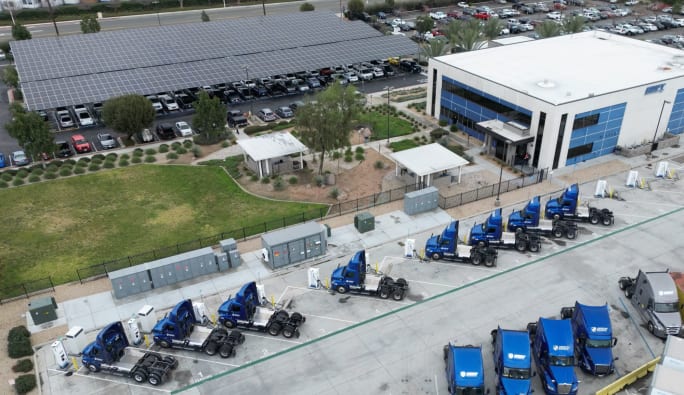
Microgrids are becoming a common part of electric truck charging facilities.
Charging strategy is just as important. Fleets are learning to manage charging to avoid peak demand charges and to plan for uptime and service response times. Some are exploring battery storage to help manage costs or provide backup power.
Pitt Ohio’s advice is to think ahead and “future-proof” the installation when investing in charging infrastructure. Installing enough capacity up front for future growth is usually easier and less expensive than rebuilding later.
Infrastructure considerations extend beyond electric vehicles.
Renewable diesel offers one of the easiest entry points because it can be used in existing equipment without major infrastructure changes. The challenge, fleets note, is that availability and pricing vary widely by region.
Detmar Logistics decided to address the question of natural gas fueling infrastructure by becoming vertically integrated and opening its own fueling stations.
Pilot First, Scale Later
The fleets that have been most successful with alternative fuels generally didn’t start with large deployments.
“Embrace the pilot-first model,” Werner said, using smaller deployments to evaluate real-world performance, identify operational bottlenecks, and understand infrastructure requirements before making larger investments.
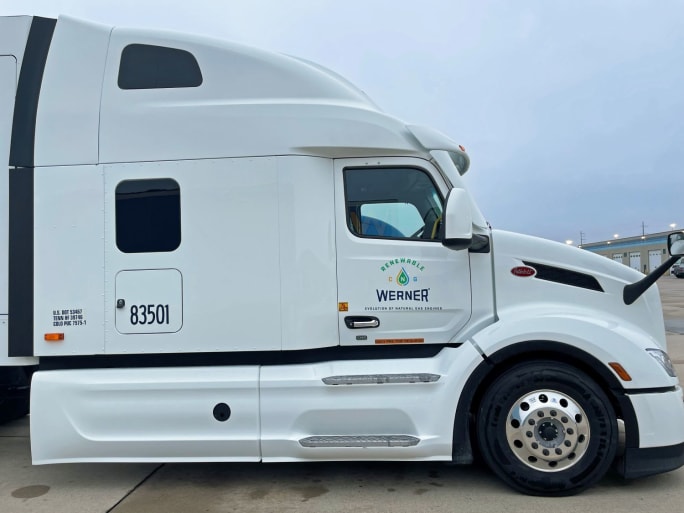
Werner advocates starting with small pilot programs, such as this one for renewable natural gas.
Werner Enterprises
Pitt Ohio suggests that fleets can learn valuable lessons about battery-electric technology through electric forklifts before committing to Class 8 trucks.
4 Gen cautions fleets against relying solely on manufacturer range claims.
“The one thing we know from experience, the current equipment will not be a one-for-one match to current ICE vehicles,” Bayne says. “Talk to other companies using the product and get the real-life numbers,” Bayne says.
Real-world operations have a tendency to expose challenges that don’t show up in product brochures or even short-term tryouts. Fleets should expect some level of operational adjustment. For instance, Bayne found that tire wear on the battery-electric and hydrogen-fuel-cell trucks was even worse than he anticipated and he had to make adjustments to address it.
Then there’s the maintenance aspect. And not just of the trucks, but also of the charging or fueling infrastructure. Think about this before you need it.
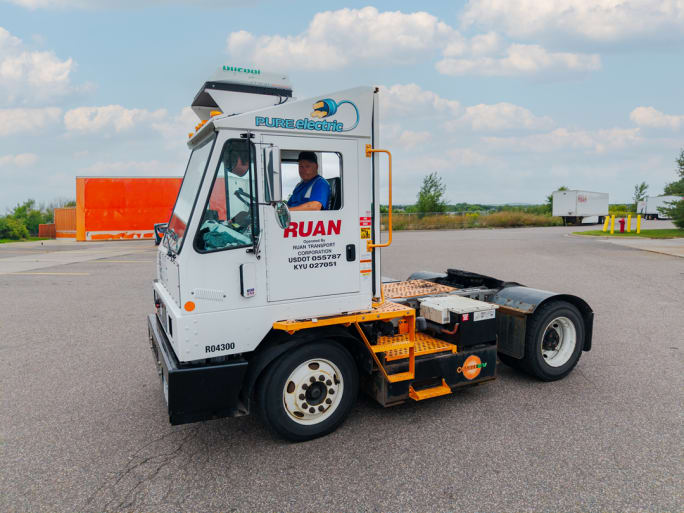
Starting out with electric yard tractors, a less expensive investment that also is easier to plan charging around, can help a fleet dip its toes into EVs.
Ruan Transportation Management Systems
“Have a solid understanding of how the service piece will look,” Bayne says. “Does the OEM have a solid dealer network to handle your BEV fleet with plenty of trained technicians? What should the expected response time be for issues?”
For natural gas fleets, training and safety are also key, and shop upgrades will be needed.
Technology Is Only Part of the Equation
Another common theme: Emissions reductions alone aren’t enough.
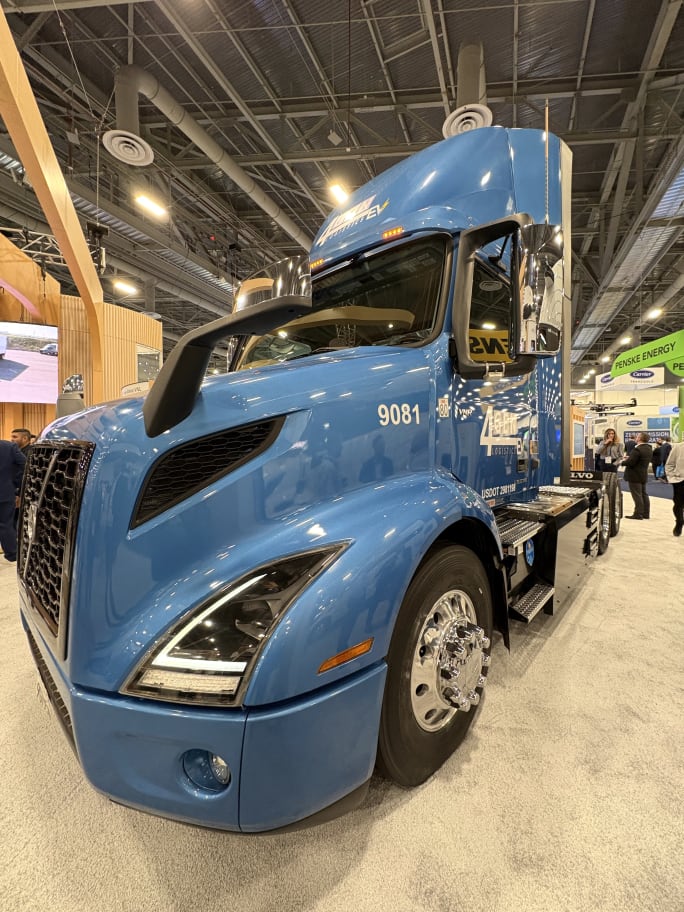
4 Gen Logistics has been working with battery-electric trucks since the early days of the Volvo LIGHTs program.
Beyond the technical aspects of vehicle specs, range, infrastructure, maintenance, price, and so on, Pitt Ohio encourages fleets to look beyond fuel savings and emissions reductions when evaluating new technologies. Cleaner facilities, improved driver experience, and market differentiation can all create value.
Another theme that surfaced repeatedly was the importance of people.
Bayne recommends getting drivers involved early in any transition and identifying drivers to try the new technology early who can help build support within the fleet.
“A few driver champions go a long way,” he says.
Customers also play a growing role.
A. Duie Pyle emphasizes the importance of being able to translate performance data into meaningful costs and benefits for customers. As more shippers pursue their own sustainability goals, fleets increasingly need to demonstrate the value of alternative fuels in ways customers understand.
Some fleets are working with shippers to enable charging at customer locations, including “opportunity charging” to get a “top off,” so to speak, when loading or unloading.
This Is a Long-Term Commitment
It’s apparent from this year’s Top Green Fleets that alternative-fuel adoption isn’t a one-time project. It takes time. Just ask Paper Transport, which has logged more than 80 million natural gas miles: “Alternate fuel adoption is a long game,” the company says. “Carriers who want to get in the game can’t quit after the first inning.”
“The path to a greener fleet is rarely a straight line,” says Werner. The company’s recommendation is, don’t wait for the perfect technology. Start small. Test rigorously. Stay flexible.
“Even with the best plan… expect the unexpected,” Bayne says of electric trucks. “We are still in the infancy of this technology.”
You have to start somewhere.
John Verdon, co-founder of all-electric fleet Nevoya, encourages other fleets to take that first step.
“Don’t wait. Execute now,” he says. “Start with a use case and freight that makes sense today. Build consistency and momentum with your team, organization, and customers, and then scale over time. Show the value today.”
NFI recommends that fleets set clear milestones tied to real deployments, commit to continuous learning, and get involved where you can. “Any progress is better than no progress.”
Credit: Source link