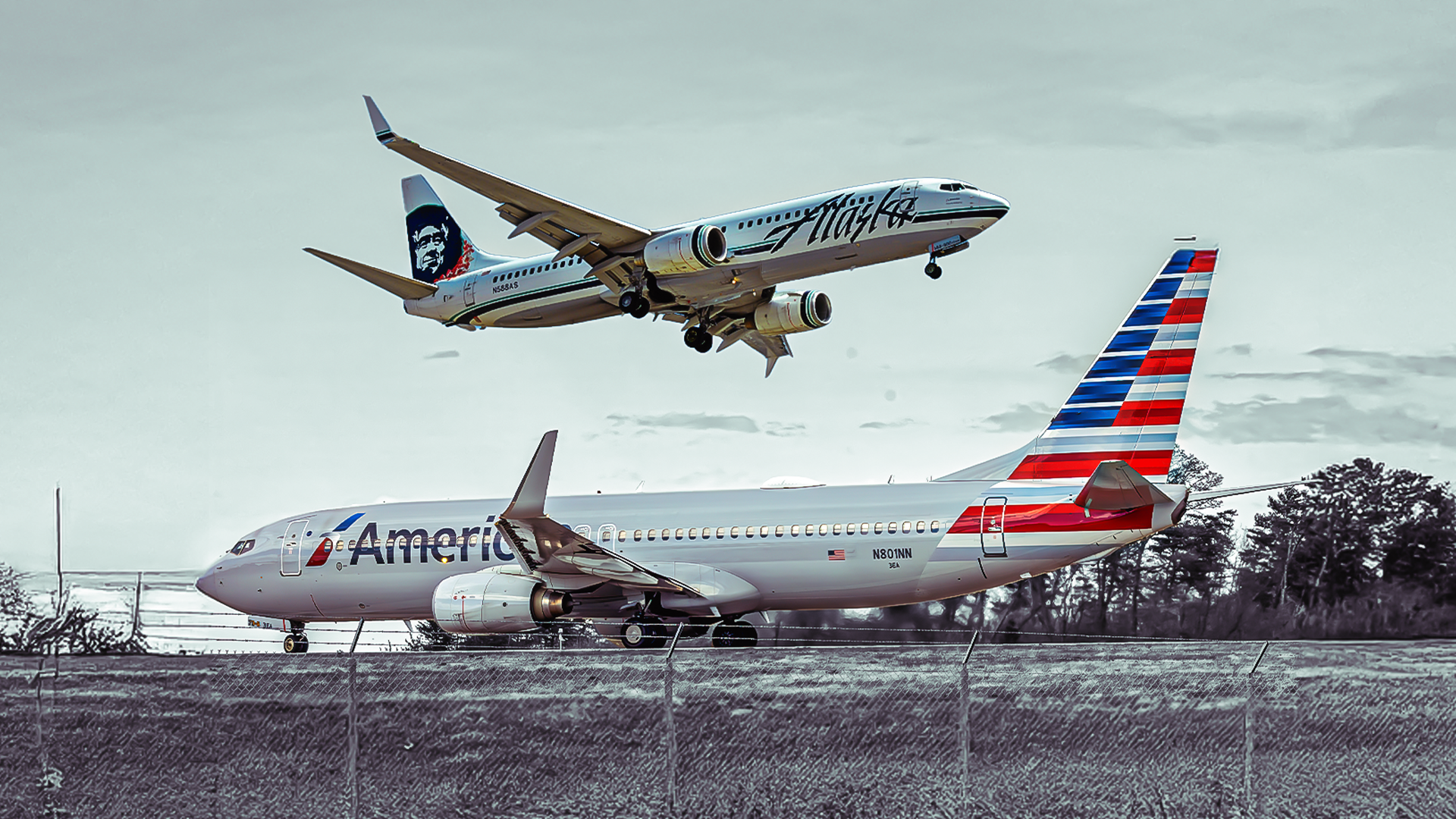
Multiple recent news stories have highlighted the challenges associated with safe baggage handling, as multiple employees have been found to have gotten trapped inside the cargo compartments of aircraft that have taken to the skies. These incidents have been determined to be accidents, although the concerns associated with the behavior of baggage handlers have created much cause for concern. These incidents have occurred primarily on  American Airlines
and Alaska Airlines flights, but other carriers have reported similar occurrences.

American Airlines
- IATA/ICAO Code
-
AA/AAL
- Year Founded
-
1926
- CEO
-
Robert Isom
Legacy carriers, unlike low-cost airlines, which tend to charge passengers handsomely for checked baggage, will have far more bags to load and thus run a much higher risk of these kinds of incidents taking place. The baggage handling industry is massive, and it is controlled by a handful of global conglomerates to which airlines outsource ground handling services. In this article, we will take a deeper look at the concerning incidents involving baggage handlers getting trapped inside aircraft cargo holds.
The First Notable Incident Of This Happened Back In 2015

The first of the many notable incidents of baggage handlers getting trapped inside commercial aircraft cargo holds occurred back in 2015, when a handler on an Alaska Airlines flight said he woke up inside a cargo hold only after the jet had taken to the skies. The handler in question could potentially have slept through the entire flight had a large piece of luggage not fallen on top of him and awoken him from his slumber, according to report from ABC News.
The baggage handler in question claimed that he saw nothing but pitch black and heard a loud frightening noise. The identity of the individual involved in the incident was not released by Alaska Airlines to the public, but his statements were reported upon by multiple major news outlets. He indicated that he was scared when he realized the position he was in, and he had no idea what was going on or how he had found himself in such a complicated set of circumstances. He said as follows regarding the incident:
“It was nothing but pitch black and a loud noise. So I was scared, and I didn’t know what was going on.”
From this statement alone, one can only imagine how frightening this experience must have been for the individual involved. However, airlines must also consider some important operational safety risks when discovering that these kinds of incidents have occurred.
The Baggage Handler Faced Serious Repercussions

While the baggage handler in question was not injured, Alaska Airlines released a statement that the individual would be permanently banned from working on the airline’s flights. This may seem like a harsh punishment for what is otherwise a fairly mundane mistake, but there is a good reason for this punishment being laid out.
The man in question was a ramp agent with Menzies Aviation, a company that Alaska Airlines contracted in order to handle its baggage at some airports, reported the incident immediately as soon as he realized the situation that he was in. He dialed 911 on his cell phone immediately in order to call for help. He said that he felt like he was on Alaska Air Flight 448 and that he was trapped in the cargo hold, subsequently pleading that somebody stop the jet. Audio from this phone call was released to the public back when the incident occurred.
The 911 dispatcher that happened to have received this unique call was quick to express his confusion, and the call was lost after just 44 seconds of communication. The baggage handler also noted that he was banging loudly in the hold, with this sound being audible to all the aircraft’s passengers and crew. The plane in question was heading to Los Angeles, and it subsequently returned to Seattle after just 14 minutes in the air.
A Similar Incident Occurred On November 1, 2018

While the cargo hold incident that took place in 2015 was widely dismissed as a freak accident, something which would hopefully not happen again, there were other incidents of baggage handlers getting trapped inside cargo holds that took place in the following years. On November 1, 2018, there was a surprise stowaway on an American Airlines flight to Chicago-O’Hare International Airport (ORD).
Just as was the case with the 2015 incident at Los Angeles International Airport (LAX), a ground handler was found to be trapped inside the cargo hold. The baggage handler in question admitted that he was drunk and that he fell asleep inside the cargo hold of a Boeing 737 when the jet took off from Kansas City International Airport (MCI) bound for Chicago-O’Hare. The individual who was involved in this accident was not hurt and was never charged with a crime, according to reports from ABC 7 Eyewitness News.
The employee in question worked for Piedmont Airlines, a regional carrier that was contracted by American Airlines to assist with baggage operations for this service. There was an odd set of operational circumstances that led to this incident going unreported, according to reports from the airline. Multiple sources reported that the man was likely not discovered inside the cargo hold because there was no luggage loaded onto the jet prior to the flight.
What Did The Airline Have To Say About The Situation?

American Airlines was quick to relay its disappointment at the situation, while also being quite clear about exactly what occurred. A Piedmont Airlines employee who had been working on an American Airlines flight on the morning of October 27, 2018, at Kansas City International Airport, inadvertently fell asleep inside the cargo hold of a Boeing 737-800 aircraft, as per the airline’s statement.
The carrier would go on to note:
“The flight subsequently took off with the team member in the cargo hold, which was heated and pressurized.”
Interestingly, the airline did not make any notes about the employee’s intoxicated state, something which would likely be of principal concern to the public. The carrier reiterated multiple times that its principal priority was ensuring the safety of its employees, who had undoubtedly encountered a traumatic situation.
The airline noted that the baggage worker in question did not immediately request medical attention when the airline arrived in Chicago, and the carrier noted its gratitude for the fact that he did not sustain any injuries. The American Airlines official statement, however, did relay the carrier’s concerns about the seriousness of the situation. The airline noted that it would be reviewing exactly what happened to cause the situation.
Some Stowaway Incidents Have Turned Deadly In The Past

Fortunately for both American Airlines and Alaska Airlines, neither of these incidents had actually turned deadly, but the same cannot be said for a JetBlue incident that took place more recently. Back in January of this year,
JetBlue announced the tragic discovery of two dead stowaways that had attempted to hide in the landing gear compartment of a flight on Monday night from John F. Kennedy International Airport (JFK) to Fort Lauderdale-Hollywood International Airport (FLL)
.
This incident reignited concerns about aviation safety and the risks of passengers attempting to be stowaways on flights within the United States. The bodies of the two deceased men were found during a standard inspection of the landing gear areas after JetBlue Flight 1801 landed in Fort Lauderdale.
The specific circumstances of how these passengers were able to access the landing gear compartment, and whether there was a major security breach involved in the incident. The identities of these two men remain unknown and Jamaican authorities have noted that the individuals were of Jamaican origin. However, later reports from The Independent confirmed they were actually Dominican.
The Practice Of Stowing Away On Aircraft Has Often Ended With Tragedy
There has been a long, decades-old history of passengers attempting to stow away on aircraft in wheel wells. Mary Schiavo, the former inspector general for the Department of Transportation, revealed that the Federal Aviation Administration (FAA) tracked more than 100 global cases between 1947 and 2020.
Over 75% of these attempted stowaway incidents resulted in passenger deaths due to the extreme dangers involved with hiding in a wheel well. Passengers are exposed to extremely low temperatures, are often deprived of oxygen and are often physically crushed by the landing gear systems.
Cuba used to be one of the most popular origin destinations for stowaways, and there is a long, documented history of survivors suffering long-term physical damage from the noise, lack of oxygen, and freezing temperatures associated with completing such a maneuver. Furthermore, stowing away on an aircraft is a serious aviation security violation, one that could seriously endanger any flight operation.
Credit: Source link