Uncertainty remains elevated and the main variable surrounding the freight market.
Data released by the OOIDA Foundation on Tuesday, May 26, indicated manufacturers report improved demand compared to last year, but geopolitical tensions and rising oil and diesel prices continue to weigh on the market.
“Ultimately, much of 2026 may depend on what happens in the Middle East, which could impact everything from fuel costs and interest rates to housing activity,” the Foundation said. “If conditions stabilize, 2026 could see a stronger, more demand-driven recovery.”
Van market
Demand followed seasonal trends. The South Central region reported the largest increase in demand, while the Midwest experienced the largest decrease.
Overall freight volumes remained soft and have been largely flat since the second quarter of 2023, according to the Foundation’s May outlook.
Rates have stayed about the three-year moving average for six consecutive months.
Miscellaneous durable goods wholesalers, furniture and home furnishing wholesalers and food manufacturing drove dry van increases.
Flatbed market
For the fifth consecutive month, demand increased and by the largest margin in the Southeast.
A sharp decrease in capacity relative to the amount of freight, as well as a decline in primary metal manufacturing and cement and concrete product manufacturing, drove this increase.
Rates rose in all six regions and are up for the 14th consecutive month.
Reefer market
Less freight and an increase in capacity compared to the previous month led to a decline in demand, which remains below 2019 levels.
More than half of the regions reported an increase in rates.
Despite a contraction in beverage manufacturing and wholesaling, food manufacturing drove increases across this market.
Trucking market
The Cass Shipment Index rose, while the Truckload Linehaul Index indicated growth for the seventh time in eight months.
“A supply-driven freight cycle doesn’t imply strong volumes and with higher fuel prices sapping consumer spending and rising interest rates sapping the housing market, this time is no different,” Cass said. “The source of this early demand increase is primarily capacity reduction.”
Seasonally-adjusted estimated for-hire carrier entries aligned with expectations.
Based on historical trends, those entries are expected to decline in May. However, a recent surge in the freight market could affect that trend.
Some owner-operators are reporting that spot rates are not keeping pace with fuel costs.
March used-truck sales were consistent with historical averages.
Freight market
U.S. manufacturing activity remains in expansion territory and grew at the same rate as the previous month, according to the Institute for Supply Management.
The Housing Market Index indicated fewer builders cut prices in May than in April, but the use of sales incentives remained above 60% for the 14th consecutive month.
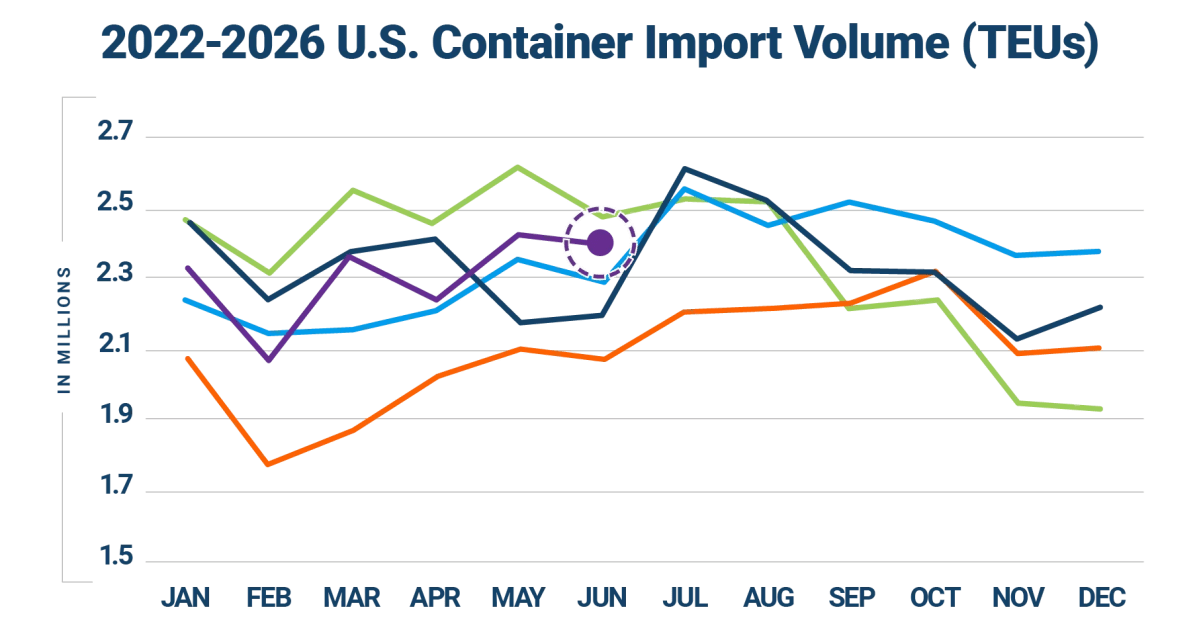
Intermodal continues to gain momentum, with modest demand growth expected through June, according to C.H. Robinson. A stronger acceleration is anticipated through the rest of the year. LL
More Land Line coverage of business news.
Credit: Source link