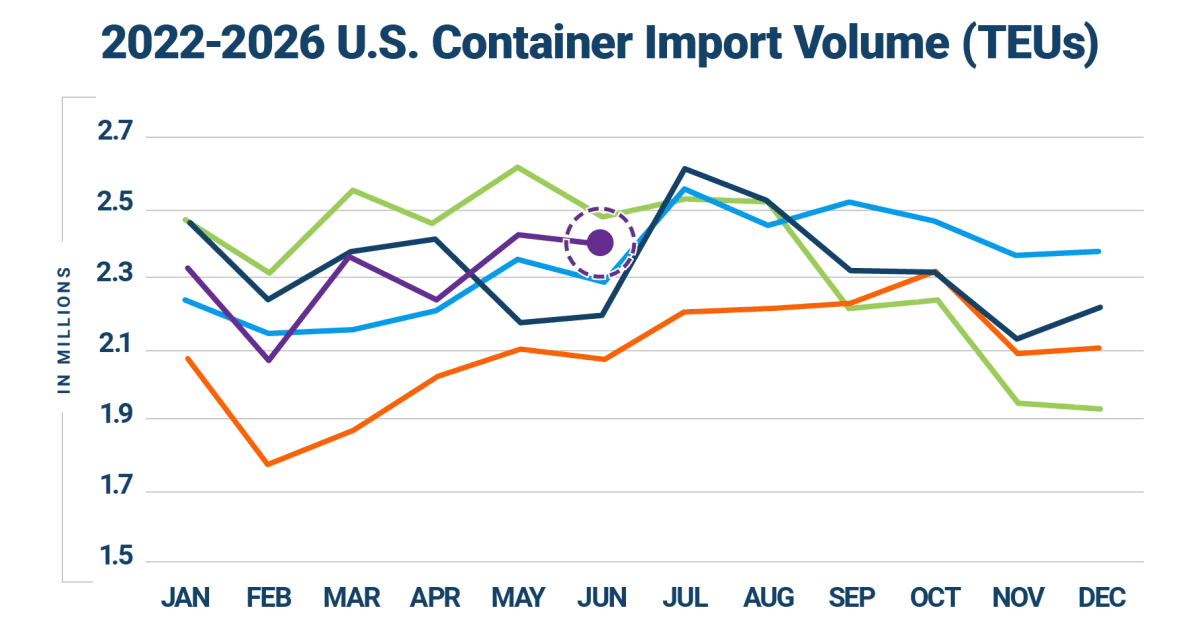
United States-bound imports are potentially poised to end 2024 at even higher levels than expected, spurred on by the chances of an East and Gulf Coast port’s strike in January, following a brief one in early October, and tariff actions expected to be taken when President-elect Donald Trump returns to office, according to the new edition of the Port Tracker report, which was issued today by the National Retail Federation (NRF) and maritime consultancy Hackett Associates.
The ports surveyed in the report include: Los Angeles/Long Beach; Oakland; Tacoma; Seattle; Houston; New York/New Jersey; Hampton Roads; Charleston, and Savannah; Miami; Jacksonville; and Fort Lauderdale, Fla.-based Port Everglades.
Authors of the report explained that cargo import numbers do not correlate directly with retail sales or employment because they count only the number of cargo containers brought into the country, not the value of the merchandise inside them, adding that the amount of merchandise imported provides a rough barometer of retailers’ expectations.
“October’s strike lasted only three days but there’s the potential for a longer strike if a new labor contract is not reached after the contract extension runs out in mid-January,” NRF Vice President for Supply Chain and Customs Policy Jonathan Gold said. “That has retailers spending extra to bring in cargo early or continue shifting it to the West Coast to avoid any potential disruptions, much like they did earlier this year. And we’re hearing that some merchants will also move up shipments to avoid the costly tariff increases expected after Donald Trump returns to the White House. Neither of these developments is good for retailers, their customers or the economy.”
For September, the most recent month for which data is available, United States imports came in at 2.29 million TEU (Twenty-Foot Equivalent Units)—which does not include final data from the Ports of New York/New Jersey and Miami—and was down 1.3% from August and up 12.8% annually.
Port Tracker issued projections for September and the subsequent months, including:
- October, at 2.13 million TEU, for a 3.7% annual increase;
- November, at 2.15 million TEU, for a 13.6% annual increase;
- December, at 1.99 million TEU, for a 6.1% annual decrease, which would slot total 2024 volume at 25.3 million TEU, for a 13.6% annual gain (the report said these numbers are revised to take the potential port strike into consideration but do not reflect the results of the election);
- January at 2.01 million TEU, for a 2.5% annual increase;
- February, at 1.77 million TEU, for a 9.3% annual decrease, due to fluctuations related to the timing of Lunar New Year shutdowns at Asian factories; and
- March, at 2.01 million TEU, for a 4.4% annual increase
“We are witnessing elections around the world where discontent is leading to inward-looking policies that threaten trade with the almost certain potential for increasing tariffs,” wrote Hackett Associates Founder Ben Hackett in the report. “In the United States this is particularly true with the election of Donald Trump, but it is not much different in Europe, with the EU calling for tariffs to be applied to a growing number of products from China, particularly motor vehicles. And tariffs aside, populist leaders are pushing de-globalization in general, yet another challenge to trade.
On top of these factors, the threat of a major port strike on the East Coast disrupted imports this year as shippers began to shift cargo to the West Coast. The shutdown lasted only three days before both parties agreed to a short- term contract extension until January, but the threat of a larger strike in the New Year remains. The result can be seen in the continuing increase in U.S. imports from Asia, which have not fallen away as expected. Imports continue with strong projections of year-over-year volume increases through November and possibly December.”


Credit: Source link