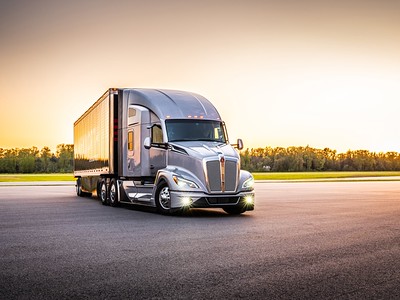
Two states approved speed limit changes this year. More debates on the issue are expected in state legislatures in the coming months.
The Owner-Operator Independent Drivers Association says that roadways are safest when all vehicles travel at the same speed. The Association does not advocate for a specific speed limit.
Since 1995, when the national speed limit was repealed, states have taken on the responsibility for setting their own speed limits.
Some states initially set lower speed limits for large trucks than for passenger vehicles. But over the past 20 years, states have trended toward reducing or eliminating speed limit differences.
Montana and North Dakota approved speed changes this year.
Speed limit bills are likely to keep coming up around the country. Here is a look at some recent state efforts to change speed limits that could be revisited in the months ahead.
New Mexico
A New Mexico lawmaker wants different speed limits for cars and trucks.
New Mexico’s biggest highways have a 75-mph speed limit for all vehicles. Trucks must stay to the right on multi-lane highways outside cities. Exceptions include overtaking and passing other vehicles.
Sen. George Munoz, D-Gallup, introduced a bill during the 2025 session to lower the truck speed limit to 65 mph on these roads.
“If you ever drive I-40, you will enjoy the semi-truck traffic that tries to pass one another going up a hill at 55 mph. Traffic lines up for 10 miles. It’s a real safety factor,” Munoz testified.
His solution was to set a differential speed limit.
A bill analysis from the New Mexico Department of Transportation warned that “this legislation could potentially result in at least a 10-mph speed limit differential between truck tractors and other vehicles on interstates, leading potentially to speed differential-related crashes as well as additional congestion.”
The bill passed the Senate. House lawmakers did not vote on it.
Hawaii
Hawaii lawmakers may revisit the idea of having different speed limits for trucks and cars.
Right now, cars and trucks of all sizes can go 60 mph on interstate highways. Other limited-access roads are posted at 55 mph.
A 2025 bill called for reducing the authorized speed limit for vehicles with at least three axles or weighing more than 10,000 pounds to 50 mph, regardless of the posted speed limit.
The rule would only apply to counties with more than 500,000 people. Honolulu County is the only county to meet the population threshold. Smaller counties could set their own split speed limits by ordinance.
Indiana
Legislation in Indiana to eliminate differential speed limits is not uncommon.
Indiana permits cars to go 70 mph on the state’s fastest roads. Trucks over 26,000 pounds are limited to 65 mph.
Rep. Mike Aylesworth, R-Hebron, has repeatedly pushed to set the same speeds for both.
His pursuit would apply to interstates and major defense highways outside cities with populations of 50,000 or more. The change would also include the Indiana Toll Road.
Supporters say uniform speeds improve traffic flow. They claim traffic flows better when everyone moves at or near the same speed.
The Indiana Department of Transportation backs the idea. A 2023 study with Purdue University found that a uniform 70 mph limit could reduce crashes in the state by about 20%.
Florida
One Florida bill that could return would raise speed limits by 5 mph for all vehicles.
State law authorizes travel up to 70 mph on limited-access highways. Divided highways with at least four lanes outside urban areas can be posted at 65 mph. Other roads the state DOT deems “safe and advisable” can be posted at 60 mph.
The 2025 bill proposed raising the 70-mph limit to 75 mph on limited-access highways like Interstate 95 and the Florida Turnpike.
Divided highways outside urban areas with four or more lanes would go from 65 mph to 70 mph. Other state-managed roads would rise from 60 mph to 65 mph.
Mississippi
Mississippi may revisit a bill on speed limits.
House lawmakers voted this year to pass a bill that would allow the Mississippi Transportation Commission to permit truckers and other drivers to go 75 mph on rural interstates and four-lane highways, up from 70 mph.
If the state adds toll roads, speeds could go up to 80 mph on those roads for all vehicles.
New Jersey
An annual pursuit in New Jersey covers how the state sets speed limits.
Sen. Declan O’Scanlon, R-Monmouth, has pushed to use the 85th percentile rule to set speed limits on highways like the New Jersey Turnpike and Garden State Parkway.
The rule sets speed limits at or below the speed at which 85% of vehicles travel in free-flowing traffic.
The bill would require the New Jersey Department of Transportation and other traffic agencies to use 85th percentile studies to set speed limits. Agencies would recheck them at least every 10 years or after major road changes.
O’Scanlon has said he is not trying to make drivers go faster. Instead, he wants speed limits to match the speeds people are already driving.
New York
Two active bills in New York would raise the speed limit for cars and trucks.
Vehicles are now permitted to go 65 mph on interstates and other limited-access roads.
A3571 and S1500 would increase the speed limit by 5 mph to 70 mph for cars and trucks. The state DOT and the New York Thruway Authority could make the change.
North Carolina
A North Carolina bill is still active that would let the state DOT raise speed limits to 75 mph on certain roads.
State law permits all vehicles to go 70 mph on interstates and other controlled-access highways. The DOT can set a “reasonable and safe” speed limit based on engineering and traffic levels.
The bipartisan House bill, H112, would apply to highways like I-95, I-40, I-87, and U.S. 1 in areas where higher speeds are appropriate. The speed rule would also cover toll roads.
Oklahoma
An Oklahoma bill could return to address speed limits on the state’s fastest roads.
Rural interstates have a 75-mph speed limit. Turnpikes have speeds set at 80 mph. These limits apply to all vehicles.
Rep. Ross Ford, R-Broken Arrow, wants a rule to implement a 65-mph minimum speed on these highways.
South Carolina
In South Carolina, a still-active House bill targets slow traffic on the state’s fastest highways.
State law already prohibits slow-moving vehicles from blocking “the normal and reasonable movement” of traffic. Certain exceptions apply.
SCDOT and local authorities can set minimum speed zones. These zones can be designated when engineering and traffic investigations show that slow speeds on a portion of the highway hinder traffic.
H3138 states that the minimum speed limit on interstates with a 70-mph limit would increase from 45 mph to 50 mph.
Tennessee
One Tennessee bill that could return would raise speed limits by 5 mph on controlled-access highways and interstates.
The maximum speed limit on these roads would go from 70 mph to 75 mph. LL
More Land Line coverage of state news is available.
Credit: Source link