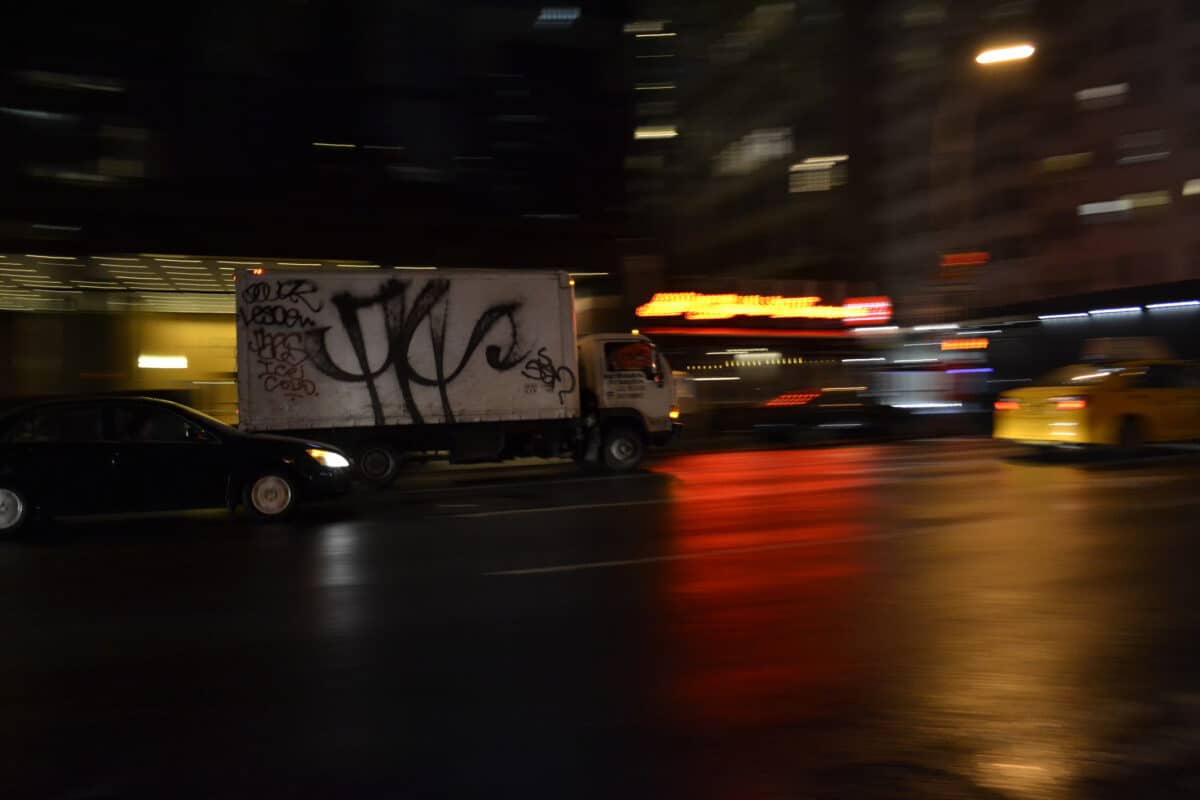
Delivery trucks are more a part of city life than ever before. The New York City Department of Transportation (DOT) reported in April that 80 percent of New Yorkers receive a package once per week.
This explosion in e-commerce and the trucking necessary to sustain it could very well mean more jobs, but it also signals the potential for more congestion, roadway damage, and increased adverse health effects. These byproducts hit hardest in communities like ours in Sunset Park in Brooklyn and Springfield Gardens in Queens, located along major highways and near Industrial Business Zones (IBZs).
According to an Economic Development Corporation report, residents and businesses rely on trucks to move nearly 90 percent of the 198 million tons of freight that annually traverses the five boroughs, a massive logistical undertaking that shows no signs of slowing down. City officials predict yearly citywide freight movement to jump to 312 million tons by 2045.
As the lead sponsor of Introduction 708 and Chair of the New York City Council’s Committee on Transportation and Infrastructure, respectively, we are calling for a long overdue truck route redesign.
If enacted, Introduction 708 would require the DOT to redesign a truck route system that has remained untouched since the 1970s. The measure also mandates the DOT to center neighborhood, environmental, and business voices in a new plan, with the goals of improved safety, increased visibility, reduced traffic congestion and emissions, and reduced vehicle miles traveled. With 40 co-sponsors in the Council, Introduction 708 is sensible policy with a broad coalition of support, including longtime champion of the cause, Brooklyn Borough President Antonio Reynoso, who first introduced the measure when he served on the council.
Increased truck traffic on our streets has a tangible impact. A 2022 MIT Technology Review report found that freight significantly contributes to New York City being the most congested city in the country. Since the pandemic, the rise of e-commerce has added 7,800 freight vehicles to city streets on a daily basis. Calculated at eight hours a day, this means an increase of 60,000 daily vehicle hours to our roads and lungs. While the problem is multi-faceted, including the need to better leverage our waterways to move cargo, a key component necessitates overhauling our transportation networks.
We know this to be true in Red Hook, for example. This South Brooklyn community is now unwittingly home to massive last-mile facilities that jam an extra few thousand trucks through narrow residential passageways each year. Red Hook is also a neighborhood without access to reliable public transit, a community that is largely made up of public housing residents, and an area of the city that suffers disproportionately from asthma. The influx of trucks crowding the streets makes it harder on these residents, who often rely on cars due to living in a transit desert, and increases air pollution levels.
These conditions are also prevalent in communities near JFK Airport, where inefficient truck routes lead to congested roads in the surrounding IBZ. Day in and day out, residential areas are inundated with large trucks — including 53-footers, which are banned from the City’s streets — that cut corners, damage roads, and disrupt lives. Community members there have created a task force to specifically address the issue of illegal truck parking near JFK, which generates noise, pollution, and congestion.
Our communities, which are predominately made up of people of color, are often home to problems that many of the city’s wealthier and whiter neighborhoods don’t want to deal with. Heavy congestion in transportation deserts is only exacerbated by truck routes that run through the heart of our residential communities.
We cannot call ourselves an equitable or green city without tackling this long standing issue. Large corporations cannot continue to exploit our land and roadways without addressing resident needs. Communities like the ones we represent should not be forced to bear the weight of the e-commerce boom alone.
The coming years present an opportunity for the city to plan and implement a citywide trucking system that’s fit for the 21st century and meets the needs of both this growing industry and our communities. The time is now to ensure this goal becomes a reality.
Even agency officials agree. Department of Transportation staff dubbed the current situation at a Council hearing this past spring “already problematic.” They acknowledge that the city needs to make changes and want “fewer truck miles on our streets.”
An overhaul of our truck route map is long overdue. We must pass Introduction 708 for the sake of our communities and all New Yorkers.
Council Member Alexa Avilés represents District 38 in Brooklyn, and is lead sponsor of Introduction 708.
Majority Whip Selvena N. Brooks-Powers represents District 31 in Queens, and chairs the Council’s Committee on Transportation and Infrastructure.
Credit: Source link