Retailers are accelerating imports ahead of expected new tariffs. The trend is pushing U.S. containerized cargo volumes toward a record-breaking July and providing another sign that freight demand remains driven as much by trade policy as by underlying economic growth.
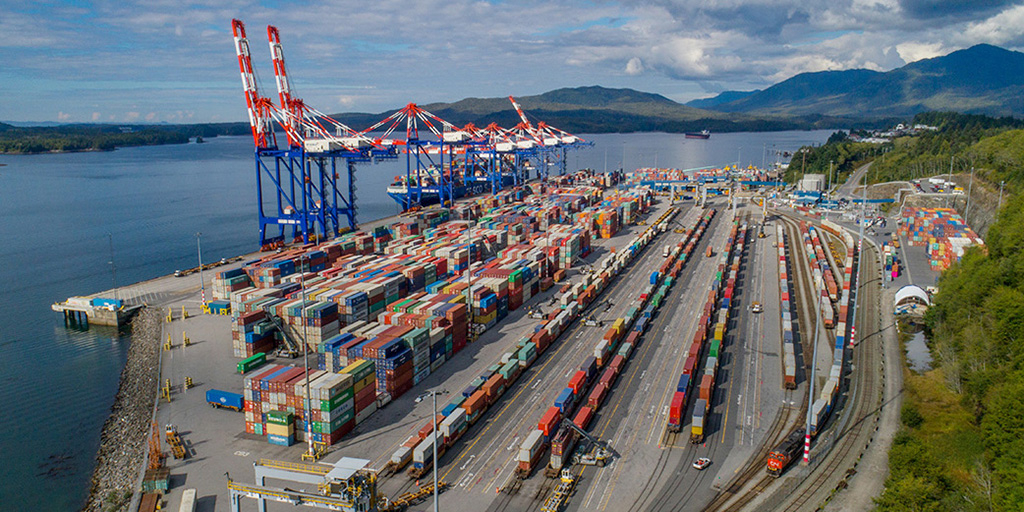
That’s according to the latest Global Port Tracker report from the National Retail Federation (NRF) and Hackett Associates. Its analysts found imports moving through the nation’s major container ports are expected to reach 2.47 million twenty-foot equivalent units (TEUs) in July. That’s enough to eclipse the previous monthly record of 2.4 million TEUs set in May 2022 during the post-pandemic freight surge.
Retailers Continue Frontloading Shipments
NRF said retailers are continuing to bring goods into the country early to avoid potentially higher costs if additional tariffs take effect in August.
“This year’s early peak season is expected to continue through July as retailers and other importers prepare for potentially higher tariffs beginning in August and other trade uncertainties,” said Jonathan Gold, NRF vice president for supply chain and customs policy.
Gold noted that retailers are balancing multiple challenges, including continued supply chain disruptions tied to the conflict in Iran, while preparing inventories for both the back-to-school shopping season and the year-end holidays.
“The busy back-to-school selling season has already started, and the winter holidays won’t be far behind, so retailers have been working to get products into the U.S. and ready to go before new tariffs can potentially drive prices higher,” Gold said. “Despite ongoing economic headwinds, consumers are continuing to spend, but affordability is a key factor affecting their spending habits.”
Temporary 10% Section 122 global tariffs implemented earlier this year are scheduled to expire July 24, while the Trump administration is expected to impose a new round of tariffs related to forced labor concerns as early as August.
Imports Surge Ahead of Expected Tariff Changes
Hackett Associates Founder Ben Hackett said the recent jump in cargo volumes is largely the result of importers moving shipments forward before tariff increases take effect.
“Import volumes have risen sharply, with strong growth likely continuing into July,” Hackett said. “Much of this increase reflects frontloading ahead of expected tariff increases.”
Final data show U.S. ports handled 2.24 million TEUs in May, up 14.9% compared to the same month last year and 10.1% higher than April.
While June numbers have not yet been finalized, Global Port Tracker projects 2.33 million TEUs, an 18.7% increase from June 2025. Combined with May’s growth, the first half of 2026 is expected to total 12.77 million TEUs, up 2% year over year.
After July’s anticipated record, however, import activity is expected to cool considerably.
NRF projects August imports will fall to 2.22 million TEUs, down 4.5% from a year earlier. September and October are each forecast at 1.99 million TEUs, with declines of 5.7% and 3.8%, respectively, while November is expected to reach 1.92 million TEUs, down 5.2% year over year.
Peak Shipping Season Continues to Shift Earlier
The report highlights how the traditional peak shipping season has continued migrating earlier in the calendar.
Historically centered around October, peak import volumes have shifted into late spring and midsummer in recent years as importers respond to labor negotiations at ports, supply chain disruptions and the possibility of new tariffs.
Overall, U.S. imports totaled 25.4 million TEUs in 2025, essentially flat with the 25.5 million TEUs handled in 2024.
Global Port Tracker tracks import activity at major U.S. container ports, including Los Angeles/Long Beach, Oakland, Seattle and Tacoma on the West Coast; New York/New Jersey, Virginia, Charleston, Savannah, Port Everglades, Miami and Jacksonville on the East Coast; and Houston on the Gulf Coast.
For trucking companies serving ports and intermodal operations, the report suggests elevated drayage demand is likely to continue through July before freight volumes begin easing later this summer if tariff-driven frontloading subsides.
Credit: Source link