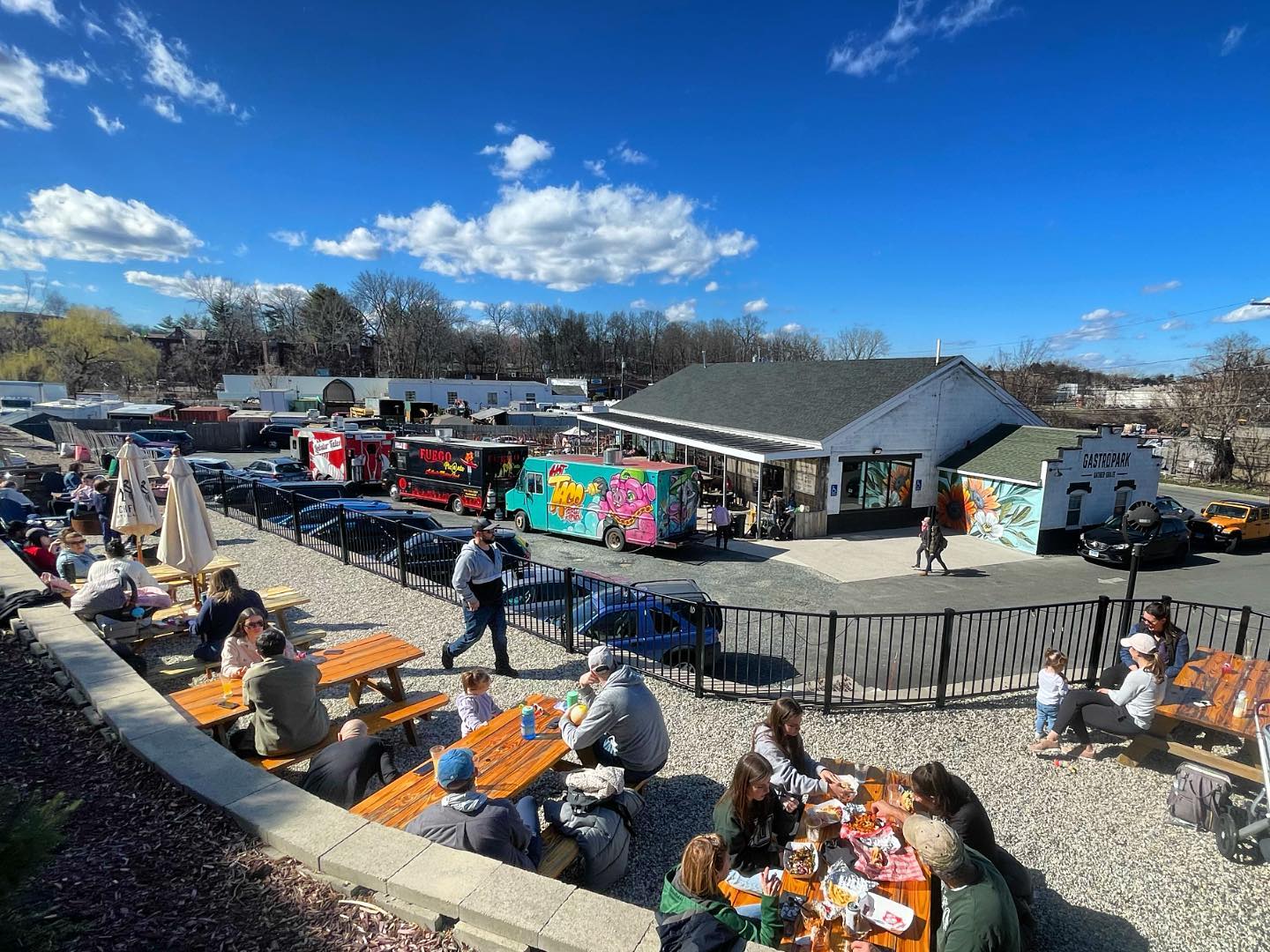
WEST HARTFORD — New Park Avenue, long known for its industrial, manufacturing, and home decor businesses, has recently been a hot spot for a new type of development.
So much so, that the corridor that begins at New Britain Avenue and ends at Flatbush Avenue has had a diverse portfolio of new businesses open over the last several years alongside two new housing developments, with even more to come.
“A week doesn’t go by without talking about all of the development and exciting future of New Park Avenue,” said state Rep. Kate Farrar, who serves constituents in parts of Newington and West Hartford. “Everyone I talk to really supports and wants to make sure that New Park Avenue is part of how we have a healthy community where everyone can live and work and play.”
It’s a renewed and rejuvenating focus on a part of town that historically has been home to manufacturing companies — some of which are more than 100 years old — and home design businesses, as evidenced by the creation of the Design District of West Hartford nearly 20 years ago.
“It’s a good area for our type of business,” said Brian Knies, the Design District founder who owns Tile America, which his family opened in West Hartford in 1963. “We’re destinations. We don’t need to be in West Hartford Center. They ended up there because there’s more space and rents aren’t what they are in the center. It’s a good area, it’s accessible and it’s just been improving over the years.”
Those elements of what New Park Avenue always has been remain — and in some cases are still thriving, as Knies said there are over 20 home design businesses still operating — but what’s happening around it has stakeholders excited about the future of the area.
West Hartford’s ‘opportunity zone’
There’s some belief that the surge of investment in New Park Avenue began with CTfastrak, the state’s bus transit system that launched in 2015 with two stops along the corridor. In fact, it’s one of the reasons why the West Hartford Housing Authority and its nonprofit, Trout Brook Realty Advisors, targeted the area for two of its affordable housing developments.
“It was an interesting site because of being right next door to the CTfastrak station,” said Jill Corrado, executive director of the housing authority. “The thought was this could be a game changer for the area. With the CTfastrak right next door, they could live there without needing transportation. It’s close by to a whole lot of other things, like medical facilities, a library, pharmacies, retail, restaurants. It’s sort of the best of both worlds.”
And so on a roadway previously dedicated entirely to a variety retail and commercial uses, housing sprung up in the form of The Lofts at 616 and The Residences at 540 New Park, meaning New Park Avenue now had the potential for residential foot traffic it never had before.
Tate Norden, who opened the GastroPark food truck venue in 2020, has seen that injection of residents into the neighborhood play out at his own business, which hosts an array of food trucks in addition to providing food and drink out of their own kitchen and bar.
“We have a handful of regulars from those units, which is great,” Norden said. “We’re excited to see more walkable accommodations pop up in the neighborhood. That’s what makes places like the GastroPark vibrant: locals and regulars who want to pop in to get a coffee and then come back later that night for food.”
For Norden, New Park Avenue is providing creative upstarts with a place they can take a risk on new businesses and ideas.
“It’s West Hartford’s only opportunity zone,” Norden said. “The New Park corridor is a place for homegrown small business activity because it’s the only place that can foster it in town. Everywhere else is pretty developed and the rents are obviously established. If you’re starting something new … you see a lot of people go to the New Park corridor. A lot of the old factory uses and warehouse uses have gone elsewhere, so you have space and you have opportunity. It’s kind of the only place in town where people can do stuff like this.”

New Park Brewing owner Alex Dee gives Gov. Ned Lamont a tour of the brewery’s expansive brewing system.
Michael Walsh / Hearst Connecticut MediaNew Park Brewing took the opportunity to be West Hartford’s first brewery when it opened its doors to much fanfare in 2017. That business, producing sought-after beers like its IPAs and sours, keeps expanding, most recently by taking advantage of the state’s new small business loan program to create a brand new event space. A combination brewery and coffee shop, WeHa Brewing & Roasting Company, also opened not far from New Park Avenue in 2021.
In the buildings adjacent to Norden’s GastroPark, a variety of businesses have taken residence in spaces that have taken on new lives. They are the nooks and crannies of New Park Avenue, small businesses tucked away from the main roadway, and they include a barber shop, multiple gyms, and an indoor dog park and pet resort. Artisans, too, have taken hold of the area, making use of underutilized spaces for their concepts.
“It’s fun to have an area where people can play with more creative ideas that have been inspired through their own travels or a challenge or a problem someone might see in the area,” Norden said. “There needs to be a place in town where entrepreneurs and small business owners can pursue an opportunity to chase their dream and grow their business.”
One example of that is Perkatory Coffee Roasters, which opened its fourth shop in the state earlier this year on New Park Avenue. The business previously occupied a small stall inside GastroPark and when it came time to expand, husband and wife owners Joe and Johanna Perazella opted to stay nearby.
“We felt that maybe it would be a good way to get our toes wet,” Joe Perazella said about their GastroPark location. “We did a short lease, year to year, his model worked for us. It helped a business open up and become familiar with the area by building a customer base. When we felt ready to move on, we would.”
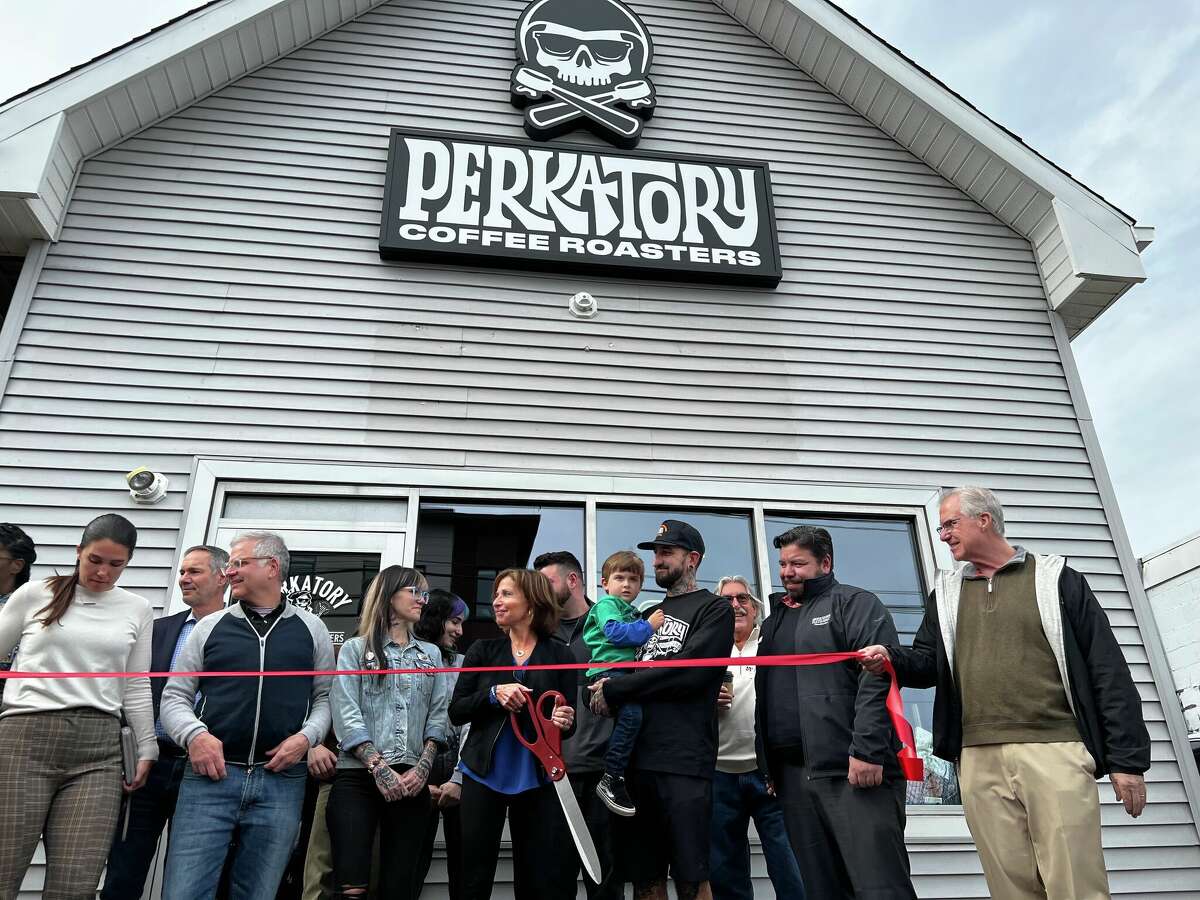
Mayor Shari Cantor stands between Perkatory Coffee Roasters owners Johanna and Joe Perazella during a ribbon cutting ceremony on Monday, March 6, 2023.
Daniel Figueroa IV/Hearst Connecticut Media“It was such a welcoming community,” Johanna Perazella said. “Different business reached out to introduce themselves. We felt so welcomed. We knew drink orders. We didn’t want to lose that customer base.”
It’s that collaboration, Norden said, that can be a launching pad for the next great business.
“That’s our main goal and our mission statement, to let food unite and empower our community,” Norden said. “Most people have an idea, but they’re not ready to open a restaurant in West Hartford Center or break off this massive endeavor. We wanted to let all types of small businesses, not just food trucks, to get their foot in the door. We’re proud of all the small businesses we’ve been able to work with, from the food trucks to the artists that do pop-ups on the weekend. That’s the community that we want to help foster.”
West Hartford’s housing boom comes to Elmwood
When housing developers look at West Hartford, immediate attention is often given to the areas surrounding West Hartford Center, a desirable location known for its bustling dining and shopping scene.
And while a variety of housing developments have been approved within walking distance of that part of West Hartford, New Park Avenue and the Elmwood neighborhood it’s apart of hasn’t been left out in the cold when it comes to the more than 1,300 housing units that could be built in town over the next few years.
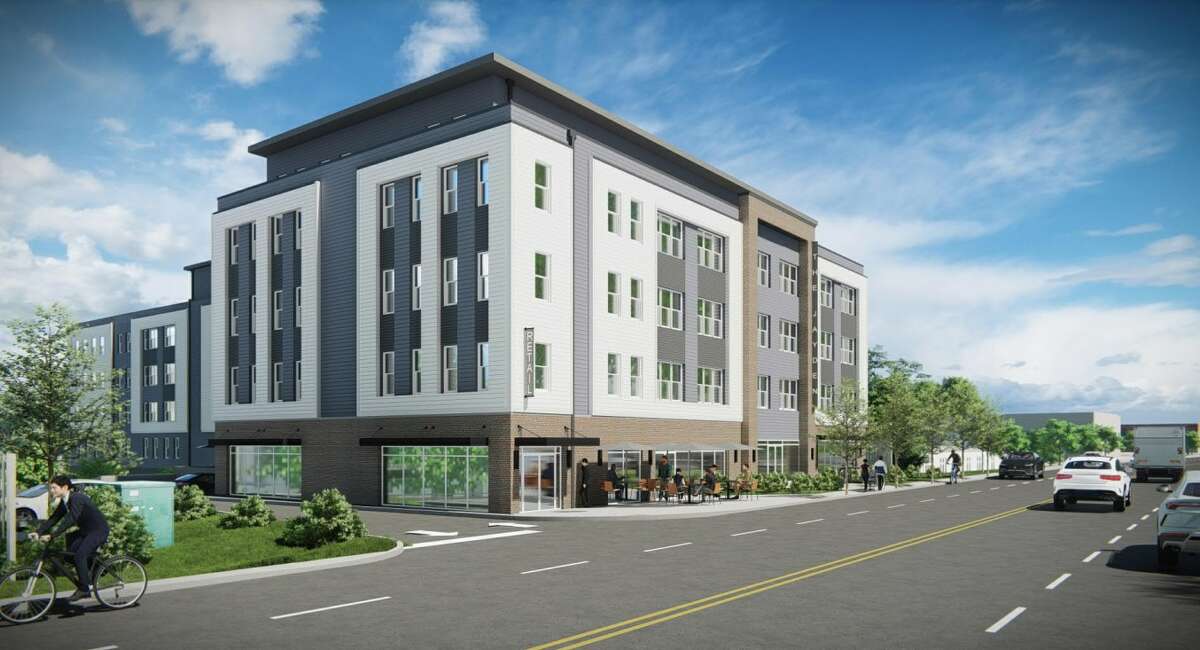
The Hexagon Group wants to built 70 units of housing on New Park Avenue in West Hartford.
Contributed photo / Phase Zero DesignIn addition to the two West Hartford Housing Authority developments, which offer affordable units and is often at full capacity, two more major housing projects have been proposed in the area under the town’s new transit-oriented development district, which it established in 2022 to encourage housing developments in the area by offering incentives to developers who build housing in the vicinity of the CTfastrak stations.
The proposed developments include 150 units of housing, plus street-level space for restaurants and other retail uses at the former Puritan furniture site on New Britain Avenue, right at the gateway to New Park Avenue. There’s also a smaller proposal on New Park Avenue that would call for 70 units of housing, as well as retail spaces on the ground floor. That’s a possible influx of 220 units in an area where there isn’t much housing, save for existing apartments further down New Britain Avenue and a neighborhood of homes to the south.
“The Puritan furniture site — I’m super excited for that one,” Corrado said about the potential new housing developments. “That will bring a lot of people to the area and also just change that whole corner. That is going to be a game changer. That’s only going to help to build up that area and make it less industrial and more of a place where people might want to live. Before we built 616 New Park, nobody lived over there.”
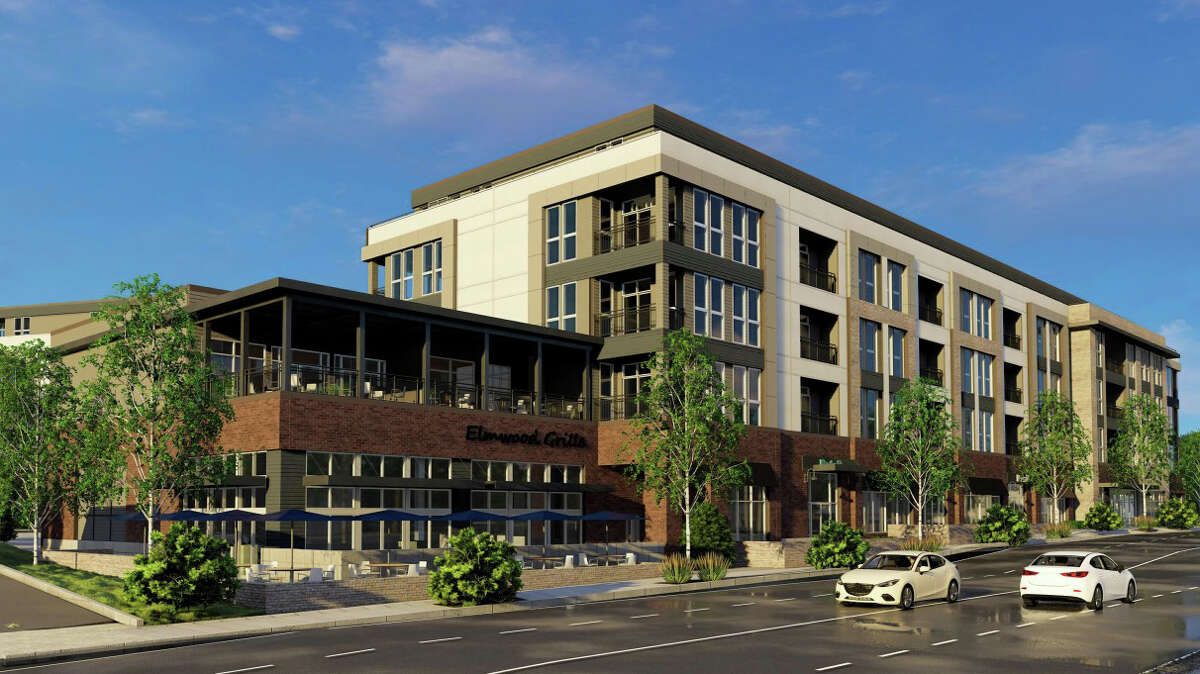
The former Puritan Furniture site would also increase five spaces for retail and restaurants on the ground floor.
Contributed photo / Phase Zero DesignCorrado said added people, who very well may take advantage of the short walk to local businesses, are a benefit for existing housing and could encourage more investment by both developers and businesses. In turn, that could create new jobs for people living nearby.
“Housing brings people to the area to help with the businesses, because those tenants might frequent those areas,” Corrado said. “But then those businesses have workers who might want to live in the area where they work. It’s a back and forth. It’s a great area that’s a little hidden treasure.”
Norden agrees and is championing plans for more housing like the proposed Puritan development.
“That’s going to be a real milestone marker for the neighborhood,” Norden said about the Puritan furniture site proposal. “We were early adopters. Once that Puritan building goes up, even the staunchest doubters will have to say this neighborhood has turned the corner.”
A road diet, protected bike lanes and more
Knowing more residents may soon be moving into the New Park Avenue area, town leaders have targeted the busy roadway as a place that needs street safety enhancement. And they’re coming, in the form of a partial road diet, protected bike lanes, and an off-road bike and pedestrian path that could encourage more people to travel New Park Avenue in other ways than by car.
Jay Stange, a West Hartford resident who is the coordinator for the Transport Hartford Academy at the Center for Latino Progress, knows New Park Avenue well. The Center for Latino Progress opened BiCi Co., a community bike shop, on the ground floor of The Lofts at 616 in 2022.
“New Park Avenue is one of those places that I feel is like a cultural estuary in West Hartford,” said Stange, who is also a member of the town’s Vision Zero task force. “New Park Avenue is a really important commercial sector. There’s this optimism about an area that was formerly an industrial district that has now been signaled by the town that they’re going to develop walkable housing.”
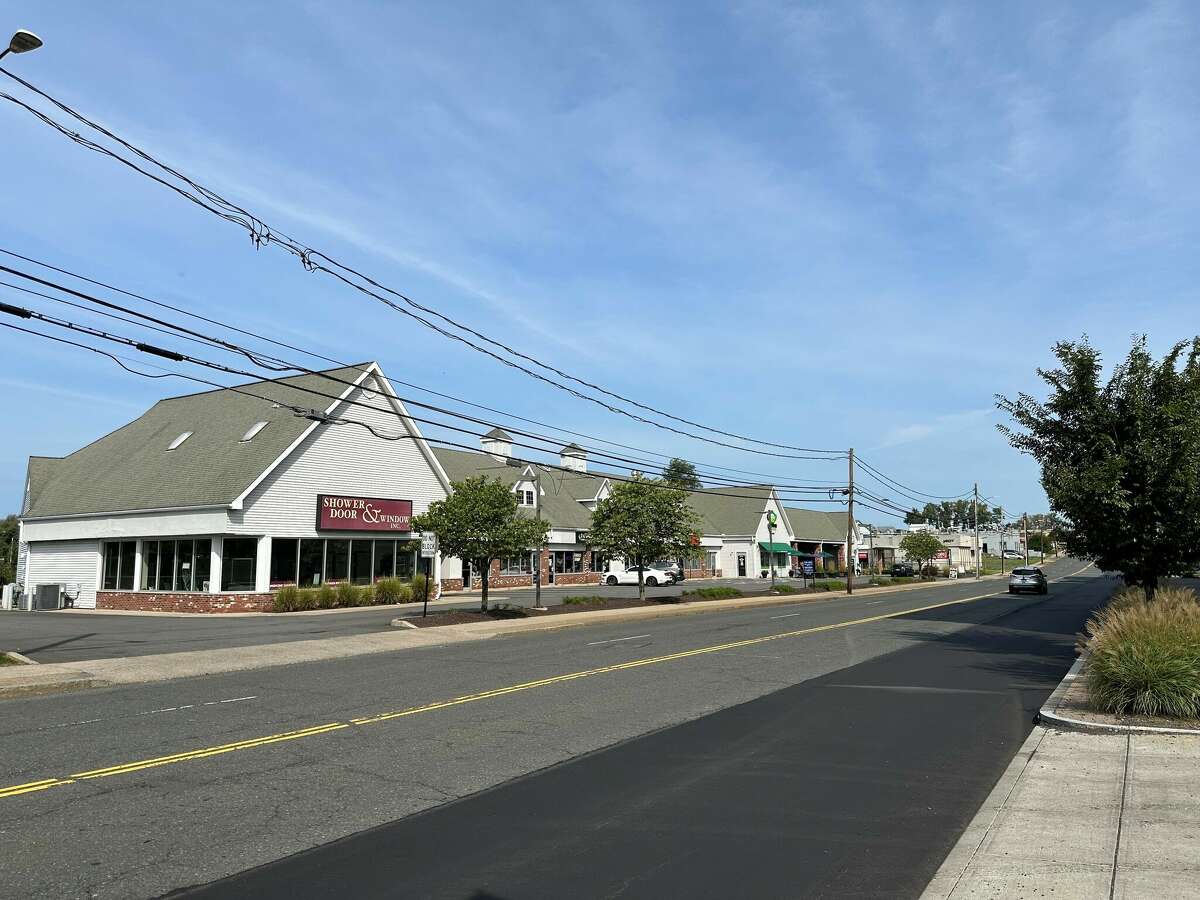
A portion of New Park Avenue in West Hartford will receive a road diet, bringing the number of lanes down from four to three. The town will also install protected bike lanes on that same portion, which will connect to an off-road multi-use path.
Michael Walsh / Hearst Connecticut MediaThe roadway safety enhancements, Stange said, are an important investment by West Hartford town leaders in a key area. He said he hopes this turns New Park Avenue into a place “people travel to instead of a corridor they’re looking to travel through.”
“The investment the town’s making in the road diet and the separate cycle track is a really important signal to merchants and residents and folks that are passing through this area,” Stange said. “It’s a place to invest and a place to plan for. The town has been pretty wise by signaling with investments that this is a place that people can look to as a future thriving area. Folks are going to want to get in on the ground floor.”
The future of New Park Avenue
No part of West Hartford is immune to businesses having to close. On New Park Avenue, fast-casual vegan restaurant G-Monkey just announced it would be closing in December after a year and a half of business in the area. What stakeholders hope happen, though, is that space becomes a potential landing spot for another creative local business that keeps New Park Avenue thriving into the future.
“People want to support local,” Norden said. “There’s a lot of people who are staunch lovers of Connecticut. On New Park Avenue from New Britain Avenue to Talcott Road … I really hope that area can stay local. New Park Avenue in five years is going to be just as attractive of a destination to come and hang out in as it will be to go to West Hartford Center.”
In the years to come, Farrar hopes the Hartford Line comes through the area with a train station, which would add just another method of transportation to the neighborhood and town of West Hartford at large.
“It would really connect us to the region, to Springfield, to New Haven, and to New York City,” Farrar said. “It’s something I’m remaining a steadfast advocate of. It would generate much more use of this incredible Hartford Line.”
And with all that thought to the future, it can’t go on without considering the historical footing that manufacturers and the Design District still have in the area. Those businesses still have a strong hold of their own on the defining character of New Park Avenue.
“That’s been our goal all along, to bring more people to the area,” Knies said. “There’s all these little gems of places and that’s what we want to do. We want to get people to know all these great places. They’re the specialists and they’re so good at what they do. These family businesses have been around for 50 years or more. Everyone is excited about the area and the different businesses that have been open and the old buildings that have been renovated. It’s all good stuff.”
Credit: Source link