The shine may be coming off battery-electric Class 8 trucks due to shifting government policies in the U.S., but the technology is increasingly finding a more practical — and potentially profitable — home in medium-duty and last-mile applications.
After years of ambitious projections around longhaul electrification, many fleet operators are recalibrating expectations around where battery-electric vehicles (BEVs) actually make operational and economic sense. Increasingly, that appears to be in predictable urban delivery routes, utility work, and medium-duty applications where vehicles return to base nightly and charging can be tightly controlled.
“Medium-duty vehicles are inherently well-suited for battery-electric technology for several compelling reasons,” said Kate Rahn, Canadian country manager with Peterbilt. “By design, medium-duty trucks carry less weight than their Class 8 counterparts, placing fewer demands on battery energy and enabling longer operational hours, particularly in the dense urban environments where these trucks typically operate.”
Rahn added many medium-duty applications involve frequent stops, extended idle time and predictable routes — all characteristics that align well with battery-electric powertrains.
“Unlike diesel engines that consume fuel while idling, battery-electric vehicles consume virtually no energy at idle, delivering significant efficiency gains,” she said.
That shift in thinking was reflected throughout the show floor and conference sessions at ACT Expo, where fleet operators, charging providers and manufacturers focused less on sustainability messaging and more on total cost of ownership (TCO), route optimization, uptime and infrastructure planning.
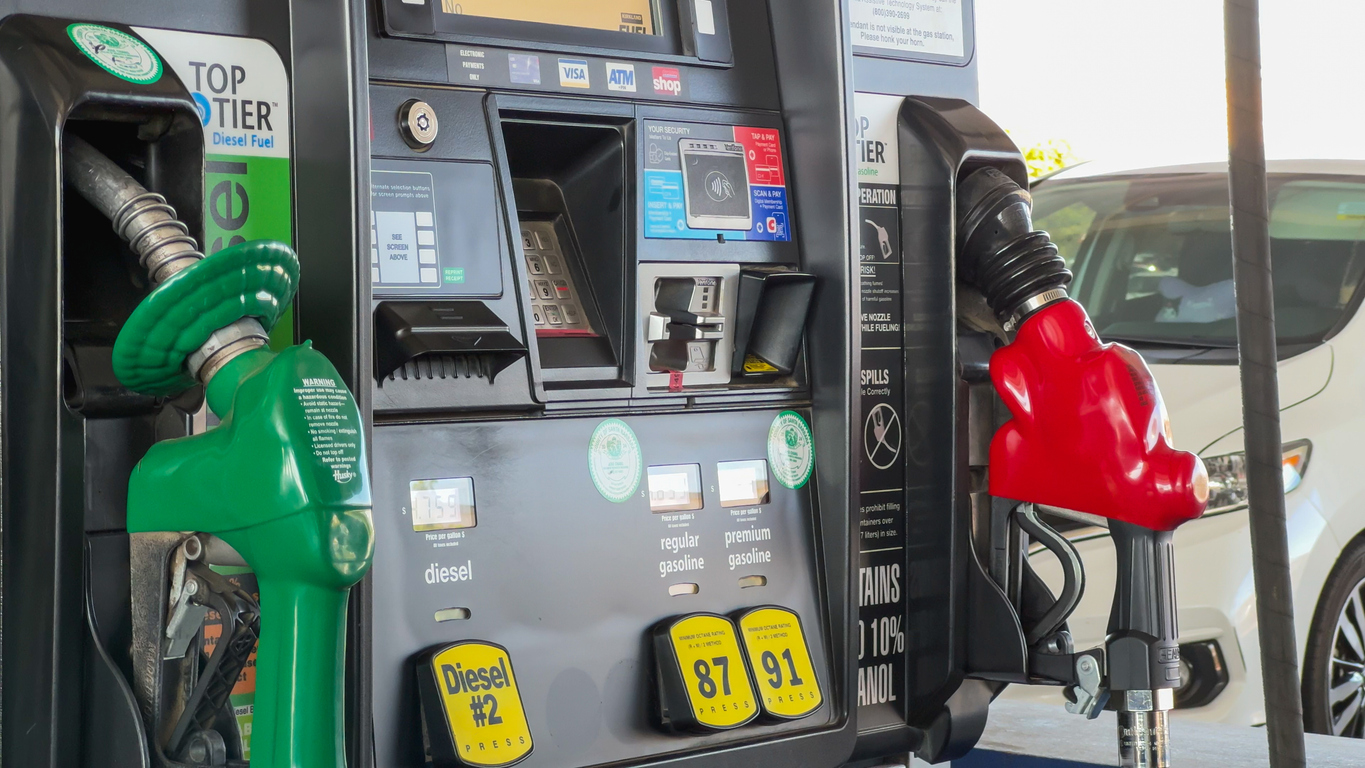
And with diesel prices again climbing amid the conflict in Iran, several speakers suggested electrification economics may soon become more compelling.
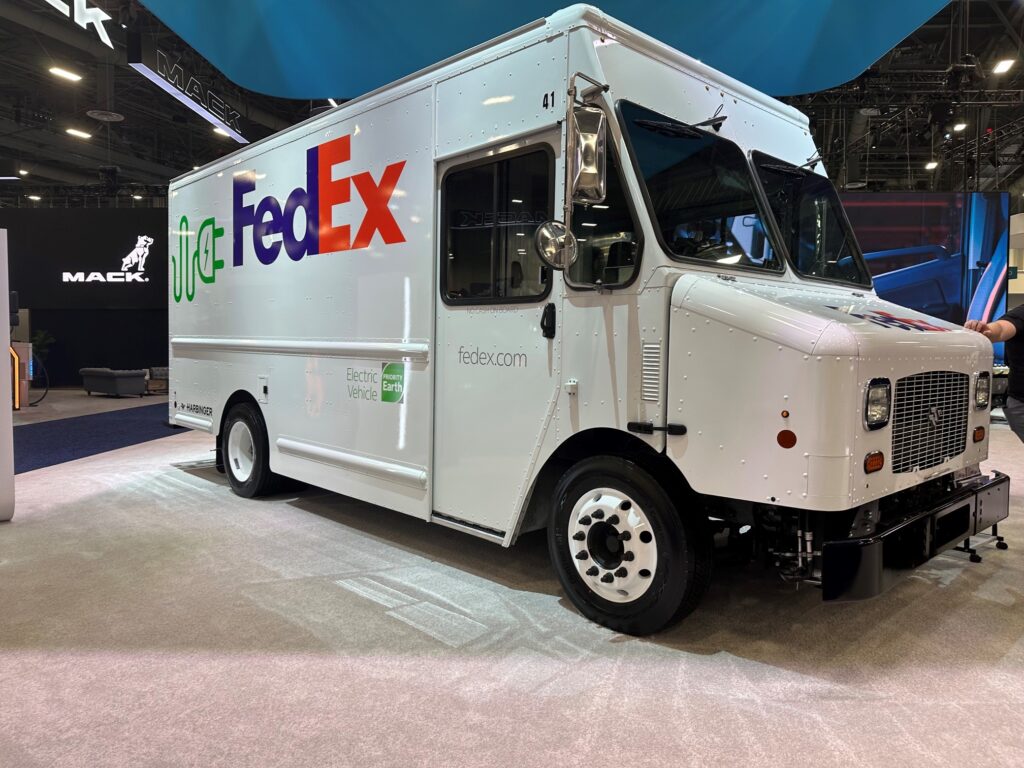
“There’s no better sales tool for EVs than fuel at $8,” said John Harris, co-founder and CEO of Harbinger. Unlike the Class 8 segment, the acquisition cost of an electric medium-duty truck can be more closely aligned with that of a diesel, or in Harbinger’s case, parity.

“We decided that’s what it needed to be, and then set out to do it,” Harris told trucknews.com of the company’s effort to achieve acquisition-cost parity with diesel vehicles.
That’s a stark contrast to many heavy-duty manufacturers, some of whom have recently scaled back Class 8 BEV ambitions amid weak demand, infrastructure concerns and challenging economics.
International Motors, for example, has suspended production of its Class 8 battery-electric truck while continuing to push ahead aggressively in medium-duty applications.
“I think it’s kind of the Swiss Army knife of last-mile delivery type applications,” Joe Jenkins, zero-emissions onboarding manager with International Motors, said in an interview.
Jenkins added that the company is seeing strong interest from utilities, municipalities and vocational customers using medium-duty electric trucks for urban repair work, landscaping and even concrete mixers.
“What they’re appreciating most is that the cost of “fuel” is typically about 50% less than what they would spend on diesel,” Jenkins said. “When you add in the lack of maintenance and just not having to come in for oil changes, you’re talking about an overall TCO savings of 60% from one year to the next.”
He added that much of the recent product development focus has shifted toward software improvements and operator usability in the absence of major battery breakthroughs.
“The strongest interest in Canada has come from fleets operating in urban pickup and delivery, particularly parcel delivery applications,” Rahn said. “These duty cycles — characterized by predictable routes, frequent stops, and return-to-base operations — are an excellent match for battery-electric technology.”

At the fleet level, Purolator may offer one of the clearest examples of where medium-duty electrification is gaining traction.
Speaking during the panel discussion Last Mile Fleet Sector – Powering the Final Stretch of Clean Delivery, Nim Takhtar, senior manager, fleet engineering with Purolator, outlined how the courier has expanded from an initial pilot of 100 EVs in 2023 to more than 500 medium-duty electric vehicles today.
The company has also installed more than 800 Level 2 chargers and 20 Level 3 chargers across its network, while planning another 400 chargers and 284 EV deployments in 2026.
The fleet now has more than five million EV kilometers under its belt and shows no signs of slowing down. Importantly for Canadian fleets, Purolator has also spent significant time testing electric vehicles in harsh winter conditions.
“One of the most common questions I get in Canada in this space is, how does EV technology fare in cold weather?” Takhtar said. “I can tell you, it does day in and day out.”
Purolator conducted extensive cold-weather testing in Edmonton, where temperatures dropped to -30 C. The company observed up to 40% range degradation in extreme cold, but Takhtar said the losses became predictable and manageable through operational planning and route modeling.
“What we found was, really, range is predictable,” he said.
Using deployment data collected across its network, Purolator developed predictive formulas to estimate range degradation based on temperature, route characteristics and vehicle type.
“You just can’t do what we call a truck swap,” said Angie Hargesheimer, group director of advanced vehicle technology with Ryder System. “You can’t change electric or diesel for an electric.”
Instead, fleets are increasingly learning they must redesign operations around the technology. Some are selectively electrifying only routes that fit within existing vehicle capabilities. Others are reconsidering distribution strategies altogether by adding facilities or changing vehicle classes to shorten route lengths.
“We’re trying to get the right vehicle into the right road characteristics,” Takhtar said. “There’s no one-size-fits-all here.”
That “right vehicle, right route” philosophy was repeated by several panelists.
Harris argued some fleets initially made the mistake of deploying electric trucks only on extremely short routes because they lacked confidence in battery performance and charging reliability. More recently, others swung too far in the opposite direction by targeting the longest routes possible to maximize fuel savings.
“Both of those are kind of the wrong answer,” Harris said. “For me, that comes down to buying a vehicle that has the right range and putting it on the routes that have the right range.”
For last-mile fleets, the economics are becoming increasingly compelling because vehicles typically return to the same depot every night, making charging infrastructure easier to manage.
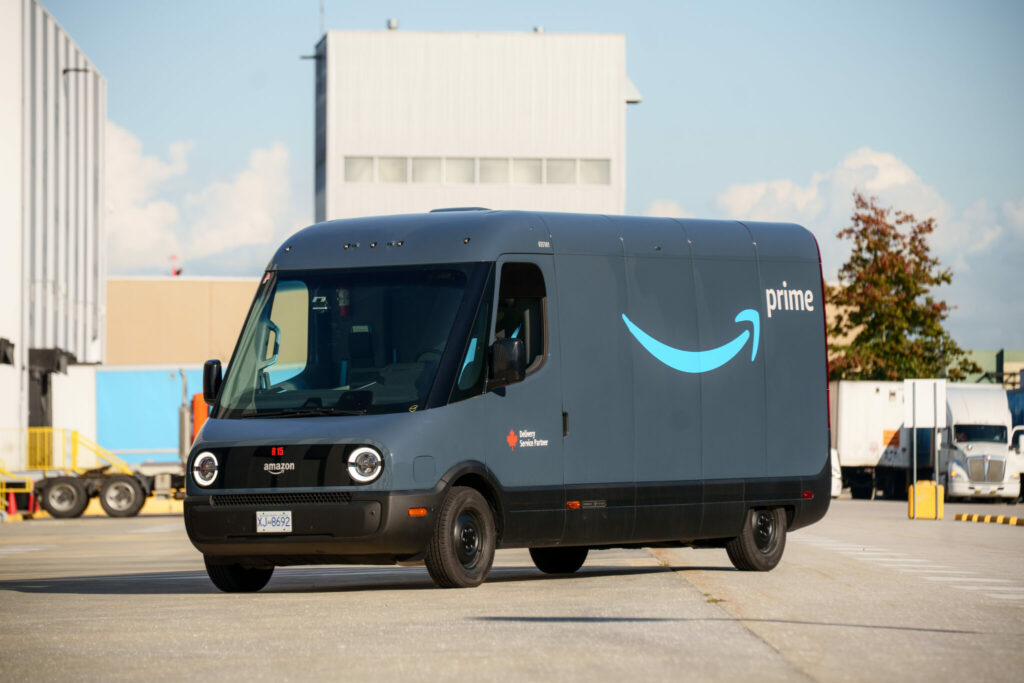
Amazon, which now operates more than 50,000 chargers supporting last-mile operations, said electrification has worked particularly well in urban delivery environments.
“Last mile has been manageable because the vehicles come back to the same depot every day,” said Mustafa Samiwala, principal, fleet development, Amazon. “Middle mile is much more difficult because those vehicles don’t necessarily return to the same place.”
Panelists repeatedly contrasted that operational simplicity with the realities facing longhaul trucking.
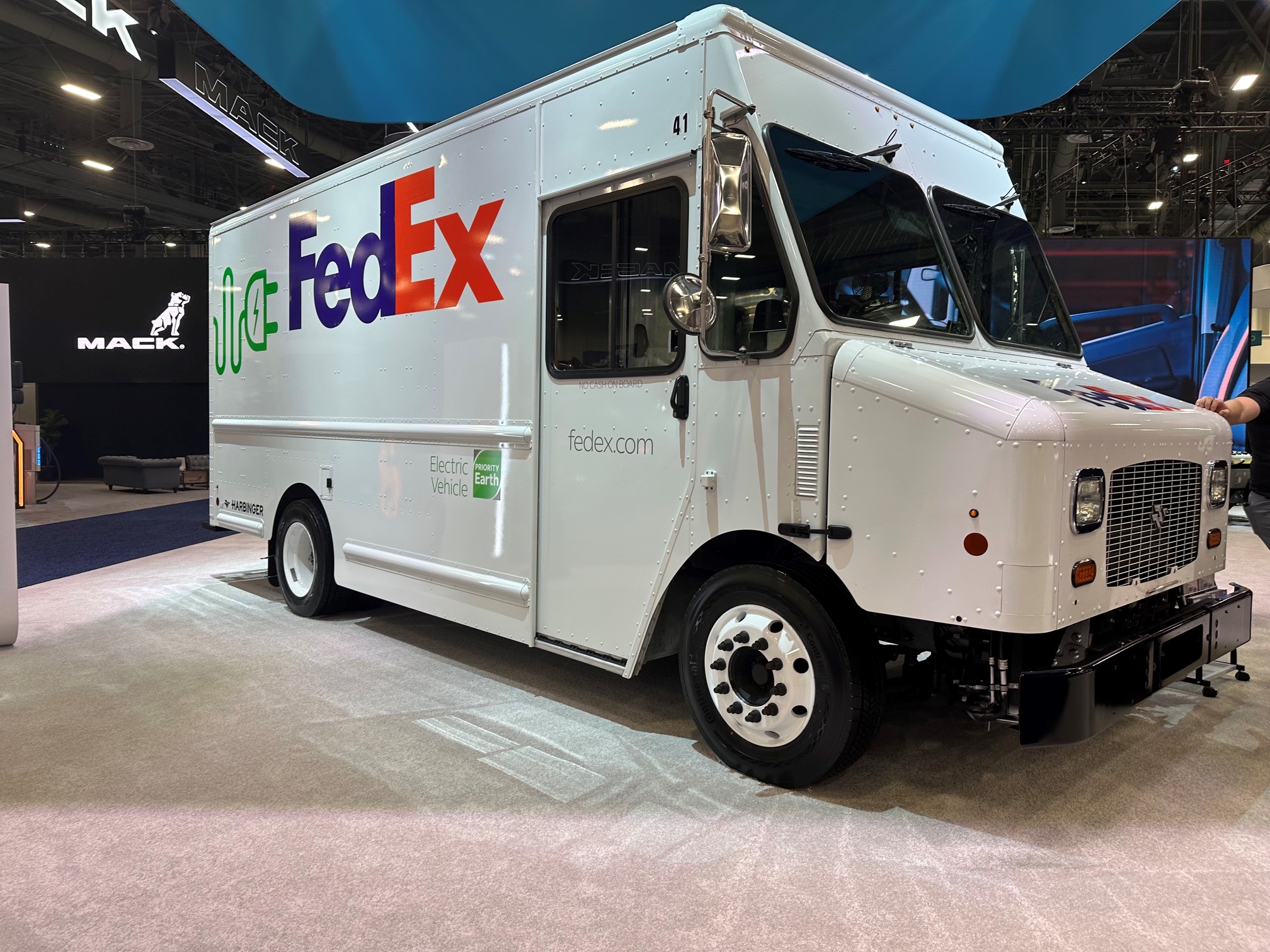
FedEx has been testing Class 8 electric tractors since 2018, but Boris Kort-Packard, chief engineer – global vehicles with FedEx, acknowledged the economics remain difficult.
“It’s not going to work, even if the vehicles were the same price initially — and they’re not,” he said, noting Class 8 electric trucks still carry roughly double the acquisition cost of diesel equipment before infrastructure costs are even considered.
He added the utilization patterns of longhaul trucking create another major hurdle, with FedEx Freight running its Class 8 trucks over two 10-hour driving shifts each day.
Charging infrastructure also remains a major barrier. Several fleets said they are now planning infrastructure deployments 18 to 24 months in advance because of utility delays, transformer shortages and permitting timelines. Still, operators said the process becomes easier as organizations gain experience.
“Practice makes perfect,” Takhtar said. “Once you’ve done infrastructure for a couple of years in a row, it becomes really repetitive.”
Driver acceptance, meanwhile, continues to be a bright spot. Panelists said drivers generally adapt quickly to regenerative braking systems and often prefer EVs once they become familiar with them.
“There’s been high acceptance,” said Steve Hanson, senior director of fleet operations, engineering, and sustainability with PepsiCo. “We’ve definitely converted some skeptics.”
That sentiment was echoed by Takhtar, who said many Purolator drivers no longer want to return to diesel-powered vehicles because of the quieter operation and improved comfort.
Fuel pricing may further accelerate that shift. As diesel prices rise relative to electricity costs, Rahn said fleets can achieve faster payback periods and stronger long-term profitability from medium-duty electric trucks.
Keith Kerman, chief fleet officer and deputy commissioner at New York City’s Department of Citywide Administrative Services said he doesn’t regret significantly increasing the portion of the city’s electric fleet. “I regret the ones we haven’t bought,” he said, citing current diesel prices.
Credit: Source link