

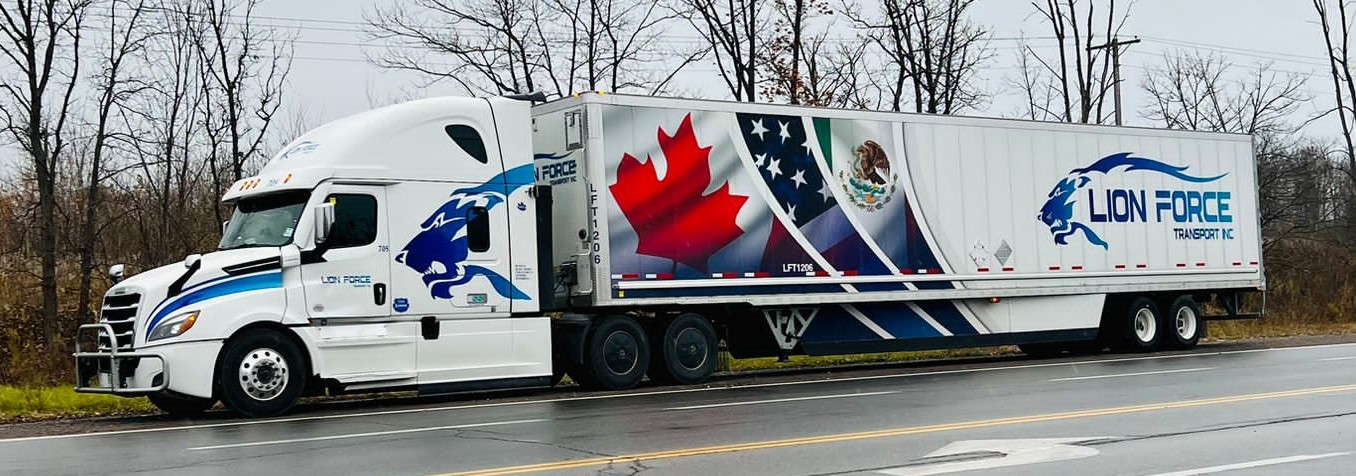
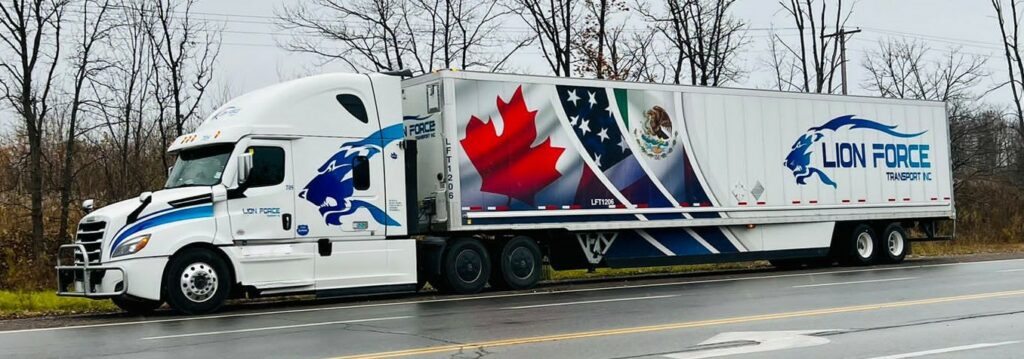
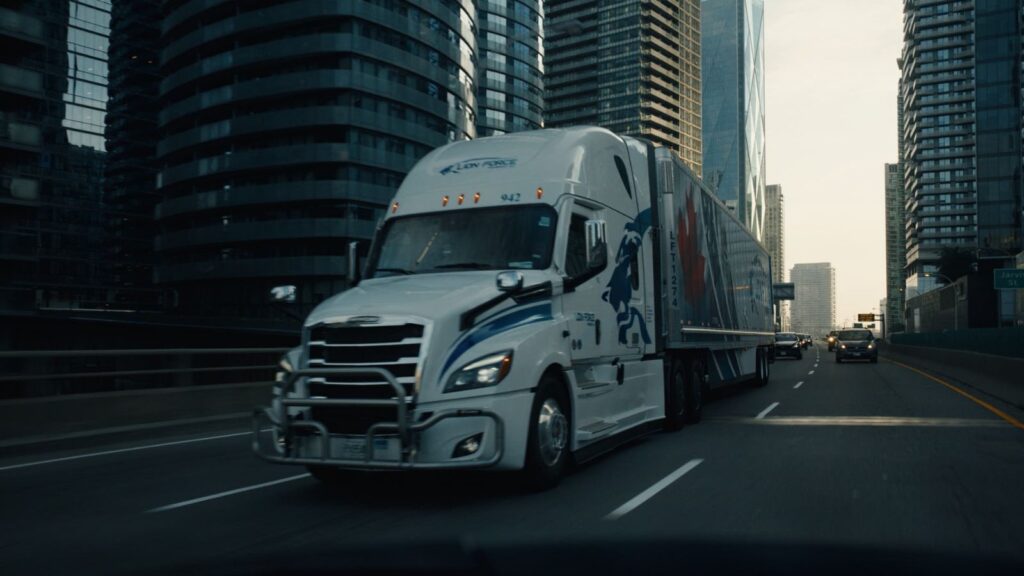
Lion Force Transport has been forced into receivership after an Ontario judge ruled Friday the troubled carrier came to court “too late” to justify protection under the Companies’ Creditors Arrangement Act (CCAA).
In a sharply worded decision, Justice F.L. Myers sided with Royal Bank of Canada and appointed Fuller Landau Group as receiver over the Brampton, Ont.-based trucking company and related entities, while dismissing Lion Force’s bid to restructure under CCAA protection.
“On balance, in my view, the debtor has come to court too late,” Myers wrote.
The judge pointed to unpaid drivers and carriers, property tax arrears exceeding $500,000, a WSIB garnishment for more than $600,000, insurance issues, and growing creditor actions against equipment spread across Canada, the U.S., and Mexico.
“A trucking business that loses its insurance, owes arrears to its fuel supplier, has a regulator enforcing garnishment against it, runs up a half a million dollars in property tax arrears, and, especially, does not pay its employees and contractors, is too far gone,” Myers wrote.
The ruling marks a dramatic collapse for a carrier that had publicly promoted investments in safety, technology and facilities as part of an aggressive growth strategy.
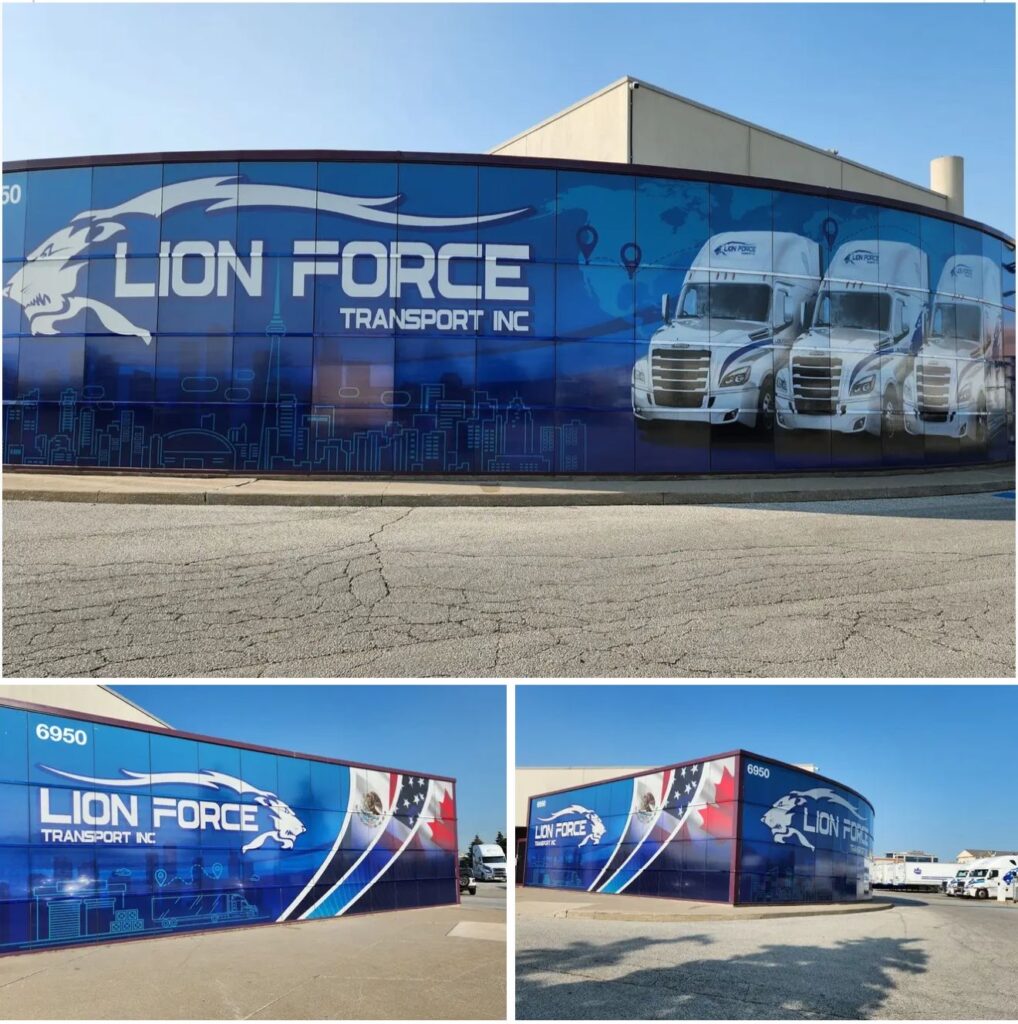
Lion Force co-owner Harry Hundal told trucknews.com the company had invested approximately $52.5 million into a Brampton terminal in 2024, followed by another $4 million in upgrades, including paving, fencing, security systems, a fuel tank and a scale.
“At one time [we had] 200-plus trucks,” Hundal said.
The fleet had since downsized to more than 100 trucks in Canada and another 40-50 in the U.S., according to Hundal.
Court documents show RBC was owed about $53 million, primarily secured against the company’s Brampton headquarters and other operating assets. Economic pressures have led those facilities to decrease in value since their purchase.
The bank said Lion Force had been in default since 2024 and had repeatedly failed to meet obligations under a series of forbearance agreements dating back to February 2025.
According to the ruling, RBC discovered previously undisclosed property tax arrears in March, followed by WSIB enforcement actions and the cancellation of the company’s insurance coverage through EDC.
The court also heard Lion Force had fallen behind on payments to truck drivers, carriers and fuel suppliers.
RBC argued a receiver was necessary because equipment was scattered across jurisdictions and multiple creditors were already attempting to seize assets.
Lion Force had argued it could stabilize operations under a short 10-day CCAA stay while restructuring the business through asset sales, cost reductions and improved truck utilization.
The company also proposed selling the Brampton property with a potential leaseback arrangement that would allow trucking operations to continue there.
But Myers said the proposed restructuring lacked substance and depended heavily on optimistic assumptions.
“Lion Force puts forward the barest seedling of a plan. It does not reach a germ or a kernel,” he wrote.
He also criticized the company for seeking emergency debtor-in-possession financing that would have ranked ahead of existing secured creditors, with lenders given less than 24 hours’ notice.
Following Friday’s ruling, Hundal expressed frustration with how the receivership process unfolded, arguing the immediate lockdown of Lion Force’s yards disrupted customer freight and damaged long-standing business relationships.
“The very first thing [the receiver] does is he just locks up the yards,” Hundal said. “If you lock up the yards, my loaded trailers are stuck inside, my customers panic, my staff panics, my drivers panic.”
Hundal said customers immediately began reacting to rumors over the weekend as operations stalled.
“They burned my relationships in two days,” he said of the receiver’s actions.
He also questioned why employees and drivers were not prioritized despite the company continuing to hold receivables. Hundal said Lion Force sold a Woodstock, Ont., property earlier this year and had a $1.4-million surplus the company intended to pay to its drivers. But RBC withheld the full amount, he said.
“We have business receivables, so why don’t my drivers and my employees have consideration to be paid?” Hundal said, noting Lion Force prioritized driver payments in its restructuring proposal.
Still, Hundal maintained that Lion Force’s problems reflected broader market conditions rather than operational failures.
“We are basically an ethical carrier, and we are paying the price to be [an] ethical carrier right now,” he told trucknews.com prior to the ruling.
He still takes pride in how the company operated, citing a single-digit CVOR score, use of Isaac Instruments electronic logging devices, and early adoption of 360-degree truck cameras.
However, a long-running freight downturn took a toll, worsened by U.S. tariffs that pounded the automotive industry Lion Force relied on for freight. All this against a backdrop of competition against unethical carriers that undercut rates.
“I cannot compete with the carriers in the market [at] too low rates,” he said.
As he discussed losing control of the company he and his co-founders built, Hundal’s voice dripped with frustration, especially over his inability to ensure staff and drivers are paid first.
“You know, we’ve done every right step,” Hundal said. “I think that hurt us a lot.”
Credit: Source link


