After more than 20 years, I’m giving up my commercial driver’s license — not because I can’t drive a truck, but because today’s nuclear verdict environment has changed the risk calculation for anyone behind the wheel of a Class 8 truck on public roads.
You don’t need a CDL to write about Class 8 trucks, of course.
OEMs routinely schedule closed-track test drives that give editors plenty of wheel time in new equipment. In many ways, those environments are better suited for evaluating vehicles. Speeds are lower, conditions are controlled, and product managers can demonstrate features without the distractions and unpredictability of public traffic.
Still, earning a CDL was always seen as a way to demonstrate commitment to the industry.
More importantly, it offered journalists at least a glimpse into what professional drivers face every day as they move freight across America. No editor can ever fully understand trucking the way a professional driver with hundreds of thousands of miles can. But spending time behind the wheel helped us better appreciate how a new truck, engine, safety system, or even seat could affect a driver’s safety, comfort, and productivity.
OEMs valued public-road drives for the same reason. Real-world conditions allowed trucks and technologies to prove themselves where they mattered most.
Why a CDL Mattered to a Trucking Editor
I started covering trucking in 1995. At the time, I worked for a construction equipment magazine, so all my test drives took place on jobsites and in quarries. No CDL required.
When I transitioned to covering on-highway trucks in 2005, getting my CDL felt like the right thing to do.
I trained at a driving school in Theodore, Alabama, on a fleet of battered Freightliner Columbia tractors equipped with Eaton 13-speed manual transmissions.
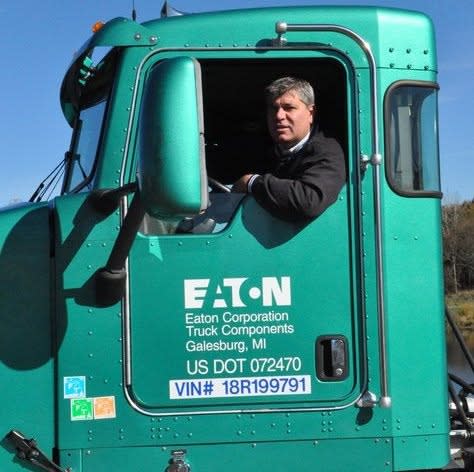
The Eaton Proving Grounds outside of Marshall, Michigan, have hosted many a Class 8 test drive over the course of the author’s career.
On my first morning, all I could think about was the 53-foot trailer attached to the tractor.
By the end of the first day, all I could think about was that 13-speed transmission.
To this day, I maintain that learning to back a 53-foot trailer into the hole was one of the most Zen experiences of my life.
I couldn’t do it.
I couldn’t do it.
I couldn’t do it.
And then, late one hot Gulf Coast Friday afternoon, I suddenly couldn’t not do it.
It was one of the strangest and most satisfying learning experiences I’ve ever had.
Why Public-Road Truck Test Drives Have Declined
Today, I doubt I could put a trailer in the hole without a couple of days of practice. And I honestly can’t remember the last time I shifted a manual transmission.
That’s part of the problem.
There has never been a special carve-out for editors or industry observers who hold CDLs. Historically, things were fairly informal. We might go weeks — even months — between driving opportunities. Unlike professional drivers, we don’t have formal compliance systems documenting ongoing qualifications and operating activity. In many ways, it was always something of a Scouts’ Honor arrangement.
It’s not hard to understand why that reality would make an OEM safety director uncomfortable in today’s environment.
Which is probably why public road editor drives have largely disappeared.
The last one I remember participating in was about three years ago. I couldn’t tell you when the one before that occurred.
The Rise of Private Test Drive Facilities
But, to be honest, truck makers don’t really need to do public road drives anymore.
Volvo has a large and impressive private test track in its home city of Gothenburg, Sweden. And clearly inspired by the facility, Volvo Trucks North America invested $38.1 million in 2017 in a Customer Service Center in New River Valley, Virginia. A major part of that package was a private test track at the rear of the facility with banked turns, differing grades and an off-road course.
In 2023, Volvo expanded the track. The company added a 1-mile straightway, super-elevations, more aggressive grade changes and a vocational/urban demonstration area.
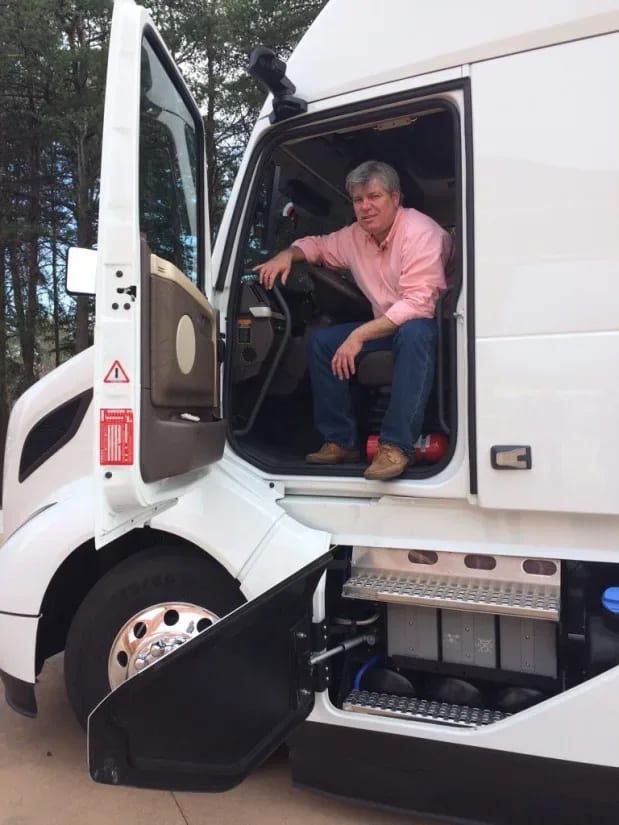
Once upon a time, an OEM like Volvo Trucks North America would simply toss you the keys to a $5 million SuperTruck and tell you to be careful while you were out on the highway. Those days are gone forever.
Volvo’s subsidiary Mack Trucks has a similar facility at its Customer Appreciation Center in Allentown, Pennsylvania.
Other OEMs use preexisting facilities around the country.
Eaton has a world-class track and proving grounds outside of Marshall, Michigan. Originally built by the Studebaker Motor Company, that facility features a 1.6-mile oval track, 45- and 60-degree gradability hills, and off-road durability sections with mud, swamp, and rock-crawl articulation courses. (And I don’t have to tell you that portion of the track is an absolute blast to drive on). International has used this course on several occasions to showcase new trucks.
Peterbilt, with its home in Denton, Texas, often uses the famous Texas Motor Speedway for new-truck test drives.
Likewise, Michelin has an excellent test track outside of Columbia, South Carolina, that truck OEMs have taken advantage of in the past.
And Daimler Truck North America leverages the proximity of its Detroit Powertrain manufacturing plant to the sprawling and historic Willow Run test facility outside of the Motor City. This huge facility is where Daimler showcased its Gen5 Cascadia in a variety of real-world driving situations designed to show off the latest Detroit Assurance safety system features.
Daimler’s vocational-focused Western Star brand has a showcase Customer Appreciation Center, with off- and on-road driving courses in Madras, Oregon.
So, the move away from public road drives has clearly been gaining momentum for some time now.
How Nuclear Verdicts in Trucking Changed the Risk
Still, public road test drives have been a part of the trucking industry since its founding.
And some OEMs would still like to continue them — if a safe and legally protected format for doing so can be established.
Last year, one major truck manufacturer reached out to CDL-holding editors in a sincere effort to find a path forward. I won’t name the company, but let’s just say safety is one of its core corporate values.
The solutions they proposed were rigorous but workable.
But the more I considered them, the more I found myself thinking about all the nuclear verdict stories we’ve published in Heavy Duty Trucking over the past several years.
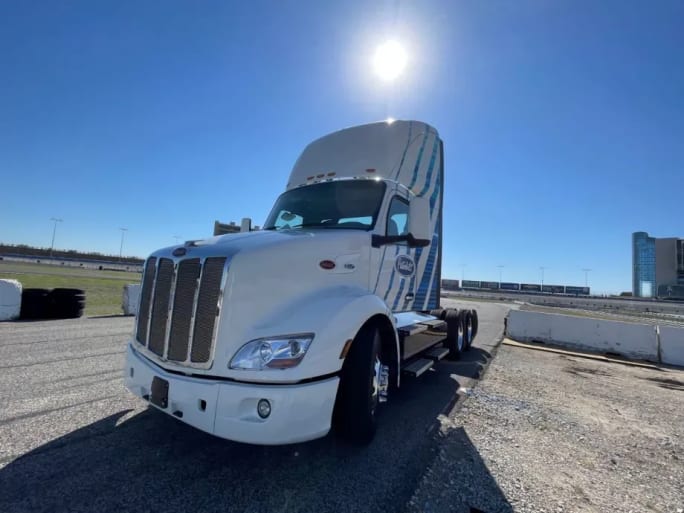
Denton, Texas, is not far from the Texas Motor Speedway, which provides a handy track when Peterbilt hosts test drives.
And I kept coming back to a presentation transportation attorney Jennifer Akre made at our Heavy Duty Trucking Exchange event in 2024. One of her key points was that, in serious litigation, perfect compliance often isn’t enough. Plaintiff attorneys will search relentlessly for anything that can be used to sway a jury.
That’s when it hit me.
An OEM can do everything right. I can do everything right.
But if I’m behind the wheel of a fully loaded Class 8 truck and an accident occurs, the OEM is going to get sued. Bobit Business Media is going to get sued.
And I’m going to get sued.
That realization sent a chill down my spine.
And so, here we are. I hate it. To be honest, I’m still having second thoughts.
I’ve always wanted to take a solo, long-distance drive in a brand-new truck. I never got that opportunity.
But once I shared my concerns internally, the litigation warning light went off in a few other heads as well. At this point, the decision has effectively been made.
I’ll continue driving trucks on test tracks. But I’ll always feel a pang of sadness climbing into the passenger seat when public road drives come around.
What Professional Drivers Face Every Day
If nothing else, this process has given me an even greater appreciation for the pressure professional drivers face to maintain their skills, protect their CDLs, and operate safely every day.
It has also reinforced the enormous legal exposure they face while doing the work that keeps America’s economy moving.
Trucking’s nuclear verdict crisis is spiraling out of control.
Beyond the direct impact on drivers and motor carriers, it is driving up trucking insurance costs, increasing legal exposure throughout the industry, and making it harder for companies to manage risk. It’s only a matter of time before those pressures seriously impair an industry that remains essential to the nation’s economic health and supply chain stability.
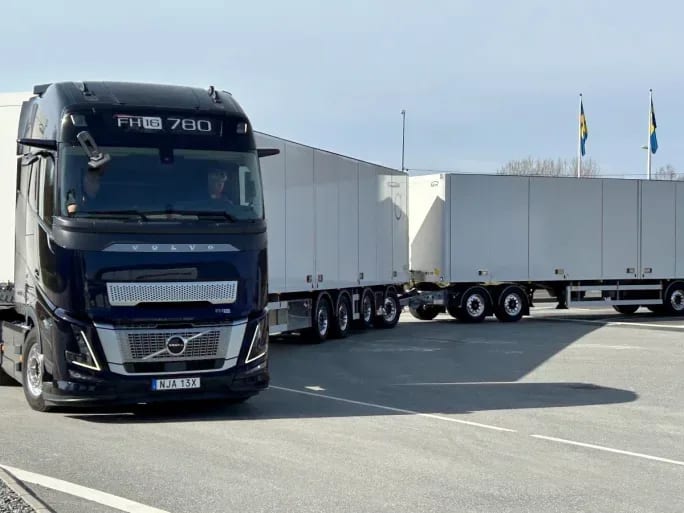
The author takes a 700-horsepower FH16 780 b-train around the Volvo test track in Gothenburg, Sweden.
I’ve talked to other CDL holders who don’t drive every day and who express the same fears and concerns that ultimately led me to let mine go.
What happens when the risks of being a CDL holder involved in a road accident become so extreme that professional drivers decide the job is no longer worth it and start walking away?
We already have a driver shortage. Maybe autonomous technology will step up and solve that problem. But even the most optimistic proponents of self-driving trucks think we’re about 20 years away from deployment at scales that can match the miles driven by human drivers.
And freight volumes continue to rise every single year.
What happens when nuclear verdicts have driven so many drivers away from the industry that we can’t move those ever-increasing freight volumes?
That’s why I believe the trucking industry needs to find its collective voice and demand that Congress do something substantive to address nuclear verdicts before we face a far more serious economic and supply chain crisis.
‘But You’re a Class A Driver!’
Postscript: About an hour after putting the finishing touches on this article, I climbed into my pickup truck and drove to the Alabama State Troopers’ office in Tuscaloosa to renew my driver’s license.
The nice lady behind the desk was aghast when I told her I was surrendering my CDL.
She simply couldn’t believe it. “But you’re a Class A driver!” she exclaimed.
I explained why I was letting it go. But she kept shaking her head in disbelief. “You’ve got 30 days to change your mind,” she said, handing me the paperwork. “Everything you need to know to reverse the decision is right there,” she added, gesturing to the papers in my hand.
I thanked her.
“You’ve got 30 days to change your mind!” she urged again as I turned to leave.
All of which goes to show that among the people who know, earning a CDL and learning how to drive a Class 8 truck is still a highly respected skill in our society.
It’s not something everyone can do. And those drivers who are out there on the road every day, keeping our country moving forward, are still valued and praised by a great many Americans who fully understand how important the job they do is.
For all of us.
Credit: Source link