When the unexpected happens, how you react to, and deal with operational blind spots is critical. Here’s how to keep you recovery on track, when nothing is normal.
When disaster strikes, the pressure on freight networks is immediate and unforgiving. Supply chains must pivot quickly to deliver food, water, medical supplies, and other essentials to affected areas — often under rapidly changing, unpredictable conditions.
While much of the focus during these moments is on transportation capacity, a less visible but equally critical challenge often emerges: access to the right equipment, in the right place, at the right time.
For many fleets and shippers, that’s where operational blind spots begin to surface. Trailers that support everyday freight flows are suddenly in short supply, positioned far from where they’re needed or already committed to existing loads.
As demand spikes within hours of a major event, organizations can find themselves scrambling to secure additional capacity, slowing response efforts at the very moment speed matters most.
Industry leaders say the difference between disruption and resilience often comes down to preparation. Increasingly, fleets are rethinking how equipment strategy fits into broader continuity planning, moving from reactive approaches to more proactive models designed to keep goods moving when it matters most.
Access and Operations
Although some events, including hurricanes, can be forecast days in advance, disaster response rarely comes with perfect timing or long lead times; rather, it develops quickly and requires immediate action.
“In many cases, equipment access begins impacting response timelines very early, sometimes within the first 24 hours of an event,” explained Courtney Shaffer Lovold, CCO at TEN (Transportation Equipment Network), a trailer leasing and fleet services provider. “That is why having an established equipment strategy in place before an event occurs is so valuable. Organizations that define their partner networks and equipment access points early are typically able to activate response plans faster and move essential goods with greater confidence.”

Courtney Shaffer Lovold is CCO at TEN.
Lovold added that, with solutions like TEN Ready, fleets can integrate equipment access into their broader continuity planning.
“Having those relationships and processes in place helps ensure that when conditions change unexpectedly, organizations are not trying to coordinate equipment for the first time in the middle of a crisis,” she explained.
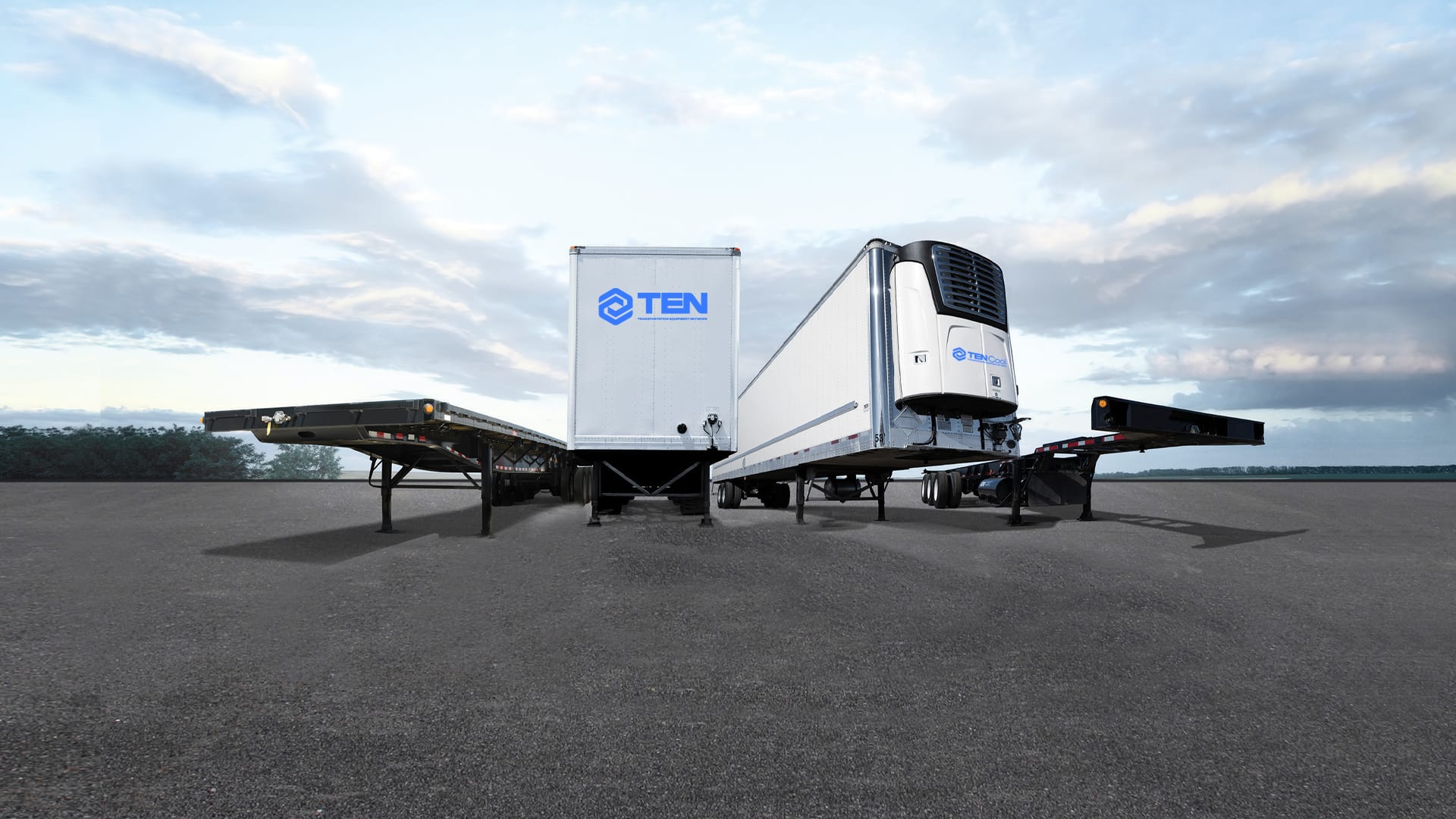
Typically, 53-foot dry vans and refrigerated trailers are the first types of equipment used during evacuations and relief operations because they are the most versatile assets in a fleet.
Their size allows for maximum product capacity, making them well-suited for transporting or storing large volumes of food, water, pharmaceuticals, and other critical supplies, Lovold explained.
“Dry vans help ensure that food, water, and relief supplies stay dry and secure, while refrigerated trailers protect temperature-sensitive goods like produce, pharmaceuticals, and medical supplies,” she said. “These two trailer types are incredibly versatile, which is why they are so widely used during both evacuation and recovery efforts.”
While reliability is just as important as availability in these situations, Lovold said that well-maintained equipment will help ensure critical goods remain protected throughout response and recovery efforts.
“Through rigorous maintenance and lifecycle management, trailers can remain dependable for many years and continue serving important roles in disaster response, including longer-term staging or storage during recovery,” she said.
Staying Structured
Because of the unpredictability of emergencies, advanced planning can transform what could otherwise be a chaotic response into a more efficient, structured operation.
The benefits of pre-arranging equipment enable fleets to activate response plans quickly and focus on supporting customers, employees, and communities. Teams can focus on moving essential goods rather than searching for equipment in the middle of a crisis.
Lovold added that, compared with everyday operations and other types of emergencies, hurricanes and flooding typically require a combination of dry vans and refrigerated trailers to support the movement and protection of essential goods.
With that in mind, she explained that coordination is key.
“Pre-arranged access also allows organizations to think through practical details in advance, such as where equipment will be staged, how it will be deployed, and who will coordinate operations during a response,” said Lovold. “This type of planning helps ensure that the right trailers are available when they are needed and that response efforts can move forward without unnecessary delays.”
In short, whether staged preparation or rapid mobilization is required, a well-planned equipment strategy helps reduce disruption and ensures that essential supplies continue moving through the supply chain.
Some Do’s and Don’ts
Many organizations underestimate how quickly equipment demand can spike during a disaster and assume they can source trailers when needed.
In reality, by the time an event is underway, many of the most commonly used assets are already committed or difficult to reposition quickly.
Another common mistake, explained Lovold, is focusing only on transportation without considering how trailers will be used operationally during response and recovery.
“In many disasters, trailers serve as temporary storage, mobile staging units, or refrigerated backup when facilities lose power,” she said.
Finally, some organizations do not clearly define where equipment will be staged, who will coordinate deployment, and how additional capacity will be accessed if demand spikes.
Again, Lovold urges that forward-thinking fleets should treat equipment planning as an important part of their continuity strategy.
“When organizations engage equipment partners early, they can map out potential scenarios, understand what equipment may be required, and develop clear response processes before an event occurs,” said Lovold. “This type of preparation builds confidence. Instead of reacting to changing conditions, prepared organizations can respond with clarity and speed.”
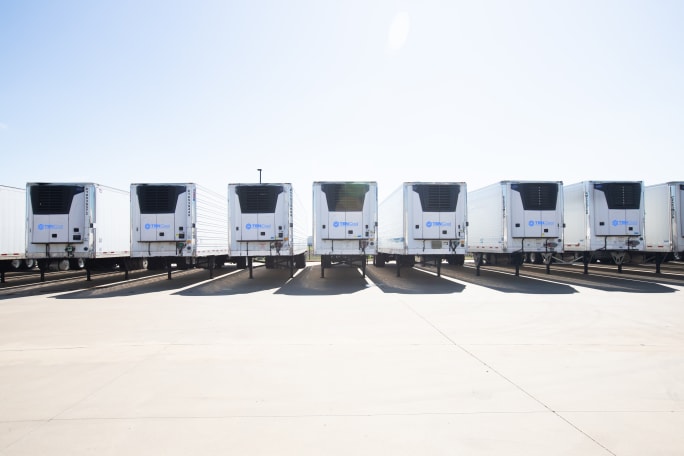
Increasingly, fleets are rethinking how equipment strategy fits into broader continuity planning.
So, what should fleets consider to be better prepared for unexpected occurrences?
Lovold said that effective preparation begins with a few practical questions:
- What types of trailers may be required?
- Will specialized features such as liftgates be necessary?
- What products will be stored or transported?
- Are temperature-controlled trailers needed to protect temperature-sensitive items like food or pharmaceuticals?
- Where will trailers be staged or domiciled?
- Who will serve as the operational contact during deployment?
Clarifying these details ahead of time helps ensure the right equipment is positioned quickly and efficiently when it is needed most.
Some Final Thoughts
Remember, recovery does not end when the immediate crisis subsides. In many cases, it extends well beyond the first 72 hours, requiring fleets and agencies to shift from rapid response to sustained support.
The organizations that navigate this phase most effectively are those that plan for it in advance, recognizing that equipment needs will evolve as conditions stabilize.
During recovery, trailers often take on new roles, serving as longer-term storage, temporary distribution points, or critical links for moving supplies into affected areas.
With a coordinated equipment strategy in place, fleets can transition more seamlessly from response to recovery, maintaining service for customers while supporting broader rebuilding efforts.
In that sense, access to the right equipment is not just a response issue, but a cornerstone of continuity.
Credit: Source link