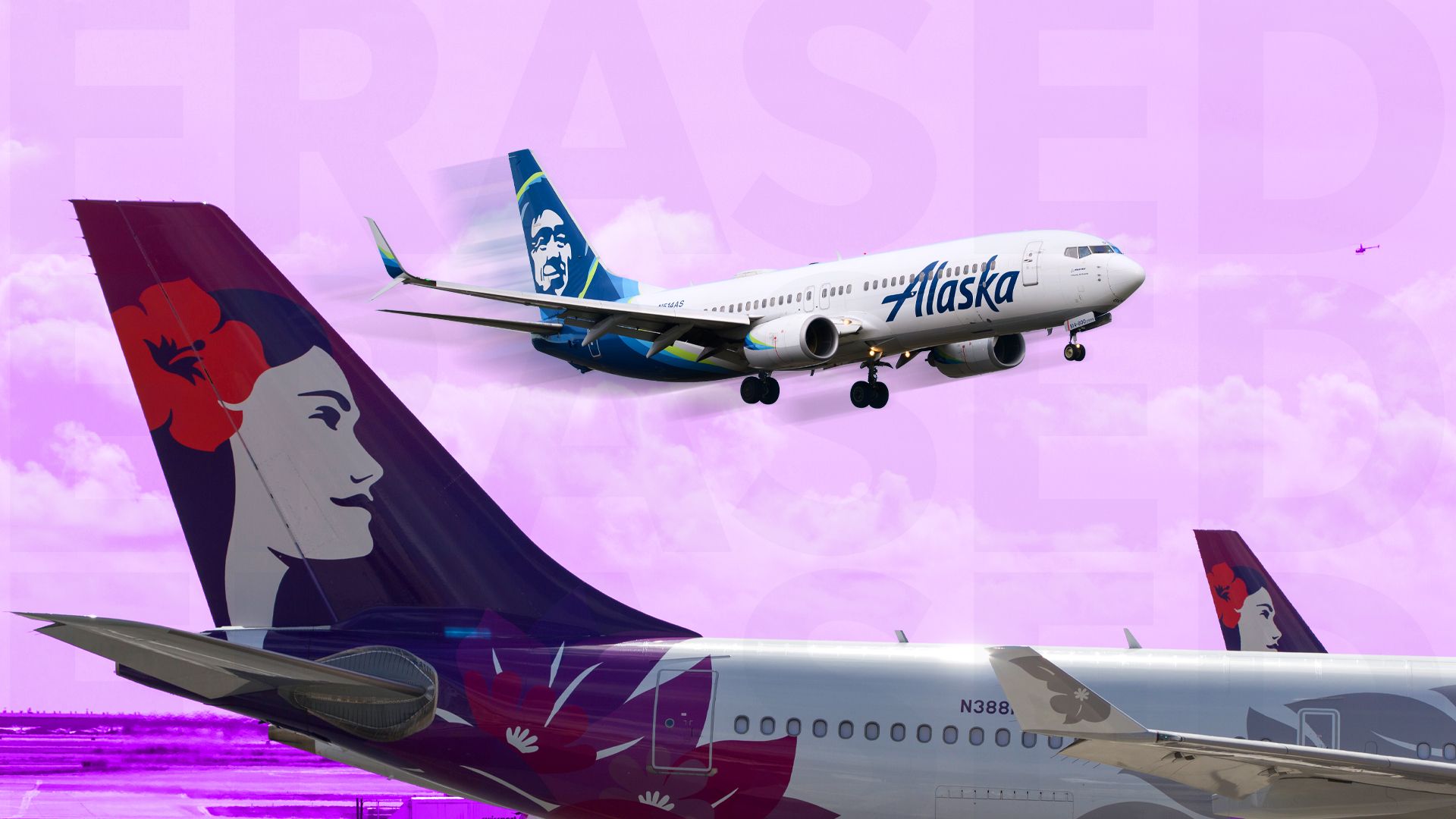
December 2023 saw Alaska Airlines formally announce plans to acquire Honolulu-based Hawaiian Airlines. The merger was eventually completed for $1.9 billion on September 18, 2024, catapulting the Alaska Air Group to become one of America’s largest airlines. Many loyal Hawaiian Airlines passengers have become skeptical that one day the Hawaiian name might disappear following the merger, but could this ever happen?
While it’s hard to say without a crystal ball,  Alaska Airlines has made it clear that it has no immediate plans to lose the Hawaiian brand. The airline is still licking its wounds after losing an appeal for $160 million that was part of a trademark dispute with Virgin Aviation. This lengthy minimum royalty of $8 million is payable from Alaska to Virgin Aviation Tm Ltd and Virgin Enterprises Ltd until 2039.
All About The Alaska-Hawaiian Airlines Merger

Set to revolutionize travel to and from Hawaii, and across America’s West Coast, the Alaska Air Group’s acquisition of Hawaiian Airlines created a combined carrier that no longer relied solely on narrowbody aircraft as Alaska Airlines had done. Instead, the combined portfolio of aircraft will now include a growing widebody fleet, including Airbus A330s and Boeing 787s from Hawaiian Airlines.
The deal saw Alaska Airlines acquire Hawaiian for $1.9 billion in cash, with the assumption of almost a billion dollars in debt. This represented a significant premium to the then share price (around $4), valuing the airline at around $18 per share. The deal was a lifeline for Hawaiian Airlines, which suffered heavily from travel restrictions that were a result of the COVID-19 pandemic.
Merging the carriers promised to enhance their network and operations, seeing them combine to operate around 40% of all flights between Hawaii and the contiguous US (per AP News). Following the merger, Hawaiian Airlines is now destined to join the oneworld alliance, alongside its partner Alaska Airlines, with both airlines also set to operate a combined frequent flyer programme from October 2025. As such, all HawaiianMiles members will be converted to the Alaska Airlines Mileage Plan.
Alaska Airlines And A Royalty To Virgin

In 2016, the Alaska Air Group took possession of Virgin America at a cost of $4 billion. This created the fifth-largest airline in the US, and saw them combine operations under the Alaska Airlines brand. This expanded Alaska’s presence substantially at San Francisco, Los Angeles, and other key West Coast hubs. The Virgin America branding was phased out fully by 2020, but the Virgin legacy remained on many of its previous jets, including mood lighting, premium seating, and WiFi.
Part of the deal was that Alaska Airlines was liable to pay $8 million as a ‘minimum royalty’ to Virgin Aviation TM, and Virgin Enterprises, through a trademark licence between Virgin and Virgin America Inc. As Alaska Airlines acquired the company in 2016, Alaska thought it could get out of the royalty by stopping use of the branding, but this was overruled by a judge, noting that Virgin is entitled to the royalty every year until 2039.
Virgin America had previously been a low-cost airline that was based in San Francisco, with hubs at  Los Angeles International Airport (LAX) and
  San Francisco International Airport (SFO). Its frequent flyer program was called eleVAte, and it operated to 31 destinations with a fleet of 67 aircraft. Remnants of the Virgin America fleet remained under Alaska Airlines’ ownership up until 2023, when the final ex-Virgin America A320-200 was retired.
The Hawaiian Airlines Name Will Keep Flying

Alaska Air Group, the American holding company that owns Alaska Airlines, Hawaiian Airlines, and Horizon Air, also owns its aircraft ground handling company named McGee Air Services. The airline group has grown to become a powerhouse of aviation on the US West Coast, operating hubs at Anchorage, Los Angeles, Portland, San Diego, San Francisco, and Seattle-Tacoma (Alaska Airlines), and Honolulu and Kahului (Hawaiian).
Today, you can fly on a Hawaiian jet under an Alaska Airlines flight number from Washington State to Asia, which is confusing to comprehend for some. This has led to speculation that, one day, we may see the Hawaiian Airlines brand diminish as more of its flights fly under the Alaska Airlines brand. In June, Alaska Airlines announced its plans to it would start flying a Boeing 787 direct to Rome under Alaska Airlines livery. However, this would be operated by Hawaiian Airlines.
Alaska Airlines’ plans to serve Rome mark a significant shift for the carrier, given that it currently does not operate any widebody aircraft of its own (only those of Hawaiian). As such, the introduction of the 787 with an Alaska Airlines livery will see the Dreamliner become the airline’s first next-generation long-haul aircraft.
This will start to clarify a line between Hawaiian and Alaska Airlines’ operations, as the Hawaiian carrier focuses primarily on its Pacific and Hawaiian operations. Meanwhile, Alaska Airlines will look to make its mark for international long-haul travel from  Seattle-Tacoma International Airport.
A Change Of Direction

Hawaiian Airlines was set to receive up to 12 Boeing 787-9 aircraft, with four of these planes already delivered. The airline was expected to continue receiving deliveries up until 2028, with the type currently configured to accommodate up to 300 passengers in total across three classes (first class, extra comfort, and economy).
The latest move from Alaska Airlines, as reported by Your Weekend Travel, means that several of Hawaiian’s initial 787s will now end up within the Alaska mainline fleet. This will enable the airline to launch more international long-haul flights from Seattle-Tacoma Airport (SEA), and see Alaska Airlines design and introduce its long-haul business class cabin.
The Hawaiian-Alaska merger was not just about expanding domestic market share for the Seattle-based carrier, but also gaining access to a long-haul fleet that could fuel the airline group’s long-haul ambitions. Already, the airline is operating direct flights (albeit on Hawaiian aircraft) between Seattle and  Tokyo Narita Airportand
  Incheon International Airport(Seoul). Rome Fiumicino Airport an
  Barcelona-El Prat Airport will also be added from May 2026.
Examining Hawaiian Airlines’ Existing International Network

Hawaiian Airlines operates intra-island and domestic flights to and from Honolulu and Kahului. The carrier, which operates a fleet of both narrow and widebody aircraft, also has a international network that stretches from Honolulu Daniel K. Inouye International Airport (HNL) to Fukuoka, Osaka Kansai and Tokyo Haneda (Japan), Pago Pago (American Samoa), Papeete (French Polynesia), Rarotonga (Cook Islands), Sydney (Australia), and seasonal direct flights to Auckland (New Zealand).
All of these international services, apart from Rarotonga (A321neo), are served using the airline’s Airbus A330 or Boeing 787 fleet. Not only does Hawaiian have a modest footprint of international operations at HNL, but it also operates some of the longest domestic flights within the United States, including direct services between HNL and Boston Logan International Airport (BOS). These take nine hours and 45 minutes eastbound, and 11 hours and five minutes on the return.
While Alaska Airlines might be behind the Alaska Air Group’s earlier success, it retains a small network of flights at HNL, with current operations scheduled to Anchorage, Ontario, and Seattle year-round, with additional seasonal services to Everett. Previously, Alaska Airlines operated several other direct services to Hawaii, but these have now been integrated and operated by Hawaiian Airlines as part of the merger, shifting the carrier to more ‘hub-based’ operations.
What’s Next At Hawaiian / Alaska Airlines?

Most recently, the Alaska Air Group announced that it would establish a Honolulu-based leadership team that will oversee and steer the direction of both Hawaiian Airlines and Alaska Airlines operations in Hawaii. This comes as the two carriers seek to obtain a single operating certification from the Federal Aviation Administration by this fall. Jim Sanders, who has previously served as the Hawaiian Airlines SVP of Technical Operations, will take up the role of Head of Hawaii operations.
Following Seattle, Honolulu remains the second most important hub, with the group outlining that more than 180 flights both domestically and internationally are flown daily by the group. This marks the largest Hawaiian network by any carrier in the region. Hawaiian CEO Joe Sprague reaffirms that “Hawaii will always be the home of Hawaiian Airlines,” and remains committed to supporting the 6,500 staff who support the Hawaiian carrier’s 95-year legacy of providing reliable air service to the state.
Strong cargo revenues have also continued to reap rewards for the Alaska Air Group, with an increase of 34% in Q2 of 2025, according to Air Cargo News. This generated $139 million in revenue, with 90% of this figure being a direct result of the Hawaiian Airlines acquisition. This was contributed by not only the airlines’ ten Airbus A330-300P2F operating on behalf of Amazon Air, but also through additional passenger flights providing crucial cargo capacity on routes to Asia and the Pacific.

- Year Founded
-
1929
- CEO
-
Peter Ingram
Credit: Source link