If you have ever wondered where  Boeing
aircraft are made, the answer is usually Washington State. The 737 is built in Renton, while the 767 and 777X are brought to life in nearby Everett, where another 737 line is currently under construction. There is one aircraft that isn’t created in Washington, however, and that’s the Boeing 787 Dreamliner.

Washington has been the home of Boeing since its founding in 1916, and it remains the headquarters of the Boeing Commercial Airplanes division (The Boeing Company is headquartered in Virginia now). Because of high demand, Boeing built two assembly lines for the plane, one in Everett and another in Charleston, South Carolina. Today, the Everett line is closed, meaning all Boeing 787s now come from Charleston. Here are some cool facts about the Charleston plant.
5
The Birthplace Of The 1,000th Dreamliner
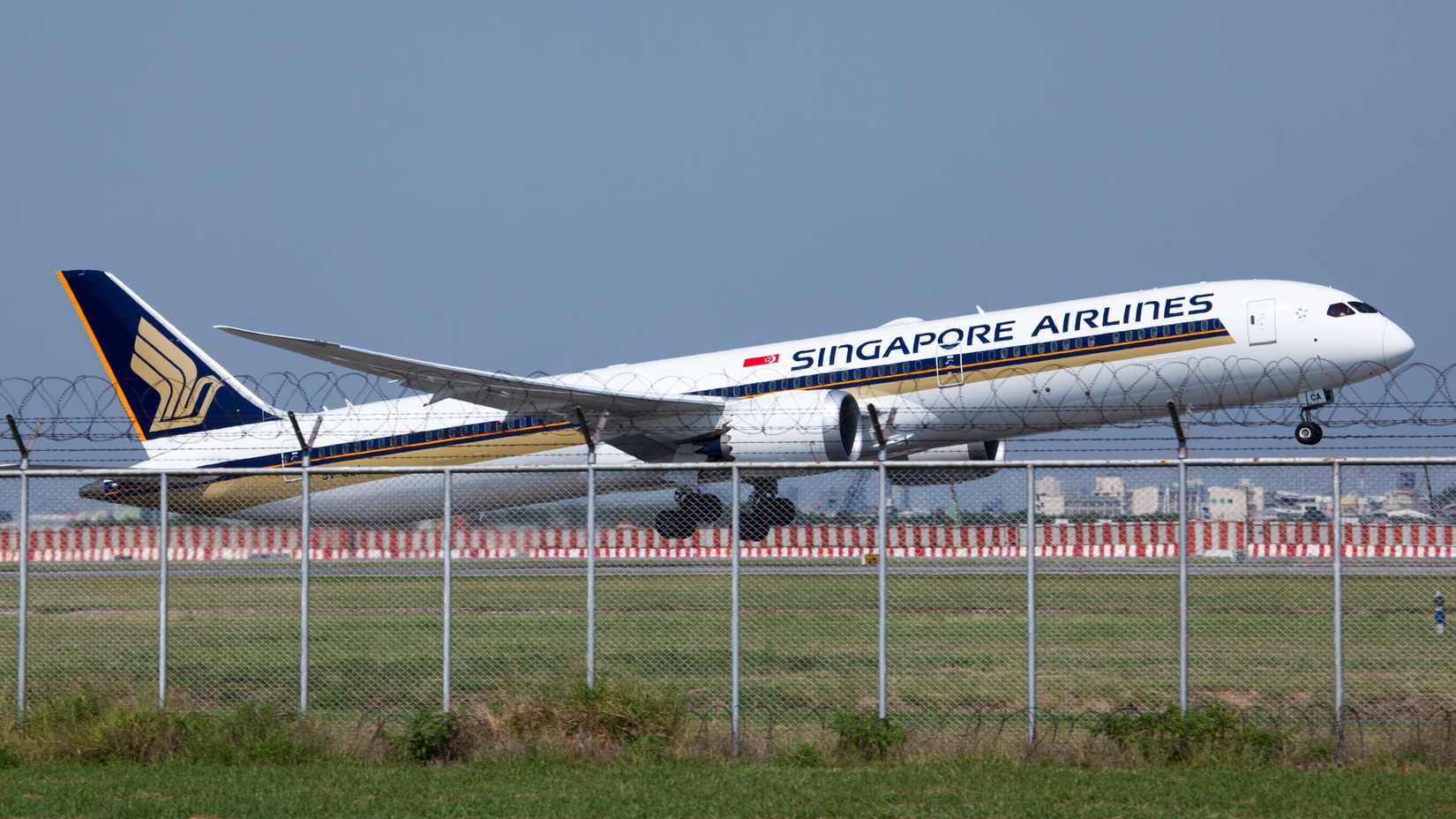
9V-SCP Came From Charleston And Is Currently Based In Singapore
Widebody aircraft aren’t produced in the same volume as single-aisle jets. Over 12,000 Boeing 737
examples have been built, the most common narrowbody, while fewer than 1,800 Boeing 777s were produced-still more than any other twin-aisle aircraft. It’s a special occasion when any widebody plane reaches 1,000 units, and it’s especially unique that the 1,000th 787 came from the Charleston plant, the newcomer in the Boeing family.
This aircraft is a Boeing 787-10, which currently flies for  Singapore Airlines
. 9V-SCP is Singapore Airlines’ 20th example. It was delivered in 2023, flying from Charleston to Singapore with a stopover in Nagoya, Japan, as the 787-10 doesn’t have enough range to cover the immense distance nonstop. This particular aircraft is equipped with two Rolls-Royce Trent 1000s and flies with 337 seats in a two-class layout. It’s used for short-haul flying, and its longest flights are usually between six and eight hours, operating from Singapore to other Asian destinations or Australia.
|
Aircraft |
Business |
Economy |
Total |
|---|---|---|---|
|
Model |
Stelia Symphony |
Recaro CL3710 |
|
|
Layout |
1-2-1, staggered direct aisle access |
3-3-3 |
|
|
Number of seats |
36 |
301 |
337 |
Only five twin-aisle aircraft types have ever met the milestone of 1,000 units. These are the Boeing 747, 767, 777, 787, and the Airbus A330. Additionally, there are slightly over 650 Airbus A350s in service, but Airbus has orders for over 1,300 examples, so the A350 will join the 1,000 club in the future. However, the 787 has received over 2,000 orders throughout its lifetime, and given that production is now consolidated at Charleston, this means that the 2,000th Dreamliner will also come from here.
4
Home Of The Dreamlifters
Boeing’s Fleet Of Four Dreamlifters Is Now Based In Charleston

Constructing a 787 involves shipping components and large items from various parts of the world for final assembly. To accomplish this, Boeing converted four second-hand 747-400s into the 747-400 Large Cargo Freighter (LCF), also known as the Dreamlifter. These planes are operated under contract by Atlas Air
and previously flew parts to both 787 factories.
With the shutdown of the Everett line, all Dreamlifters now send parts to Charleston. Boeing is adding a new servicing and testing facility to accommodate these unusual freighters. As part of this program, new spaces will be added for unloading components from these 747s, in addition to the existing operations center that was constructed at Charleston in 2018.
|
Aircraft |
Previous operators |
|---|---|
|
N249BA |
China Airlines |
|
N718BA |
Malaysia Airlines |
|
N747BC |
Air China |
|
N780BA |
China Airlines |
The four Dreamlifters are registered as N249BA, N718BA, N747BC, and N780BA. They typically visit Taranto, Italy, and Wichita, Kansas, to pick up large components, in addition to Chubu Centrair International Airport in Japan. Because the Dreamlifter has significantly less range than a standard 747, flights to Asia
that require a fuel stop are typically performed in Anchorage, Alaska. These aircraft do occasionally visit other cities, but these are the airports that they usually frequent.
3
This Is The Only Place That Can Produce The 787-10
Everett Only Made The 787-8 And 787-9

The 787’s production includes a higher degree of outsourcing than previous Boeing aircraft. Parts are manufactured around the globe and then shipped for final assembly. The 747 Dreamlifter takes care of larger components. South Carolina is already home to a significant portion of the 787 fuselage assembly, which would be flown via Dreamlifter for aircraft assembled in Everett. However, the stretch that created the 787-10 meant that some parts of the fuselage were now too big to fit inside.
As a result, while both factories produced the 787-8 and the 787-9, the largest 787 variant could only be assembled in Charleston. This was likely a contributing factor in consolidating production here. Consolidating in Everett would require a significant upheaval in the established supply chain to enable 787-10 production. This makes the 787-10 the first commercial Boeing aircraft variant produced exclusively outside of Washington.
|
Specifications |
787-8 |
787-9 |
787-10 |
|---|---|---|---|
|
Length |
186 ft 1 in (56.72 m) |
206 ft 1 in (62.81 m) |
224 ft 1 in (68.3 m) |
|
Wingspan |
197 ft 3 in (60.12 m) |
197 ft 3 in (60.12 m) |
197 ft 3 in (60.12 m) |
|
Height |
55 ft 6 in (16.92 m) |
55 ft 10 in (17.02 m) |
55 ft 10 in (17.02 m) |
|
Maximum Take-Off Weight (MTOW) |
227.9T |
254.7T |
254T |
|
Range |
7,305 NM (13,530 KM) |
7,565 NM (14,010 KM) |
6,330 NM (11,720 KM) |
|
Engines |
2x General Electric GEnx-1B or 2x Rolls-Royce Trent 1000 |
2x General Electric GEnx-1B or 2x Rolls-Royce Trent 1000 |
2x General Electric GEnx-1B or 2x Rolls-Royce Trent 1000 |
(Data from Boeing)
The first Boeing 787-10 rolled off the assembly line in March 2017 for its maiden flight, and Singapore Airlines took the first example for an airline one-year later. To date, nearly 300 orders have been booked for this variant. By all accounts, it’s a fantastic plane, with phenomenal cost-per-seat metrics and enough capability to meet many airlines’ needs. Sales haven’t quite taken off, but the plane has a promising future, especially if the reported range increases materialize.

Related
The Billion Passenger Jet: Boeing’s 787 Soars To New Heights With Major Milestone
The company achieved the milestone in less than 14 years— faster than any other widebody commercial aircraft in history.
2
It Now Has Two Final Assembly Lines
This Will Allow The Facility To Match Previous Production Rates

Initially, there was a single line at the Charleston facility and one at Everett, Washington. Production peaked in 2019 when Boeing was producing 14 Boeing 787s a month: seven at Everett and seven at Charleston. But after the COVID-19 pandemic and a number of production halts, the Everett line stopped producing Dreamliners in 2021. The factory remained operational for quality inspections, but this, too, ended recently.
However, one assembly line isn’t enough to meet the high demand for the 787. In 2023, 787 production peaked at five per month. 2024 saw occasional reductions, and the company ended the year still at five per month. However, in 2024, Boeing also saw the opening of a second final assembly line at the facility, and the famed manufacturer is hoping to ramp up production to 10 per month in 2026.
As a point of comparison, the Airbus A350 is currently at six per month, while the A330neo is at four. Increasing the production rate of the 787 will help reduce per-unit costs through economies of scale, and the increased revenue flow from more deliveries will allow Boeing to continue paying down the huge development costs. The higher production rates will also help Boeing offer lower pricing than it currently does, which will make the Dreamliner even more competitive against its Airbus rivals.
1
The Size And Scale Of Boeing South Carolina
A Truly Impressive Operation

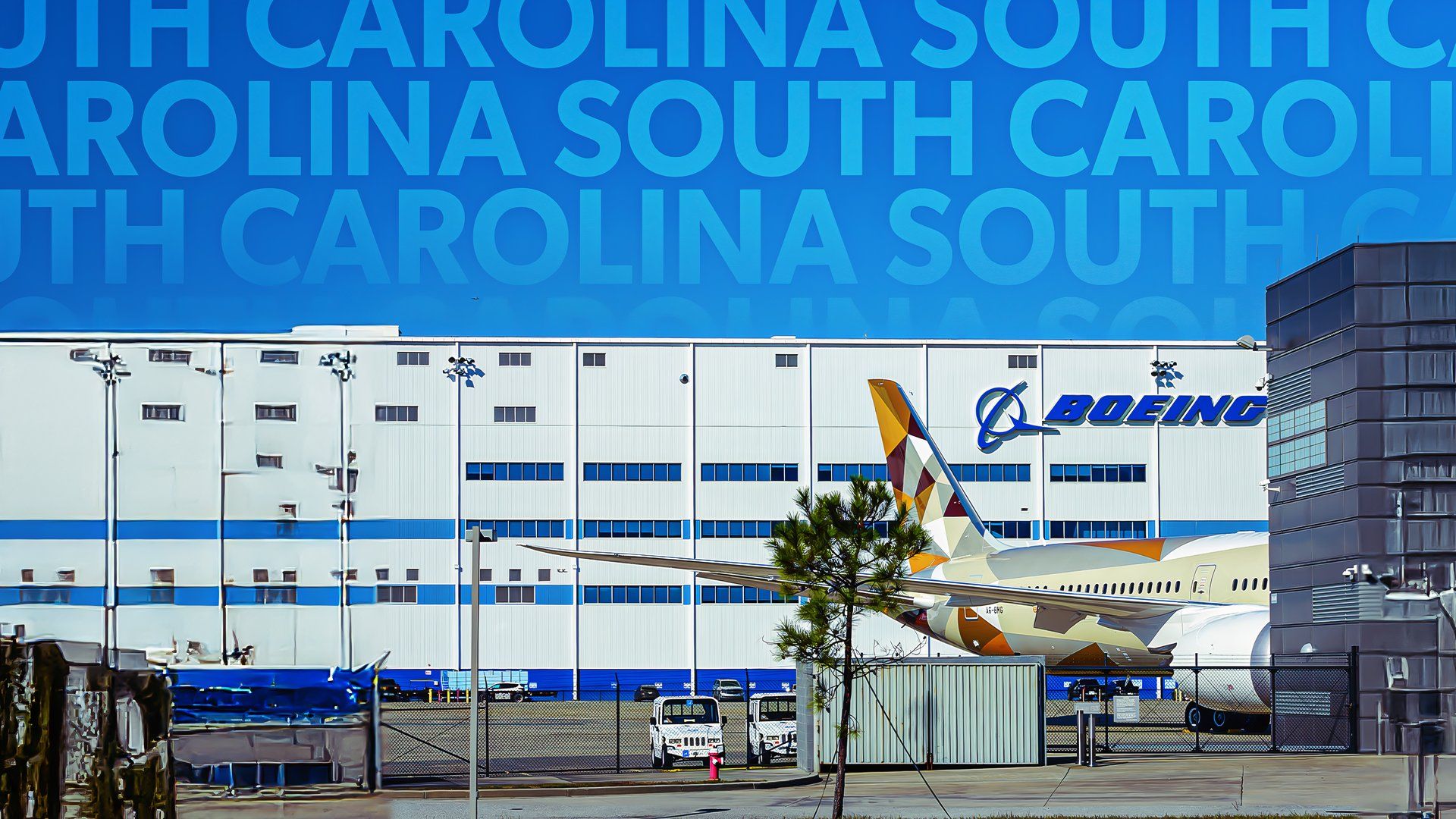
First, there are the stats. The site spans an area of 265 acres next to Charleston’s passenger terminal. The final assembly building itself was originally built with 1.2 million sq ft (111,484 sq m) of interior space, and the structure is over 1,000 ft (305 m) long, enough for the Wright Brothers to perform their first flight almost nine times. 2016 saw the opening of a new paint facility, with WCSC reporting that the new hangar is nine stories tall and the size of two football fields, with enough space to paint two 787s simultaneously.
Charleston started as a site to construct the mid and aft body sections of the fuselage. Later in the 787’s development, Boeing elected to add a second final assembly line. Since then, the facility has added the previously mentioned paint hangar and the Dreamlifter operations center. Boeing also added a delivery center for visiting airline representatives, and, of course, the second final assembly line. All the additions have made Boeing South Carolina capable of full start-to-finish production, with no need to send the planes out for additional work during the assembly process.
The Charleston plant has been controversial from its inception. Using cheaper labor was a key motivator for its opening, and the facility is infamous for poor quality control. Some airlines have even refused to take delivery of Charleston-assembled Dreamliners in the past, while the 787 has experienced multiple production halts due to quality issues. But the site is a hugely impressive facility that can churn out a 787 in about a month. Furthermore, the 787 has a long life ahead of it, and it seems all but certain that Charleston will continue to be each unit’s birthplace.
Credit: Source link