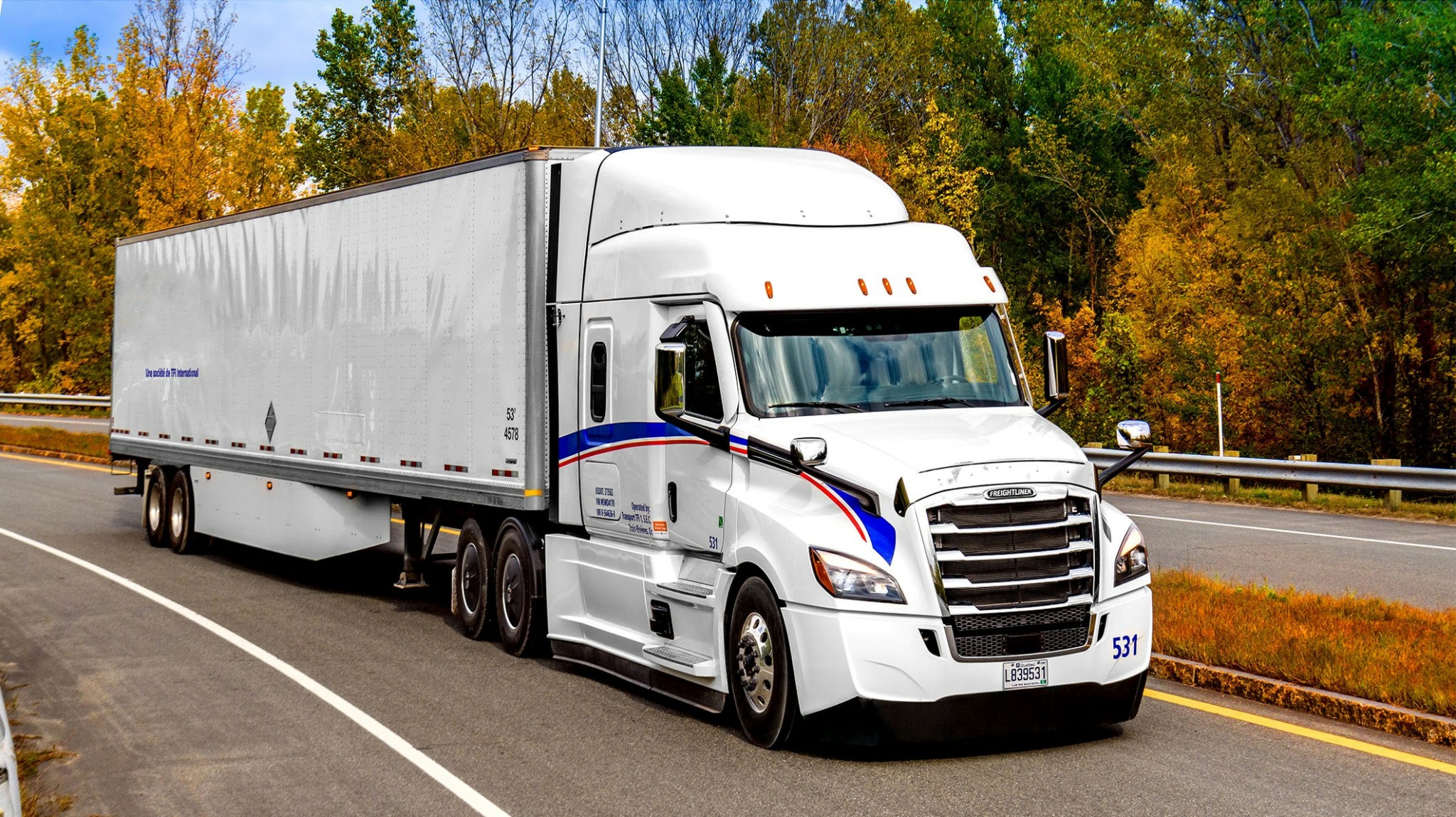
Truck manufacturers are trying to escape a signed agreement with California. The agreement mandates that they follow truck emission standards that the Trump administration has eliminated.
Daimler, International, Paccar and Volvo have filed a lawsuit against the California Air Resources Board (CARB) and Gov. Gavin Newsom. The original equipment manufacturers (OEMs) argue that the Clean Truck Partnership is unenforceable after Congress ripped up the truck emission standards that the agreement addresses.
Signed in 2023, the Clean Truck Partnership binds top truck manufacturers to California’s truck emission standards. These include the Omnibus Low NOx rule, Advanced Clean Fleets and Advanced Clean Trucks. This holds true despite any challenges to the state’s authority.
In return, CARB will work with manufacturers, allowing time to meet requirements before enforcing new regulations. The agency will also support building the necessary zero-emission vehicle infrastructure.
The terms of the Clean Truck Partnership include:
- CARB will align with the Environmental Protection Agency’s 2027 nitrogen oxide emission regulations. CARB will also modify parts of the 2024 NOx emission regulations to help meet California’s targets.
- CARB promises at least four years of lead time and three years of regulatory stability before new requirements.
- Truck manufacturers will meet CARB’s zero-emission and pollutant regulations in California, regardless of challenges from others.
The OEMs are also prohibited from challenging or opposing CARB’s truck emission rules in any capacity. That includes voicing opposition to another state’s attempt to adopt California rules.
That agreement sat dormant for two years. But in June, President Donald Trump signed resolutions that killed California’s truck emission standards. Consequently, the Clean Truck Partnership was activated.
The OEMs were silent on the issue. When reached for comment in July, none of them committed to the agreement. Cummins said it will “remain committed to following the law everywhere.” Daimler Truck North America told Land Line it remains “committed to adhering to the requirements set by EPA.” International, Paccar, the Truck and Engine Manufacturers Association and Volvo all either declined to comment or did not respond.
Now, their position is clear: The OEMs want the Clean Truck Partnership invalidated.
Caught in the middle
In their lawsuit, the OEMs explain how they are in the middle of a tug-of-war between California and the federal government.
Just a few weeks before its truck emission standards were eliminated, CARB issued an advisory to the OEMs. The agency told them they must continue to follow the rules, including certification required for the “lawful” sales of trucks.
The day after Trump signed the resolutions, Newsom signed an executive order directing CARB to enforce the Clean Truck Partnership. According to the order, the OEMs that do not comply would be blacklisted from government contracts and incentives. Their special considerations would be ignored in future regulations.
CARB has doubled down on that stance as recently as July 24. The agency approved amendments to Advanced Clean Trucks while referencing the Clean Truck Partnership.
However, the federal government is telling the OEMs to ignore the agreement and California’s threats.
On Aug. 7, the Department of Justice issued a cease-and-desist letter to the manufacturers.
The letter states California’s enforcement of truck emission standards is contrary to federal law.
“Federal law thus prohibits CARB from adopting or attempting to enforce those regulations,” the letter states. “And, of course, CARB may not circumvent federal law by disguising its enforcement of vehicle emissions regulations as an ‘agreement.’ This is particularly true where the purported agreement was entered into under threat of enforcement of the very regulations that federal law preempts. Nor may CARB attempt to enforce preempted regulations by delaying or threatening to withhold certification of new motor vehicles in California.”
Meanwhile, the OEMs have just a few weeks left to plan for model year 2026 production. They’re asking a federal court what rules they should be following.
“Plaintiffs are caught in the crossfire: California demands that OEMs follow preempted laws; the United States maintains such laws are illegal and orders OEMs to disregard them,” the lawsuit states. “This situation is not tenable. Accordingly, plaintiff OEMs file this lawsuit to clarify their legal obligations under federal and state law and to enjoin California from enforcing standards preempted by federal law.”
Agreement or ‘regulatory mechanism’
The OEMs argue that the Clean Truck Partnership does not do what CARB thinks it does.
Truck manufacturers claim the agreement was meant for CARB to harmonize federal and state truck emission standards. It was also to provide enough lead time for future regulations.
However, the OEMs claim that CARB is using the Clean Truck Partnership to force compliance with truck emission standards that are now misaligned with and preempted by federal law. Manufacturers and the DOJ view the partnership as a “regulatory mechanism” rather than a simple agreement.
In other words, once the truck emission standards were invalidated, the Clean Truck Partnership created a regulatory framework. This argument is echoed by the Western States Trucking Association in its state lawsuit. The association calls the agreement an “underground regulation” that bypassed legal procedures.
Furthermore, the OEMs claim CARB has already broken its promises. They claim the agency refused to work with them to resolve infrastructure and consumer demand issues. CARB is also accused of not providing the proper lead time.
“CARB cannot use the Clean Truck Partnership as a backdoor to enforce California’s preempted emissions standards,” the OEMs state in the lawsuit. “Even if it could, CARB has not met – and indeed cannot meet – several of its own obligations under the Clean Truck Partnership. As a result, CARB cannot use the Clean Truck Partnership to force the industry to comply with California’s emissions standards.”
On Friday, Aug. 15, the Trump administration asked the federal court to join the case against California. The DOJ told the court that California’s “ongoing defiance of federal law must stop.”
“The United States seeks to intervene here to ensure that CARB, through the Clean Truck Partnership or otherwise, does not frustrate Congress’ twice-over choice for uniform emissions standards,” the DOJ states in its motion to intervene.
CARB declined to comment on pending litigation. LL
Credit: Source link