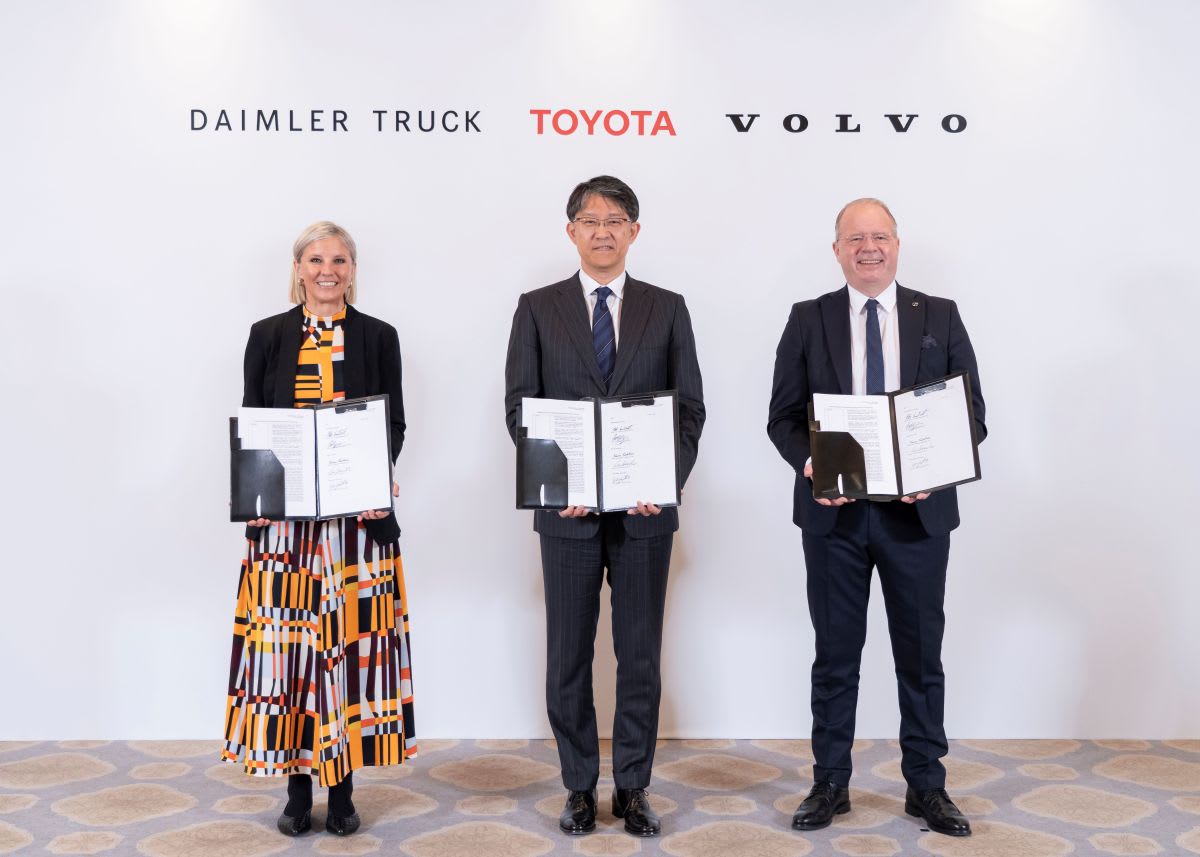
By joining Daimler Truck and Volvo, Toyota brings fuel cell expertise to a joint effort aimed at making hydrogen viable for heavy-duty transport.
Toyota is preparing to join forces with Daimler Truck and Volvo Group in a move aimed at accelerating the development of hydrogen fuel cell technology for heavy-duty trucks.
The three global manufacturers have signed a non-binding memorandum of understanding that would make Toyota an equal partner in Cellcentric, the fuel cell joint venture Daimler Truck and Volvo launched in 2021.
If finalized, the deal would bring together Daimler and Volvo’s commercial-vehicle expertise with Toyota’s decades of fuel-cell development.
Together with like-minded partners, the parties intend to share technological developments and address common challenges, with the aim of achieving sustainable and effective implementation of fuel cell systems for heavy-duty applications.
The companies said this type of collaboration is critical to scaling hydrogen-powered transport.
Building Scale for Hydrogen
Cellcentric was created to develop and manufacture fuel cell systems for heavy-duty applications, including on- and off-road trucks. Bringing Toyota into the fold is intended to strengthen both the technology and the business case for hydrogen.
The companies say combining their capabilities will help them move faster toward commercialization, which remains a challenge for hydrogen trucking due to cost, infrastructure, and production hurdles.
Toyota, a long-time leader in fuel cell technology in passenger vehicles, would contribute its experience in fuel cell stack development and manufacturing. It would also work with Cellcentric on core components such as fuel cell unit cells and related systems architecture.
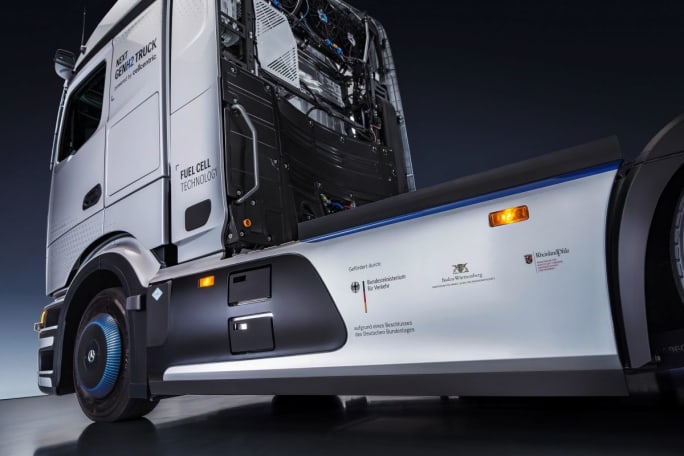
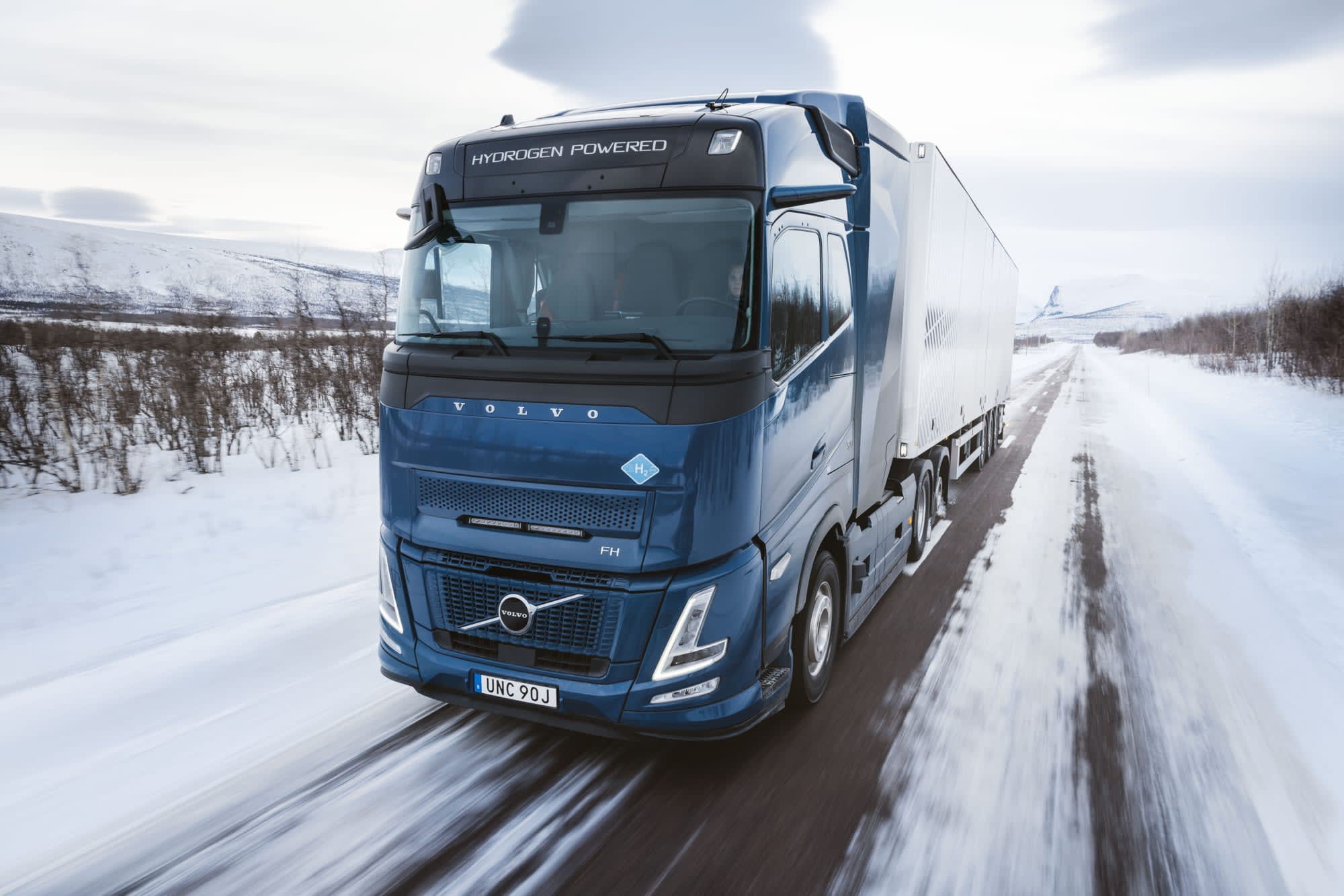
Earlier this year, Daimler Truck unveiled the Mercedes-Benz NextGenH2 Truck. In a small-series production run at the Mercedes-Benz plant in Wörth, Germany, 100 units will be manufactured and deployed with various customers starting near the end of 2026.
A Complement to Battery-Electric
For Daimler Truck and Volvo, trucks powered by hydrogen fuel cells are seen as complementary to battery-electric trucks. While batteries are expected to dominate shorter-haul applications, fuel cells are widely viewed as a solution for long-haul and high-load operations where range and refueling time are critical.
Karin Rådström, CEO of Daimler Truck, said adding Toyota would help scale hydrogen technology more quickly, noting it “complements battery-electric drives in decarbonizing transport.”
Volvo Group CEO Martin Lundstedt emphasized the importance of collaboration to “accelerate and create critical mass for hydrogen applications.”
Bringing major players together sends a strong signal to the broader ecosystem, including suppliers and infrastructure developers, he pointed out.
Hydrogen Trucks in the U.S.
Momentum for hydrogen fuel cell trucks in the United States seems to have largely stalled with the exit of Nikola and Hyzon from the market early last year.
Hyundai, however, continues to work on bringing its fuel-cell-powered Xcient to the U.S. Last year introduced the newest version of its Xcient Fuel Cell Class 8 heavy-duty truck at the Advanced Clean Transportation Expo, as well as plans for a hydrogen production and dispensing facility in Georgia.
Last fall, it announced that its trailer and body subsidiary Hyundai Translead will serve as the official distributor of Hyundai’s Xcient Fuel Cell Trucks in North America.
It Takes More Than Trucks and Fuel Cells
Beyond product development, the Cellcentric partnership reflects a broader strategy: building out the hydrogen ecosystem itself.
The companies said they will work with partners across the hydrogen value chain to support the development of fueling infrastructure, which is an essential piece that lags behind vehicle technology.
That ecosystem approach has been a recurring theme in hydrogen discussions across the trucking industry, where lack of fueling availability remains one of the biggest barriers to adoption.
Hydrogen-fuel advocates around the world say policymakers need to act to make fueling infrastructure happen.
What Happens Next
The agreement is currently non-binding. The companies will continue negotiations toward a definitive deal, subject to regulatory approvals and board sign-offs.
If completed, Toyota would invest in Cellcentric through a capital increase, resulting in equal ownership among the three partners. The joint venture would remain an independent entity, supplying fuel cell systems to a broad range of customers, not just its parent companies.
The move underscores a growing consensus among truck manufacturers: No single company can shoulder the cost and complexity of developing hydrogen technology alone.
Koji, Sato, President and CEO, Toyota, said the company will “continue to contribute to realizing a hydrogen society alongside like-minded partners.”
By pooling resources, Daimler Truck, Volvo, and Toyota are betting they can accelerate timelines, reduce costs, and make hydrogen a viable zero-emission option for heavy-duty transport.
Credit: Source link