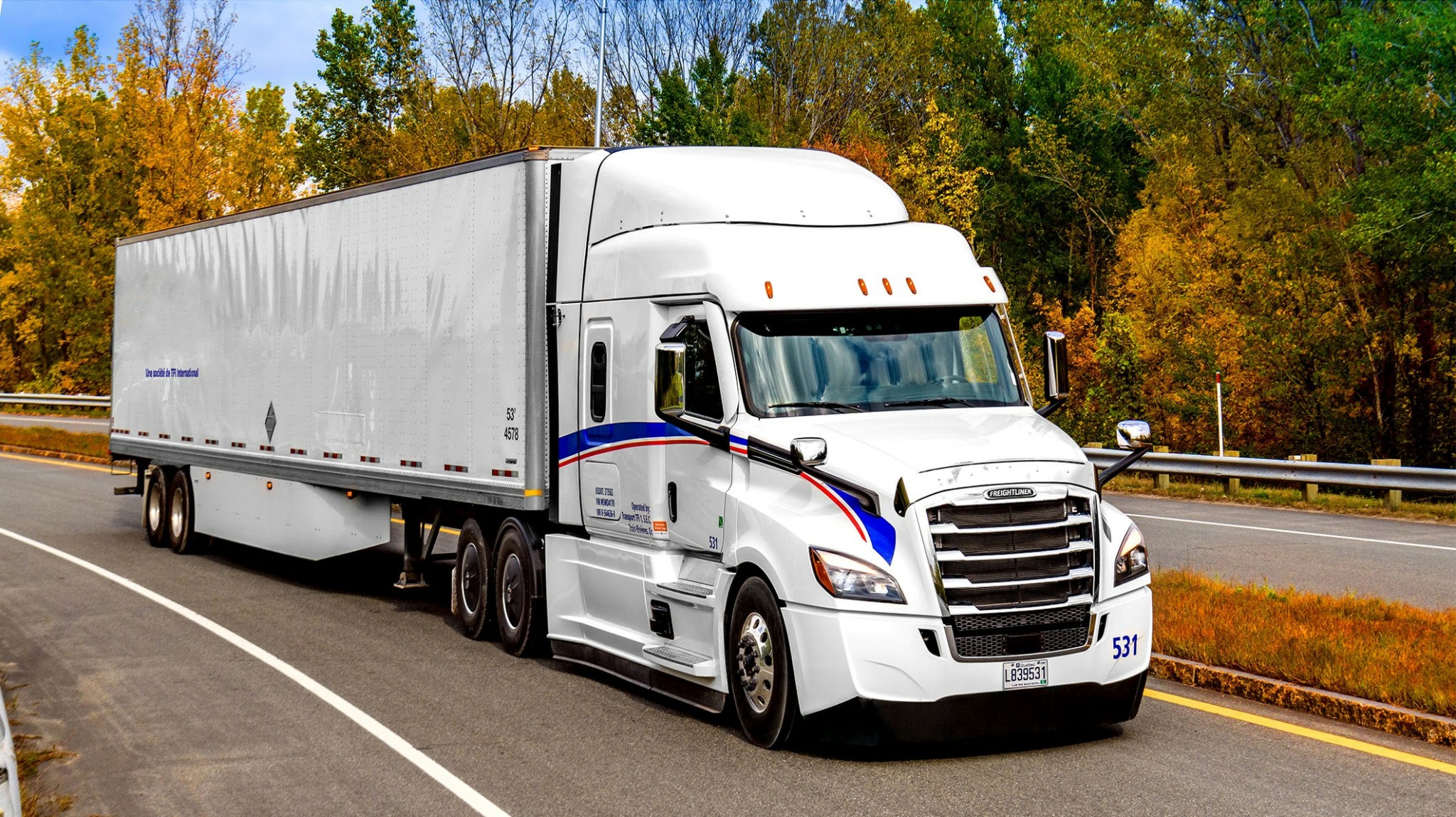
Truck drivers must constantly be alert for actions of other highway users.
Motorcycle use between traffic lanes on a busy roadway is among the potentially dangerous maneuvers that truckers encounter. The practice is commonly referred to as lane filtering or lane splitting.
Utah and Minnesota are among a growing number of states to act on the issue. Enacted rules are intended to set rules for the maneuvers.
Pros and cons
Some have said lane filtering or lane splitting is beneficial because the action saves motorcyclists time and fuel. They have added that the practice reduces the risk of getting rear-ended in stop-and-go traffic.
Others, including state transportation agencies and some in the trucking industry, have raised concerns about motorcyclists who attempt the maneuver around large trucks.
The American Motorcyclist Association distinguishes lane filtering from lane splitting.
The group defines lane splitting as the practice of riding a motorcycle between clearly marked lanes for traffic traveling in the same direction. Lane filtering is defined as riding a motorcycle between stopped vehicles to the front of the pack, typically at an intersection.
State action
Utah and Minnesota are not the first states to act on the issue. California acted first to permit lane splitting with motorcycles.
Since 2017, state law has authorized motorcyclists to travel between lanes headed the same direction at speeds up to 10 mph. Traffic must be moving at 30 mph or less.
It is illegal to intentionally block or impede a motorcycle “in a way that could cause harm to the rider.” The California Highway Patrol has recommended that travelers in the far-left lane “move to the left of their lane to give motorcyclists ample room to pass.”
Utah followed suit two years later, permitting motorcyclists to move between stopped vehicles on roads with a posted speed limit of 45 mph or less. Motorcyclists are permitted to travel 15 mph or less on roadways with two adjacent lanes to split travel lanes when traffic is stopped.
The lane filtering rule includes authorization for motorcyclists to move to the front of a traffic light. The maneuver is permitted for moving to the front when vehicles being overtaken are stopped.
The 6-year-old law does not address lane splitting.
In 2021, Montana legalized lane filtering to allow a motorcycle to overtake stopped or slow-moving traffic at a speed up to 20 mph. The motorcyclist is required to stay within 10 mph of the traffic speed.
Arizona enacted a law to permit lane filtering the following year. Motorcyclists in the state traveling on congested highways are permitted to move between vehicles up to an intersection.
The rule permits lane filtering to be completed on roadways with two lanes of traffic in the same direction and with a speed limit up to 45 mph. Vehicles must be at a complete stop.
Additionally, motorcycles can travel only up to 15 mph to complete the maneuver.
Lane filtering allows motorcyclists to safely navigate through stopped vehicles in traffic or at stop lights. Motorcycles must travel at 15 mph or less & only pass when the lane is wide enough.
For more information, visit https://t.co/rgPtvXMxnW. #MotorcycleSafety #ShareTheRoad pic.twitter.com/gsAPpN4sDY
— Colorado Department of Transportation (CDOT) (@ColoradoDOT) August 25, 2024
Colorado has since acted to legalize lane filtering.
For the past year, motorcyclists in the state have been authorized to pass another vehicle in the same lane. Traffic must be stopped, and a motorcycle is limited to travel at 15 mph or less.
The maneuver is forbidden on the right shoulder or in a lane of traffic moving in the opposite direction. A clarification is included that the move is forbidden once vehicles being overtaken or passed begin moving.
The Colorado Department of Transportation has noted that lane splitting remains illegal in the state.
Lane splitting and lane filtering became legal in Minnesota last month.
The lane splitting rule states that a motorcyclist is permitted to overtake and pass another vehicle traveling in the same direction and within the same traffic lane. Motorcycles can travel up to 25 mph and no more than 15 mph above the speed of traffic.
Lane filtering is permitted when two or more lanes of traffic in the same direction are not moving. Motorcycles can travel no more than 15 mph over the speed of traffic.
Another vehicle operator is prohibited from attempting to impede or prevent a motorcyclist from performing the maneuvers.
Other states either prohibit or do not regulate maneuver.
Arkansas, Delaware, Idaho, Kentucky, Mississippi, Missouri, New Jersey, North Carolina, Ohio, Texas and West Virginia are among the states without specific lane filtering or lane splitting regulations. As a result, the maneuvers are neither legal nor illegal.
There are 33 states that prohibit lane sharing.
Riding between lanes, also known as lane splitting, lane filtering, or lane sharing, can be dangerous. Riding between lanes puts motorcyclists closer to other vehicles, making them more vulnerable to crashes. 🏍️
For more information visit, https://t.co/8rkdxoo4ZP. pic.twitter.com/pGZcKQQeY3
— Oklahoma Turnpike Authority (@OKTurnpike) May 31, 2024
Utah
A new Utah law is intended to again clarify passing rules in the state.
In 2019, Utah passed a law permitting lane filtering. One year ago, Gov. Spencer Cox signed into law a bill to clarify what is permissible when performing the maneuver.
The revision states that lane filtering is permitted on roadways divided into two or more adjacent traffic lanes in the same direction of travel. Additionally, the maneuver is authorized on freeway off-ramps.
Lane filtering is prohibited on an on-ramp.
This year’s clarification addresses lane splitting. Specifically, statute now clarifies that lane filtering does not include lane splitting.
Lane splitting is defined as riding a motorcycle between clearly marked lanes for traffic traveling in the same direction while traffic is in motion.
Motorcyclists caught lane splitting would face fines and a 90-day suspension of the driver’s motorcycle endorsement.
The rule revision takes effect Jan. 1, 2026. LL
More Land Line coverage of state news is available.
Credit: Source link