Starting Tuesday of next week, inspectors will be out in force for the annual International Roadcheck inspection blitz.
International Roadcheck is planned for Tuesday through Thursday, May 16-18.
It is a program of the Commercial Vehicle Safety Alliance. During the 72-hour inspection and enforcement campaign, CVSA-certified inspectors in Canada, Mexico and the U.S. will conduct inspections of commercial motor vehicles and drivers at weigh and inspection stations, designated inspection areas, and along roadways.
15 inspections per minute
CVSA says an average of 15 trucks or buses are inspected every minute across North America during Roadcheck events. Here’s the breakdown.
Last year, 59,026 inspections were conducted. More than 90% of drivers came through with no out-of-service violations.
Marty Ellis, driver of the OOIDA tour trailer, regularly checks in from the road with the host of Land Line Now.
On a recent Land Line Now broadcast, Ellis shared some advice he got from a webinar on prepping for Roadcheck. He also shared a story of his own International Roadcheck experience.
Listen to the broadcast below, through the Land Line Now website, or any major podcast app.
International Roadcheck inspections
Inspectors will conduct their usual roadside safety inspections of commercial motor vehicles and drivers. In addition, this year inspectors are expected to specifically focus on two aspects of vehicle safety: anti-lock braking systems and cargo securement.
Anti-lock braking system problems are not out-of-service violations. The alliance says inspectors will first determine whether ABS is required on the vehicle. If it is, they’ll then ensure that the ABS lamp cycles on and off during the diagnostic check and check for indications of any malfunction.
For the other focus of this year’s International Roadcheck, cargo securement, inspectors will check spare tires, cargo and dunnage to make sure they are secure, confirming there are enough tie downs for the weight and length of items being hauled, and more.
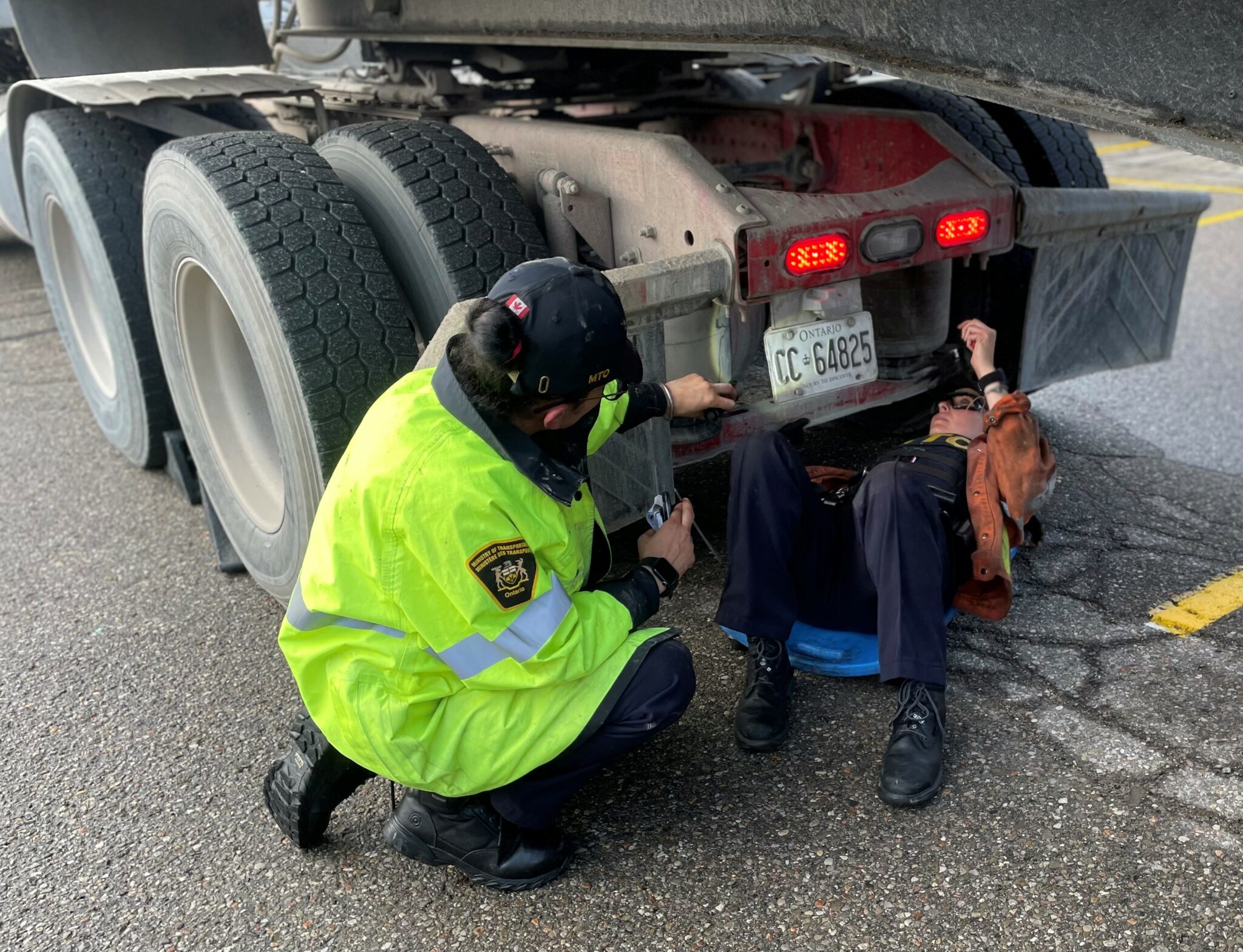
During a routine North American Standard Level I Inspection, inspectors focus on two areas – driver and vehicle safety compliance.
- Vehicle safety – Inspectors will ensure the vehicle’s brake systems, cargo securement, coupling devices, driveline/driveshaft components, driver’s seat, fuel and exhaust systems, frames, lighting devices, steering mechanisms, suspensions, tires, wheels, rims, hubs and windshield wipers are compliant with regulations. Inspections of motor coaches, passenger vans and other passenger-carrying vehicles also include emergency exits, seating, and electrical cables and systems in the engine and battery compartments.
- Driver safety – Inspectors will check the driver’s operating credentials, hours-of-service documentation, status in the drug and alcohol clearinghouse, seat belt usage, and for alcohol and/or drug impairment.
Vehicles that pass a Level I or Level V Inspection without any critical vehicle violations may receive a CVSA decal, which is valid for three months.
If the inspector identifies critical vehicle violations, the vehicle will be ordered out of service and not be allowed to operate until the identified out-of-service conditions have been corrected.
Inspectors also may put a driver out of service for violations such as not possessing a valid or necessary operating license or exhibiting signs of impairment.
Looking ahead
Tips for prepping for inspections
Daniel Mustafa, the director of technical service for Travel Centers of America and Petro Stopping Centers, writes a maintenance column for Land Line Magazine. In the May issue, he breaks down some of the things you need to make sure are in tip-top shape before inspection blitzes hit. You can read that subscriber-only content here with a free subscription to Land Line Magazine. LL
Credit: Source link