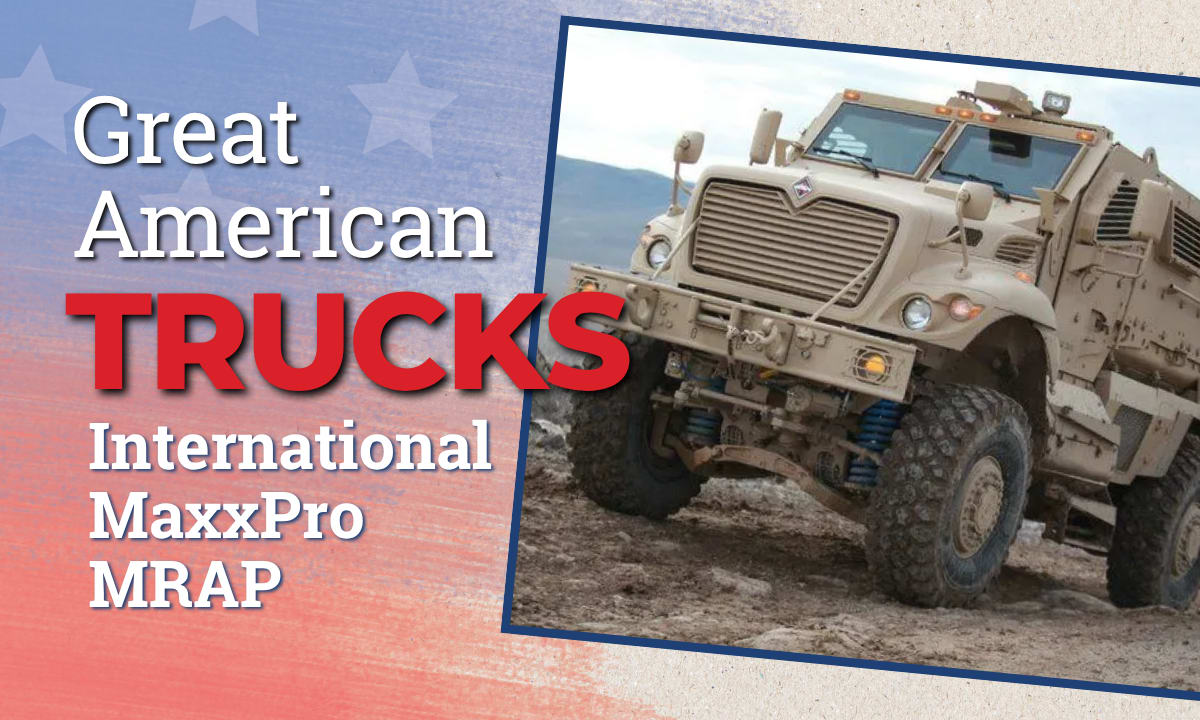
Built from an International WorkStar chassis and powered by a MaxxForce diesel, the MaxxPro MRAP became one of the most important military trucks of the Iraq War era.
On Sept. 11, 2001, terrorists attacked the World Trade Center in New York City and the Pentagon in Washington, D.C. Overnight, the United States found itself engaged in a global war on terrorism.
The principal battlefields in this new war were the harsh and unforgiving landscapes of Afghanistan and Iraq. Broiling deserts and rugged mountain terrain challenged U.S. and coalition forces from the outset.
But it wasn’t long before an even greater threat emerged.
Unable to confront U.S. and coalition troops in conventional combat, insurgents in Afghanistan and Iraq turned to asymmetric warfare. Ambushes and bomb attacks became their preferred tactics, with improvised explosive devices (IEDs) playing a central role.
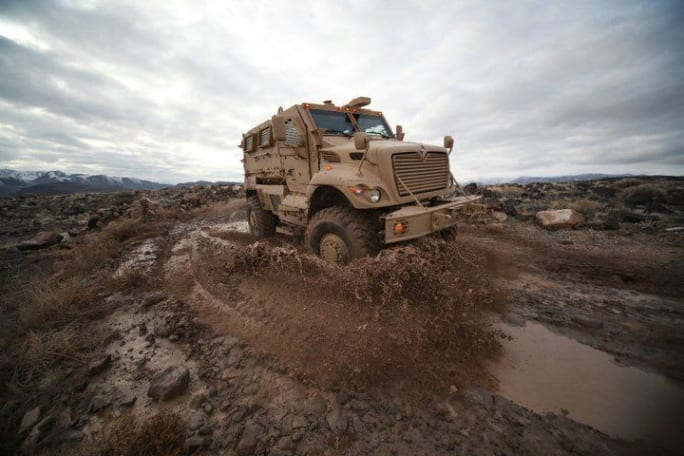
The MaxxPro wasn’t the most capable off-road vehicle in the military’s inventory. But it was among the safest.
International Motors
These homemade bombs and mines were frequently buried along roads or concealed near convoy routes. Their purpose was simple: Destroy military vehicles, disrupt operations, and inflict casualties.
Often, once a convoy halted to deal with the aftermath of an explosion, insurgents would attack exposed troops with small arms, machine guns, and rocket-propelled grenades.
The threat was serious from the beginning. But U.S. commanders soon noticed that IEDs were becoming larger, more sophisticated, and more deadly.
By 2006, IEDs had become the leading cause of U.S. casualties in Iraq. And it was becoming increasingly clear that the rugged and versatile Humvee was growing more vulnerable to the powerful explosives being used against American forces.
From Work Truck to War Truck
Seeking a solution, the U.S. military high command launched the urgent Mine Resistant Ambush Protected (MRAP) program. The initiative was aimed at developing a new military vehicle specifically designed to survive mine blasts and roadside bomb attacks.
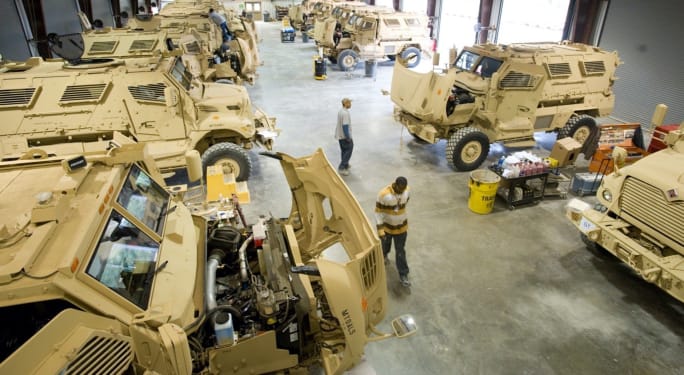
Largely based on the International WorkStar 7000 Series vocational truck, the MaxxPro entered production quickly.
International Motors
International Trucks took immediate interest in the MRAP program. Engineers at Navistar Defense believed they could provide a quick and practical solution to the crisis.
Instead of spending time and money developing an all-new vehicle, the Navistar Defense team turned to the proven International WorkStar 7000 Series vocational truck chassis.
Engineers reworked the underside of the truck, creating a V-shaped hull designed to deflect mine blasts upward and away from the crew compartment. The company also partnered with Israeli armor specialist Plasan Sasa to develop a heavily armored crew capsule designed to protect troops from gunfire and roadside bombs.
Testing showed the design could withstand a 15-pound mine blast without injuring the soldiers inside.
The vehicle rode on a 4×4 chassis with a semi-elliptical leaf-spring suspension. Ground clearance measured 14 inches, while curb weight ranged from 21 to 24 tons depending on configuration. The wheelbase measured 153 inches, and the vehicle could safely ford water up to 36 inches deep.
Power came from a 9.3-liter MaxxForce 10 D9.316 diesel engine rated at 330 horsepower, though some variants received an uprated 375-hp version. An Allison 3000 Series five-speed automatic transmission was standard across the lineup.
Other features included International’s Diamond Logic electrical system, which enabled a specialized blackout-lighting mode for nighttime operations. A backup electrical system relied on four 12-volt batteries and a 400-amp alternator.
Built for Survival
Initial design work was completed in early 2007. International dubbed the new truck the MaxxPro.
In March of that year, two examples were delivered to the U.S. Army’s Aberdeen Proving Ground in Maryland for evaluation.
Most MaxxPro variants were equipped with a roof-mounted turret carrying either a 7.62-mm medium machine gun or a 12.7-mm heavy machine gun. Armored windows also incorporated firing ports, giving troops the ability to engage threats from inside the vehicle if necessary.
In practice, however, the turret-mounted weapon provided most of the truck’s offensive firepower.
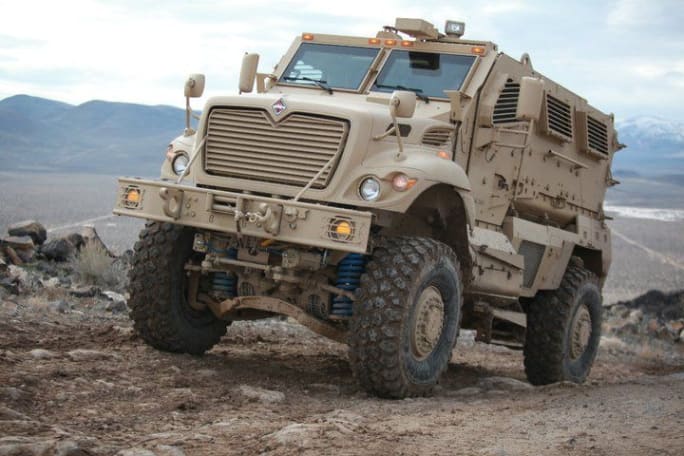
The key to the MaxxPro’s success in the field was a tall profile that enabled a V-shaped hull to direct bomb blast energy away from vehicle occupants.
International Motors
Military planners were immediately impressed with the design. International engineers had prioritized operational readiness from the outset.
Because the MaxxPro was based on the WorkStar chassis, it used standardized, readily available components. The armored crew capsule was bolted together rather than welded, making repairs faster and easier in forward operating areas.
These design choices allowed the MaxxPro to enter production quickly and deploy to combat zones in record time.
One concern was that the truck’s high ground clearance and V-shaped hull created a high center of gravity. That characteristic became even more pronounced when vehicles were fitted with turrets and heavy weapons. As a result, rollover risk was a concern on uneven terrain. In 2010, the Army added electronic stability control to help reduce rollover incidents.
The MaxxPro represented a rare case in which the U.S. defense establishment compressed what is normally a decade-long acquisition process into a matter of months. Rather than optimizing every performance characteristic, International engineers focused on getting a highly survivable vehicle into combat as quickly as possible.
The results were impressive.
The MaxxPro breezed through Army evaluations. On May 31, 2007, the U.S. Marine Corps ordered 1,200 vehicles. Additional orders quickly followed from other branches of the U.S. military. Ultimately, Navistar built roughly 9,000 MaxxPros, many of which remain in service around the world today.
Battle-Tested and Proven
By early 2008, the first MaxxPro vehicles were in combat. The truck quickly proved to be a versatile platform. At least seven distinct variants entered service with U.S. and coalition forces, including ambulances, recovery vehicles, and mobile command platforms.
In combat, the MaxxPro earned high marks from the troops who served in it. The V-shaped hull worked exactly as intended, deflecting blast energy away from the crew compartment and dramatically reducing the severe lower-body injuries commonly associated with explosions beneath conventional flat-bottomed vehicles.
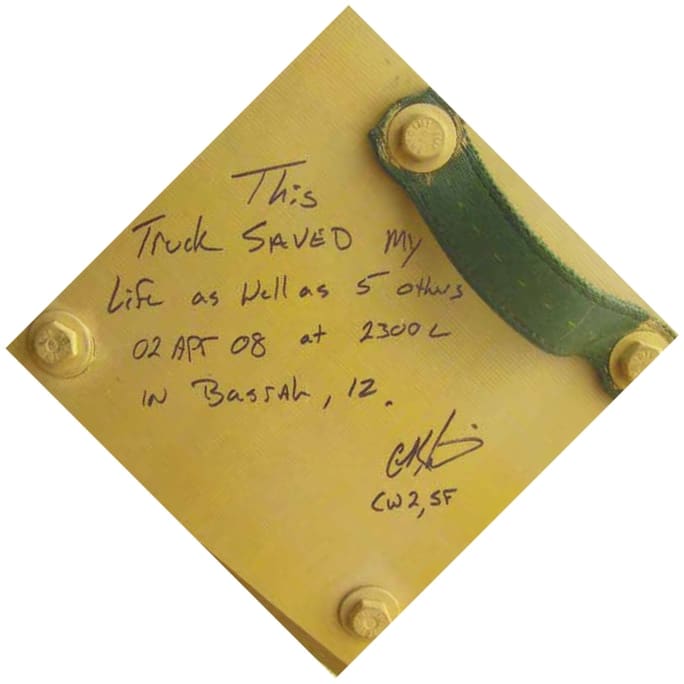
Tributes to the International MaxxPro are common. Many Afghan and Iraq veterans owe their lives to the truck’s innovative design.
International Motors
On numerous occasions, MaxxPros survived blasts that would have destroyed a Humvee. After-action reports documented vehicles being catastrophically damaged by large IEDs while their occupants escaped with only minor injuries.
There were drawbacks. The truck’s tall profile made it easier for enemy forces to spot and created challenges in tight urban environments. It was less agile on rough mountain roads and could bog down in soft ground that posed little difficulty for lighter vehicles.
Troops also noted that the armored crew compartment could feel cramped during long patrols.
Still, those shortcomings were a small price to pay for one simple reason: The MaxxPro did exactly what it was designed to do. It kept soldiers alive.
That’s why the MaxxPro was one of the most successful MRAP designs of the Iraq War era. Thousands of service members owe their lives to the truck’s combination of blast protection, rugged construction, and proven commercial-truck components.
By transforming a WorkStar vocational chassis into a battlefield vehicle in record time, International delivered exactly what the military needed most: a truck that could survive the blast, protect its occupants, and keep moving.
Nearly two decades later, the MaxxPro remains in service with the United States and allied nations around the world — a lasting testament to one of the most important truck designs ever to wear the International badge.
Credit: Source link