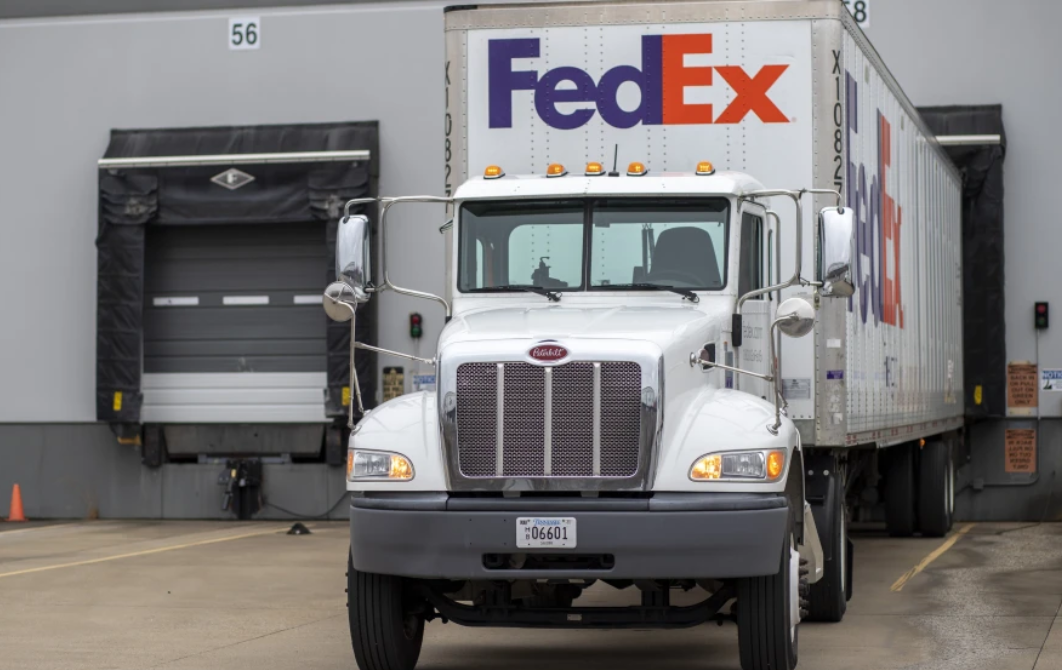
Truck drivers don’t have to cross state lines to be engaged in interstate commerce.
That was what the Supreme Court just ruled in another unanimous decision associated with transportation and freight. This time, local last-mile drivers who operate intrastate came out victorious.
At the center of the case is the Federal Arbitration Act, which requires courts to enforce private arbitration agreements. Section 1 of the act exempts workers who are engaged in interstate commerce.
The question the Supreme Court was tasked to answer: Does Section 1 exemption apply to workers who never cross state lines and never interact with vehicles that do? That includes last-mile delivery drivers.
Ultimately, the high court refused to create a “bright-line” rule requiring workers to cross state lines or physically interact with interstate vehicles.
A ‘continuous journey’
Back in the Supreme Court is Flowers Foods, one of the largest producers of packaged baked goods in the United States.
Most Americans are likely familiar with its products, which include Wonder Bread, Jumbo Honey Buns and Butterscotch Krimpets. Those goods are produced at bakeries in 19 states. Franchisees buy distribution rights for specific geographic areas.
Angelo Brock was the Denver-area Flowers Foods franchisee. He would pick up products at a warehouse in Colorado and deliver them to stores in Colorado.
In 2022, Brock sued Flowers Foods, alleging underpayment. Flowers Foods moved to compel arbitration per a distribution agreement. Both a federal district and appellate court denied that request, ruling that Brock is a worker engaged in interstate commerce. Thus, activating the Section 1 exemption of the Federal Arbitration Act.
The Tenth Circuit found that Brock’s “intrastate route formed a constituent part of the … interstate journey” of Flowers Foods’ products from out-of-state bakeries to their intended destination at retail stores. The Supreme Court agreed.
“Interstate commerce includes transporting products ‘between points in one state and points in another state,’ which involves not just crossing state lines but intrastate activity too; ‘a continuous carriage’ may begin in one State and end in another while ‘much of the journey’ takes place ‘within the limits of a single state.’” Justice Neil Gorsuch wrote in the opinion. “And at least sometimes, a person can take part, be employed, or be involved in that continuous journey without leaving a State or touching vehicles that do.”
Another setback for mandatory arbitration
This is the fourth time the Supreme Court has decided on Section 1 exemptions, ruling in favor of workers every time.
In 2019, the Supreme Court ruled that independent contractor truck drivers are also exempt from the Federal Arbitration Act, not just company drivers. A few years later, the high court determined that airline workers loading and unloading cargo also fit within the Section 1 exemption.
Just two years ago, the Supreme Court ruled on a similar case that also involved Flowers Foods.
In that case, distributors delivering Flowers Foods products argued they were exempt as transportation workers. Flowers Foods argued they are in the baking industry, not the transportation industry, and are not exempt. The Supreme Court ruled in favor of the drivers.
“A transportation worker need not work in the transportation industry to fall within the exemption from the FAA provided by the Act,” Supreme Court Chief Justice John Roberts wrote in the opinion. “The Second Circuit accordingly erred in compelling arbitration on the basis that petitioners work in the baking industry … The judgment of the Second Circuit is vacated, and the case is remanded for further proceedings consistent with this opinion.”
The Supreme Court ruled only on the “bright line” argument that a driver must cross state line or touch a vehicle that does. Flowers Foods made other arguments in passing but did not ask the court to opine on those arguments.
First, the company argues that a distribution agreement is not the same as a “contract of employment,” the latter of which is language within the Federal Arbitration Act. Second, Brock took the title of the products before reselling, potentially breaking the interstate journey chain.
Since the Supreme Court did not weigh in on those arguments, they could be invoked in future arbitration disputes involving interstate commerce. That could set up the high court to rule on the issue for a fifth time. LL
Credit: Source link