

The reintroduction of T4A slips for independent contractors in the trucking industry was the culmination of a 10-year battle for the Canadian trucking industry and a reason for optimism that the feds may finally be taking the issue of driver misclassification seriously.
But more work needs to be done, said Stephen Laskowski, president and CEO of the Ontario Trucking Association (OTA) and Canadian Trucking Alliance. He was speaking Wednesday at the Truckload Carriers Association’s Bridging Border Barriers event, its annual pilgrimage to Toronto.
“Key to enforcement and being able to follow a trail between the carriers, the drivers and how they codify themselves as personal services businesses (PSBs) is to bring back the T4As, which have been under a moratorium since 2011,” Laskowski said.
The federal government promised in the recently passed budget to bring back T4As and promised funding to restore enforcement related to those forms. Laskowski noted the trucking industry is the only sector for which the T4A requirement is being revived at this time.
The federal government also broke down a barrier between Canada Revenue Agency and Employment and Services Development Canada, allowing the two agencies to share information on taxpayers.
However, Laskowski cautioned, it’s now up to the feds to follow through on their commitments to end driver misclassification.
“They’re putting their money where their mouth is,” he said. “We have the foundation in place, but we still have work to do.”
On a provincial level, Geoff Wood, senior vice president of the OTA, said the Workplace Safety and Insurance Bureau has already ramped up enforcement of its own, through joint initiatives at roadside where the agency has been both educating drivers on their employment rights and identifying carriers suspected of misclassifying drivers.
Beyond Driver Inc., Laskowski said the trucking industry, and especially its safety performance, is likely to be a key discussion point as the Canada-U.S.-Mexico (CUSMA) trade agreement is renegotiated before expiring next year. And that’s not necessarily a bad thing, he added.
“There are opportunities here to move past our typical issues,” he said, referred to a shared desire on both sides of the border to improve truck safety and the caliber of drivers. “What’s going to be on the table? America is setting the agenda, and I don’t necessarily think that for our industry, it’s an agenda we should let pass us by.”
He said it’s a good opportunity to work with the U.S. to better monitor who is operating trucks across our shared border.
Closer to home, Wood said the OTA has three big asks: eliminating the Satisfactory Unaudited safety rating, so every company operating in the province is vetted to some extent; opening roadside inspection stations 24/7; and revamping entry-level driver training requirements, a regime that’s already under review.
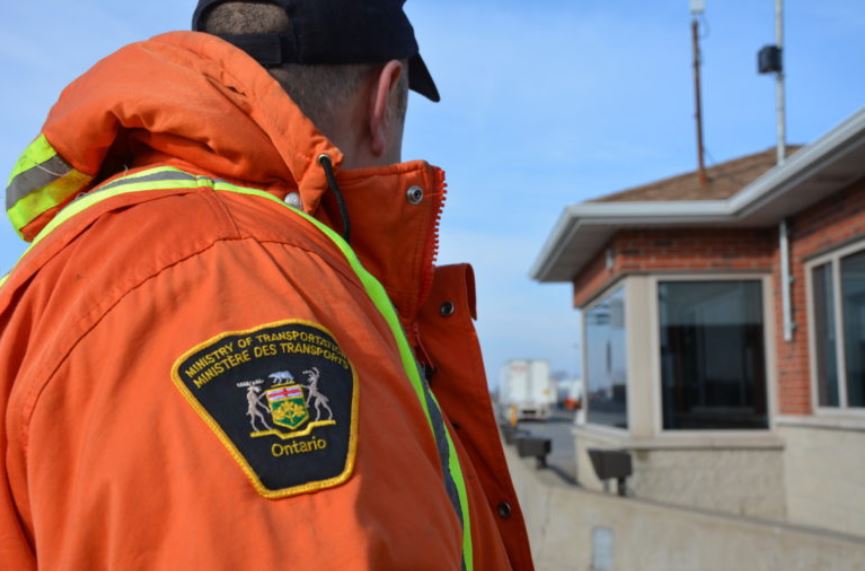
Richard Robinson, team leader of the Commercial Inspection & Enforcement Branch with the Ministry of Transportation, said the province is ramping up its inspection officer workforce but still lacks the manpower to staff all provincial scales 24/7.
“Overall, the numbers are looking really good and it’s going to allow us to get more presence on the road and open these scales more often to inspect more trucks,” Robinson said of MTO’s recruitment drive.
Laskowski said the trucking industry is working closely with enforcement to increase oversight of the industry – something he said is desperately needed.
“The government can no longer create regulations and trust carriers to comply without strict oversight,” he added.
He also urged enforcement to target the employers who are putting unsafe and poorly trained drivers on the road and not just the drivers themselves.
“Get to the heart of it,” he urged. “The people who hire the drivers. If you get to the heart of it, you don’t have to worry about this issue because no one will hire them.”
Credit: Source link


