

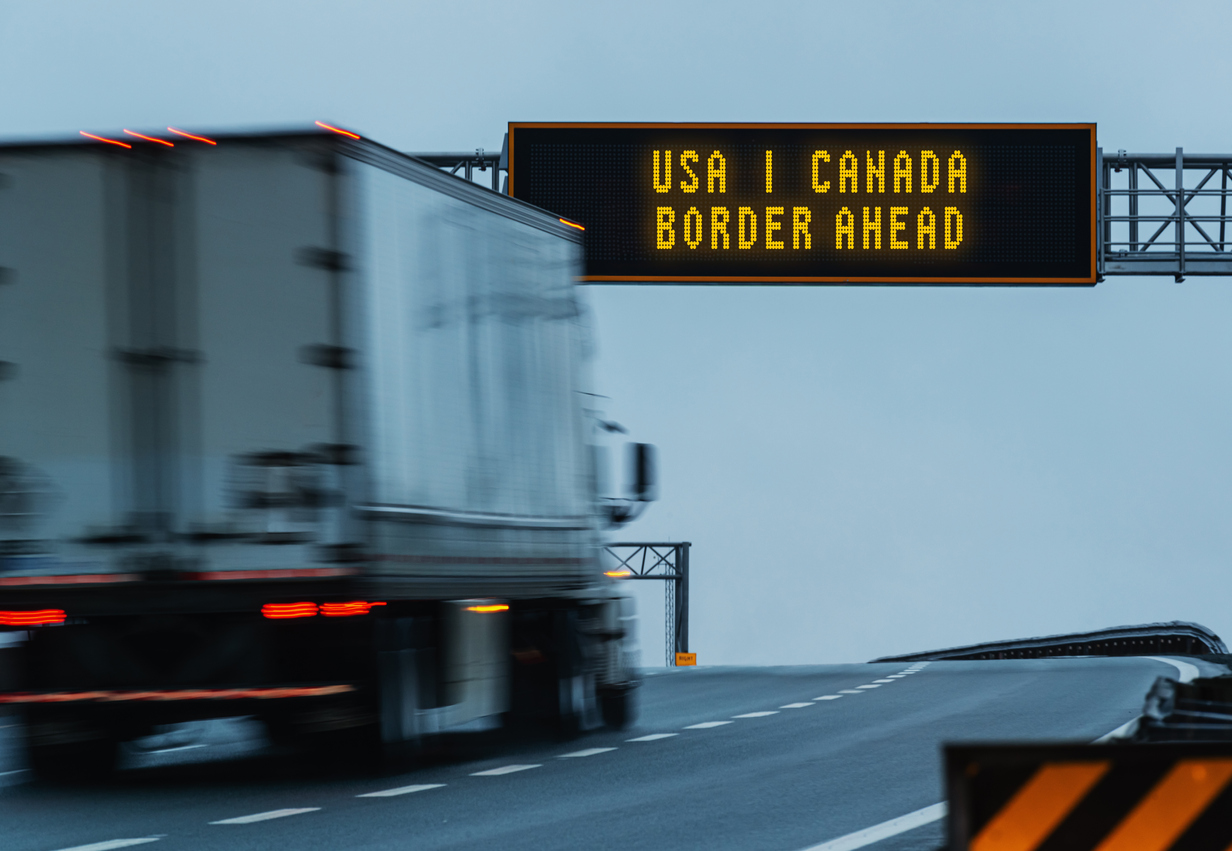
These are strange days in cross-border trucking. And we’d better be on high alert.
Trucking has been making mainstream news in the U.S., and that’s rarely a good thing.
First, it was the crackdown on truck drivers who do not meet a minimum threshold of English proficiency. Changes to the Commercial Vehicle Safety Alliance (CVSA) out-of-service criteria require enforcement officers to park drivers who cannot demonstrate English proficiency at roadside.
That made the national news and is still making headlines, as several states are facing federal sanctions for failing to enforce the new criteria.
Then there was the awful Florida highway wreck that caused the death of three motorists. The van they were in crashed into the trailer of a truck driver who was in the midst of performing an illegal U-turn.
Turns out, the driver was in the U.S. illegally yet had somehow obtained a commercial driver’s licence in California. Oh boy. Almost immediately, as public rage against the truck driver built, U.S. Secretary of State Marco Rubio, via social media, announced an immediate pause of worker visas for foreign truck drivers.
“The increasing number of foreign drivers operating large tractor-trailer trucks on U.S. roads is endangering American lives and undercutting the livelihoods of American truckers,” he posted.
While we awaited further information on the types of visas affected and the potential impact on Canada-domiciled truck drivers, anger toward the trucking industry – and especially the Sikh community – increased. Turns out, Canadian drivers won’t be affected by the types of visas being suspended. And we can breathe a collective sigh of relief.
But for how long? The Canadian trucking industry has a long and proud history of safe operation in the U.S. I always felt pride when attending U.S. conferences where Canadian fleets often placed prominently or even swept safety awards.
Early in my career, I asked Rob Penner, then-executive at Bison Transport, why Canadian companies performed so well in those North American safety competitions. I’m paraphrasing, but I still remember the gist of his response today. “We have an obligation to operate to the highest-possible safety standards,” he said. “When we are in the U.S., we are guests in their country. We have to do everything possible to respect and maintain that.”
In other words, Canadian businesses need to respect and maintain the highest-possible standards if we want to continue to play an integral role in the U.S. supply chain. This is especially true at a time when protectionist sentiment is at a historic high and policy decisions are made impulsively and disseminated by social media.
There’s no indication the crackdown on English language proficiency, or the ban on work visas for foreign drivers, are aimed at Canadians.
But I shudder to consider what the consequences would have been if that truck driver in Florida had been from Canada. While it would traditionally be unthinkable to suggest Canadians could be shut out of the U.S. trucking market, nothing is unthinkable these days. The current modus operandi to the south is to act now, explore the legal ramifications later.
And we need to be prepared. Both the Canadian Trucking Alliance and the American Trucking Associations are inviting increased enforcement. They want the bad actors sidelined. Parked for good. Under certain circumstances, even deported.
We can’t be so naïve as to think we will escape such scrutiny if Canadian truck drivers are determined to pose a disproportionate risk on U.S. highways. We are their guests. We need to be at our best. And it’s never been more important to be mindful of that as we continue to support cross-border trade and commerce.
Credit: Source link


