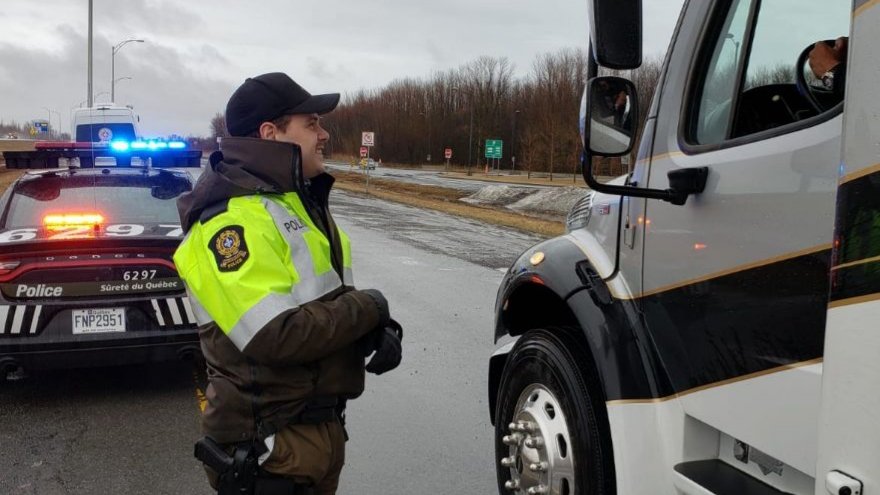
Move-over rules are in place in all states. Initially, protections were focused on emergency personnel. As time passed, many states expanded their protections to apply to vehicles that include road service, utility and tow trucks.
Groups that include the Owner-Operator Independent Drivers Association have long advocated to include large trucks and others in the commonsense rule.
More recently, states have revised rules to include all highway users in the protections. About half of all states now cover every highway user in their move-over laws.
So far this year, state lawmakers around the country are pursuing revisions to cover all highway users in rules.
Arizona
A bill on the Arizona Senate floor opens the door to possible revisions to the state’s move-over rule.
Arizona law requires drivers to move over one lane or to slow down if changing lanes is not possible when approaching and passing any vehicle with flashing lights pulled to the side of a road or highway. First-time offenders face $275 fines.
The protection applies to vehicles that include emergency vehicles, tow trucks and maintenance vehicles.
The Senate Public Safety Committee voted unanimously to advance an amended version of the bill that would establish a 13-person study committee to determine the effectiveness of the existing rule. The group would also look at whether additional promotion and education is needed to increase effectiveness and additional safety measures.
Once complete, legislation would be proposed to address issues identified by the committee.
Sen. David Gowan, R-Sierra Vista, told the committee it is necessary that the state look at the efficiency of the move-over law and how it is performing.
“With added population over the past decade, it would be really good to review current rules and to see if any changes are necessary,” Gowan said.
SB1059 awaits a final Senate floor vote.
California
In neighboring California, an Assembly bill would revise the move-over rule to include any vehicle.
Golden State law requires a driver approaching a stationary emergency vehicle, tow truck or Caltrans vehicle displaying flashing lights to move over or slow down.
AB390 would expand the requirement to apply to all marked highway maintenance vehicles and any other stationary vehicle displaying flashing lights or “another warning device” that could include cones, flares or retroreflective devices.
The bill is in the Assembly Transportation Committee. It can be considered as early as March 6.
Kansas
The Kansas Senate voted unanimously to advance a bill to amend the state’s move-over rule.
Statute requires travelers to move over or slow down when approaching stationary vehicles that include law enforcement, emergency responders and utility vehicles with lights flashing along roadsides.
SB8 would expand the rule to include any stopped, standing or parked vehicle displaying hazard lights, road flares, traffic cones, reflective triangles or other caution signals.
The House Transportation Committee is scheduled to hold a hearing on the bill Thursday, Feb. 27.
Kansas Highway Patrol Colonel Erik Smith recently told a Senate committee that the rule takes a commonsense approach to remedying an unsafe situation. He added that SB8 would “strengthen our other ‘move-over’ laws as it aligns our message across the board: If you see flashing lights, move over and slow down.”
New Jersey
One bill halfway through the New Jersey statehouse revisits the state’s move-over rule.
In 2024, New Jersey law was amended to include protection for any vehicle along the roadside. Specifically, drivers are required to move over or slow down when approaching a stationary vehicle with flashing hazard lights, road flares or reflective triangles. If changing lanes is not possible, drivers must slow down “below the posted speed limit.”
Previously, only stationary emergency vehicles, highway maintenance vehicles, tow trucks and sanitation vehicles were protected.
The Assembly voted to advance another revision. A4813 would require drivers to move over or slow down for any stationary vehicle regardless of whether it utilizes flashing, blinking or alternating lights, flashing hazard lights, road flares or reflective triangles.
The bill is in the Senate Transportation Committee.
Ohio
In Ohio, a Senate bill would cover any stationary vehicle that is in “distress.”
State law includes protection for public safety vehicles, emergency vehicles, certain utility vehicles and weight-enforcement vehicles in the move-over rule. Affected vehicles are protected when stationary and displaying flashing, oscillating or rotating lights.
SB16 states that “a vehicle is in distress when the operator indicates the condition through lit fuse, flares, red lights, red reflectors, red flags, emergency signs or flashing emergency/hazard lights.”
Failure to change lanes or proceed with caution when approaching a stationary vehicle in distress could result in a misdemeanor offense. Drivers with other traffic violations in the past year would face increased charges.
An additional $100 charge could result if distracted driving is determined to be a factor in failure to move over or slow down.
The bill is in the Senate Transportation Committee.
Oklahoma
One Oklahoma House bill would alter the state’s move-over law.
Sooner State law applies move-over protections to any vehicle displaying flashing lights, including hazard lights. If moving over is not possible, approaching drivers are instructed to slow to “a safe speed for the existing road, weather and traffic conditions.”
First-time offenders would face $1,000 fines. Repeat offenses could result in fines of up to $2,500.
HB1272 would allow first-time offenders to complete a state work zone awareness program to avoid a fine.
West Virginia
A West Virginia bill would expand the list of vehicles covered in the state’s move-over law.
Since 2005, the state has mandated that drivers move over or slow down for stopped emergency vehicles with lights activated. Offenders face fines of up to $500 and/or 60 days in jail.
HB2344 would add maintenance vehicles to the protected list, as well as any stationary vehicle displaying “some type of warning signal, such as emergency flashers, flares or retroreflective signals.”
The bill is in the House Energy and Public Works Committee. LL
More Land Line coverage of state news is available.
Credit: Source link