

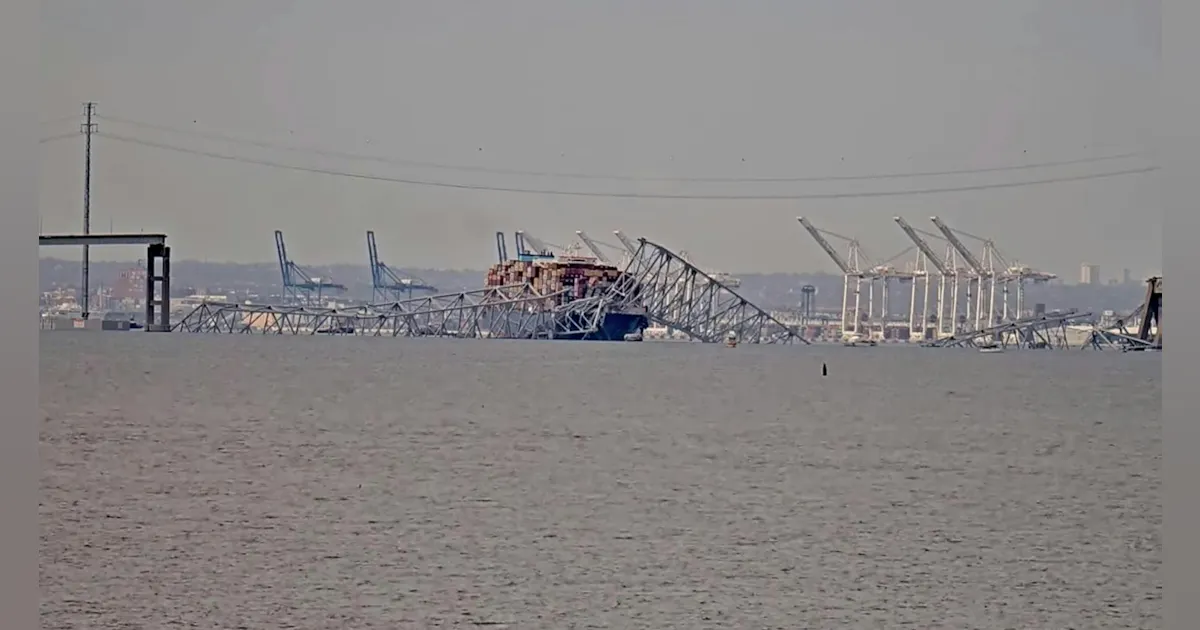
The bridge
The bridge is a part of Interstate 695 and is next to the Port of Baltimore. Both the bridge and the Port of Baltimore are major assets for freight movement in the region. More than 11 million vehicles cross the bridge each year.
The port
The Port of Baltimore is a U.S. shipping port that, with the collapse of the bridge, has lost access to and from the ocean.
“It’s the 13th largest port in the country for containers, but it’s the largest port in the country for roll-on, roll-off equipment,” Dean Croke, principal analyst for DAT Freight & Analytics, told FleetOwner.
Roll-on roll-off (Ro/Ro) equipment uses ships designed to move wheeled freight or anything that can drive on or off a ship. This includes cars, trucks, tractors, and farm machinery. Only certain U.S. ports can accommodate Ro/Ro shipping.
“I think that’s the bigger issue… it’s not just a container port. It’s the largest Ro/Ro port in the country,” Croke said. “You can draw a straight line from Baltimore straight across to the Midwest farming belt, and I think that’s the bigger implication on the trucking industry.”
Sparrow’s Point
Just east of the bridge lies Sparrows Point, an unincorporated Maryland community that hosts several major distribution centers and warehouses.
According to a 2019 Bloomberg article, the region has boomed in commercial real estate activity over the last decade. Sparrows Point now hosts two Amazon fulfillment centers as well as facilities for FedEx, Volkswagen, BMW, Home Depot, and more.
The collapse of the bridge severely limited access to and from these distribution centers.
How does the collapse affect fleets?
The bridge collapse will cause local traffic congestion, limit local warehouses’ ability to move freight, and displace a significant amount of Ro/Ro cargo.
Local traffic
The Maryland Transportation Authority is asking motorists to avoid the I-695 southeast corridor. To cross the harbor, it recommends using the Baltimore Harbor Tunnel on I-95 or the Fort McHenry Tunnel on I-895 for alternative routes.
However, MDTA prohibits vehicles carrying certain hazardous materials from using the tunnels. This includes propane gas in excess of 10 pounds per container (or a maximum of 10 containers), bulk gasoline, explosives, or significant amounts of radioactive materials. Vehicles carrying these materials should instead use I-695 around the tunnels.
According to CBS News, the bridge was originally constructed after the Baltimore Harbor Tunnel had reached capacity and experienced daily heavy congestion.
The bridge collapse will have a major impact on traffic, Herman Funk Jr., general counsel for Cowan Systems, told FleetOwner.
Credit: Source link


